Kawaii Coloring Pages — Free Printable PDFs
Kawaii is the Japanese word for cute, and this is where every kawaii collection on the site lives: round little cats with sparkling eyes, pastel unicorns on clouds, chubby bunnies, bears, puppies and all kinds of sweet small creatures drawn in the soft, big-eyed style that made kawaii famous. Pick a collection, click a picture - the PDF opens, sized for US Letter and fits A4 just as well - and print. No sign-up, no watermark, nothing to unlock.
Show me
Showing only sets with black & white pages.
Showing only sets with color sample pages.
No black & white sets here yet - showing everything.
No sets with a color sample here yet - showing everything.
About Kawaii Coloring Pages — Free Printable PDFs
Kawaii (say it kah-wah-ee) simply means cute in Japanese, but in Japan the word grew into a whole visual language. It took off in the seventies, when teenage girls began writing in round, bubbly letters decorated with hearts and little faces, and stationery makers answered with erasers, pencil cases and notebooks full of tiny smiling characters. From there the style spread to toys, snacks, fashion, shop signs and even police mascots, and today it is one of the most recognizable drawing styles in the world. The idea behind it is a gentle one: anything, however ordinary, can be made small, soft and lovable.
So what makes a drawing kawaii rather than just cute? A realistic kitten curled up on a blanket is cute, but it is not kawaii. Kawaii begins when the artist deliberately exaggerates the features that make us melt - the same features we respond to in babies and baby animals. The head grows until it is almost as big as the body, sometimes bigger. The body turns into a soft bean or a round bun, and arms and legs shrink into little stubs and tiny paws. Sharp corners disappear; every shape is rounded, as if you could squeeze it like a plush toy. When the same trick is used on people, the style is usually called chibi.
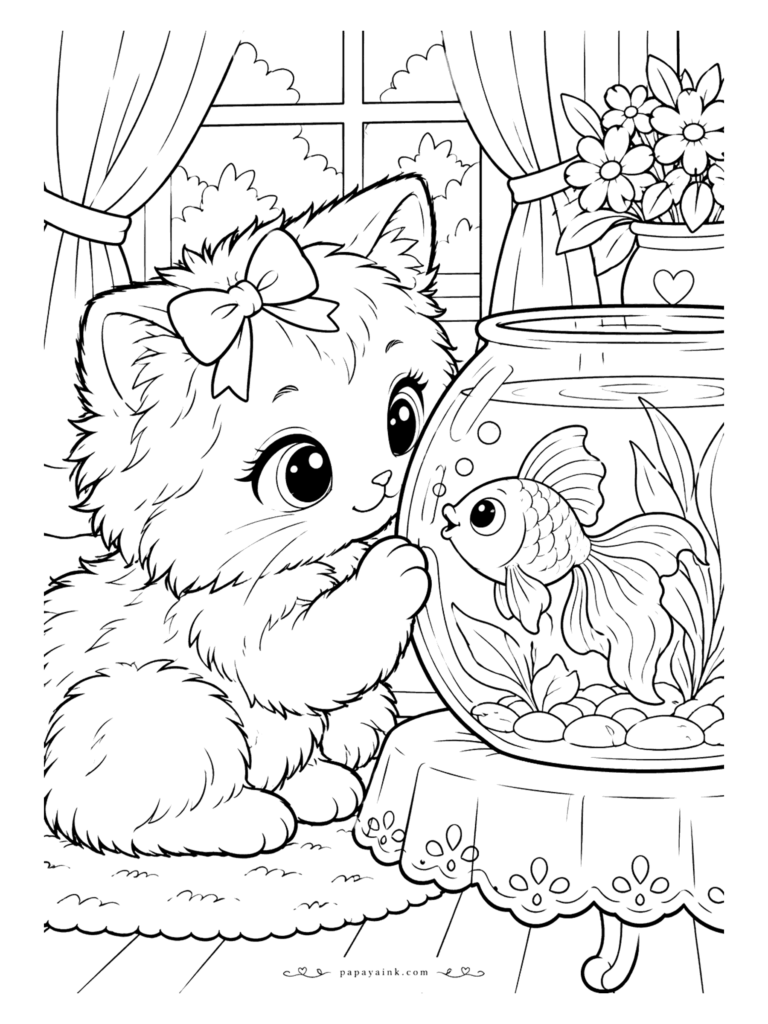
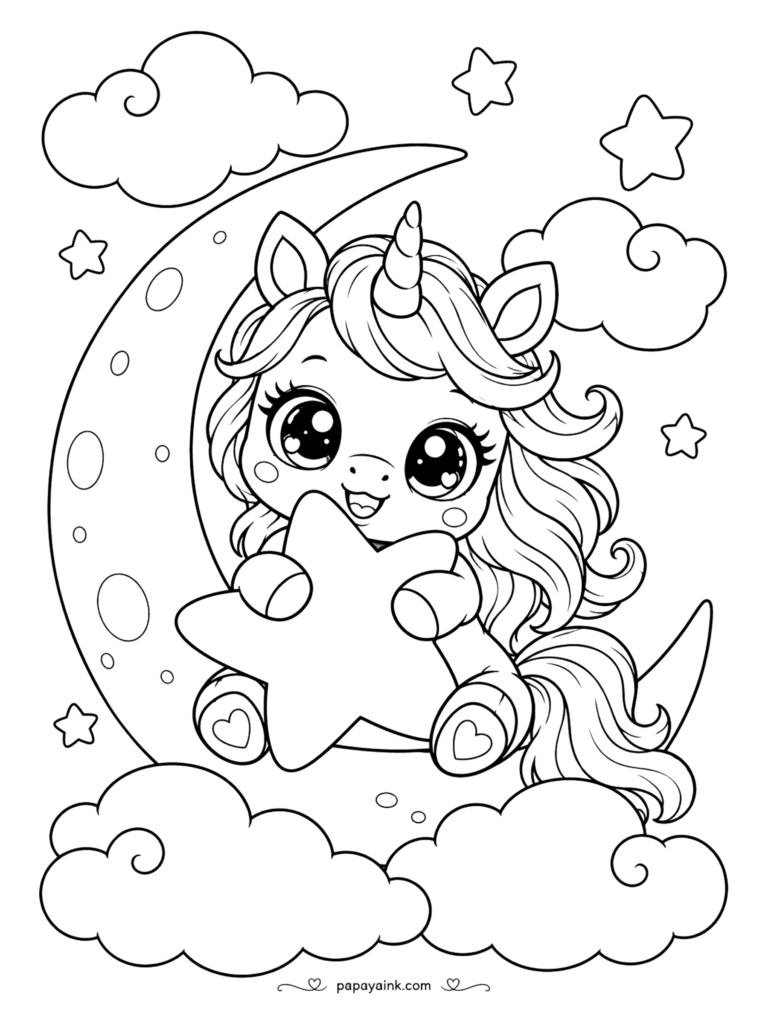
The face is where the difference is easiest to see. In a realistic drawing the eyes sit around the middle of the head; in kawaii they drop low and spread wide, leaving a big, round forehead above them. They are either huge and glossy, with a white sparkle or a tiny star or heart inside, or reduced to two simple dots. The nose often vanishes, the mouth becomes a small open smile, a little "w" or a cat-like curve, and two soft ovals of blush sit on the cheeks. Change just one of these - raise the eyes, add a real nose, draw a proper snout - and the character instantly turns into an ordinary cartoon. Cover the top half of any kawaii face with your hand and you will see it: almost everything that makes it kawaii lives in the bottom half.
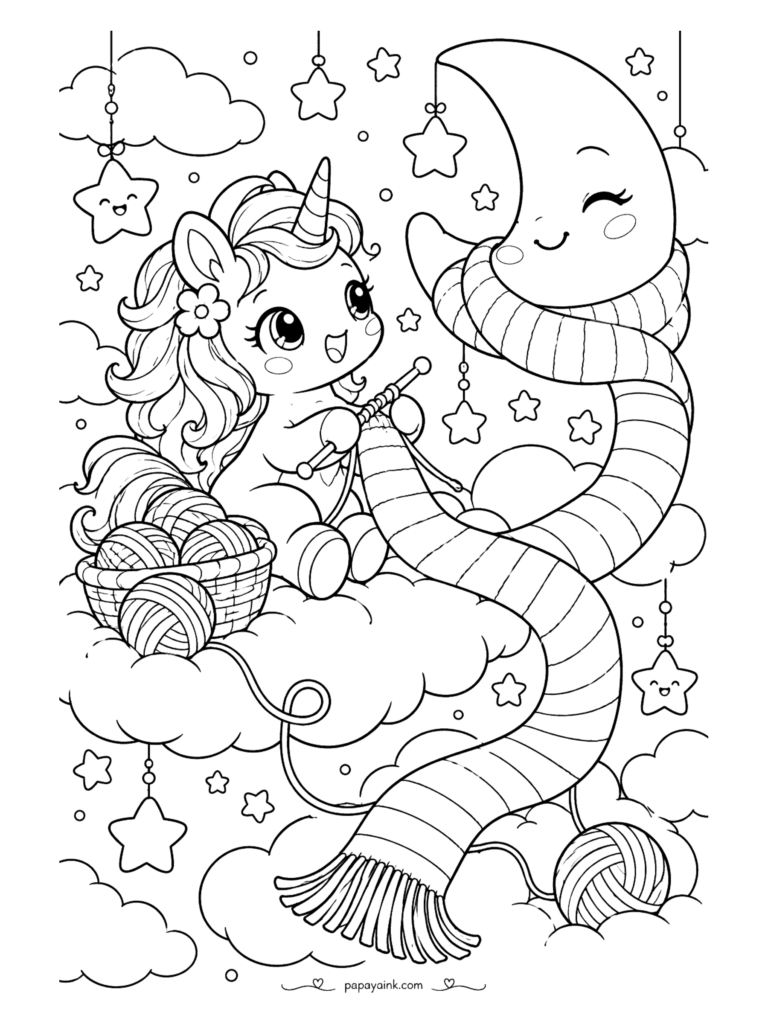
The other big difference is what gets to be kawaii. Ordinary cute art is mostly about animals and babies. Kawaii will give a face to anything - a slice of toast, a cloud, a teacup, the moon, a mushroom, a strawberry. Scary things lose their bite: dinosaurs become round and huggable, ghosts turn into little blushing drops, and even a shark looks ready for a cuddle. Characters wear bows on their ears, carry hearts and stars and float among sparkles, bubbles and tiny flowers. Nothing in a kawaii picture stays threatening, rushed or sad for long; the whole world is soft, safe and a little bit silly.
That is exactly why kawaii coloring pages are so loved by grown-ups. After a long day, a picture with nothing sharp in it is a small, quiet pleasure. Bold, clean outlines and big rounded shapes are easy to fill without stress, so you can color in front of the TV or over a cup of tea and still end up with something you want to keep. Many pages pair a simple main character with a busier background of cushions, gardens, patterns and tiny props, so you can stop at the character for a quick page or build the whole scene for a longer, more absorbing session. And they are just as welcome with a child on a rainy afternoon, at a birthday party table or in a classroom.
Coloring kawaii comes with a few simple tricks. Pastels are the classic palette - baby pink, mint, lavender, butter yellow, sky blue and peach - but kawaii looks just as good in candy-bright colors, and nobody will stop you from giving a cat rainbow fur or a unicorn a mint green mane. Always leave the white sparkles in the eyes untouched; they are what makes a character look alive. Add the blush last and keep it light: a soft pink pencil, a pink marker tested on scrap paper first, or even a little powder blush on a cotton swab. Flat, even fills suit the style best, so alcohol markers and brush pens are a natural choice, while colored pencils let you shade the edges of round shapes so they look plump and squishy. A white gel pen for extra highlights and a glitter pen for stars and sparkles finish the page.
Some kawaii collections here are classic black-and-white outlines, a whole picture waiting for your own palette. Others are color sample sheets, with a finished color version on top and the same outline below, so you can follow the colors or use them only as a starting point. The Show me buttons above the collections let you see everything, only the sets with black-and-white pages, or only the sets with color samples. Color samples print best in color; the outline below prints crisp on any printer.
Finished kawaii pages rarely stay in a drawer. Cut out a character and glue it onto folded cardstock for a birthday note, laminate a strip as a bookmark, stick small cut-outs onto magnet sheet for the fridge, or print on sticker paper, color and trim for a sheet of homemade stickers for planners and journals. A framed kawaii page also makes a sweet, low-cost piece of art for a nursery, a dorm room or a desk.
Every collection can be downloaded as a single PDF book, so one click gives you a whole stack of kawaii cats, unicorns and little animals for the printer. New kawaii collections are added regularly and the existing ones keep growing, so it is worth coming back to see which tiny new friend has moved in.