
Anime Coloring Pages — Free Printable PDFs
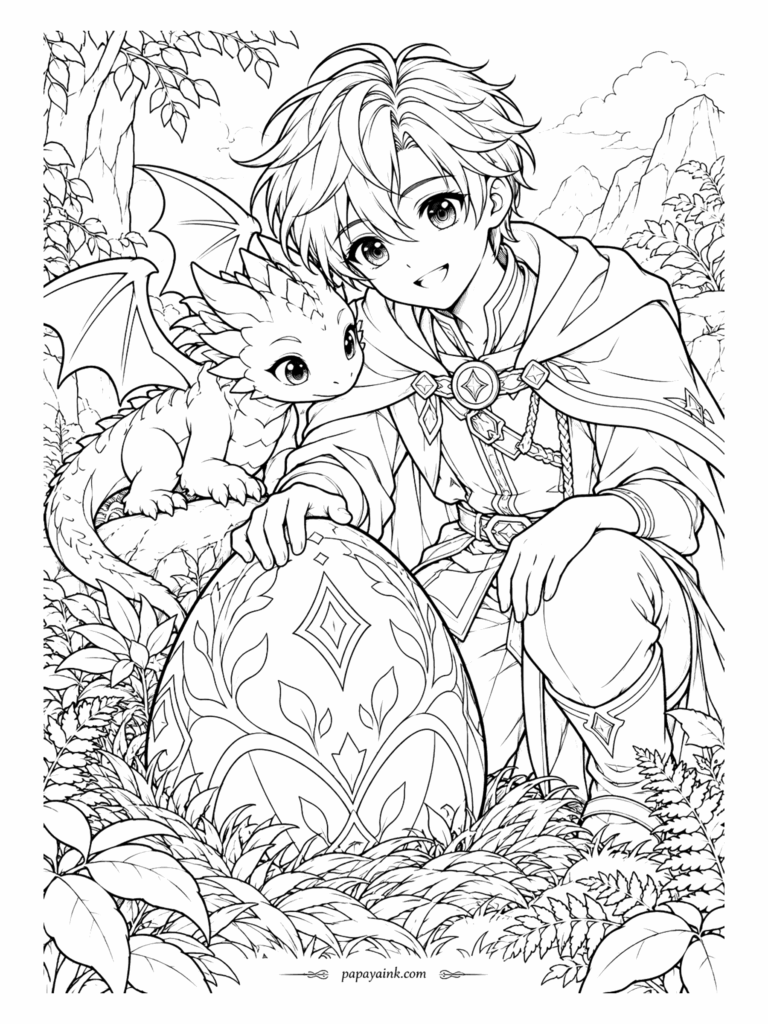
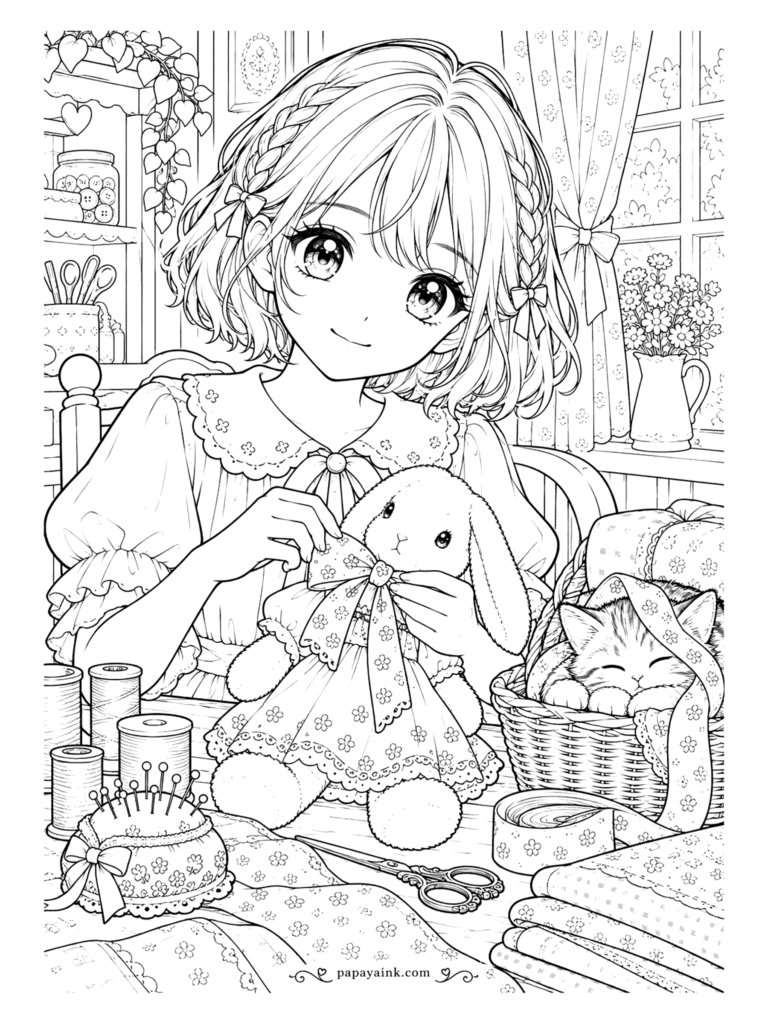
Free printable anime coloring pages in a soft manga style: big shining eyes, flowing hair, ruffles and bows, pets and cozy everyday scenes. Choose a collection below, click any picture to open it as a PDF, and print at home on US Letter or A4. All characters are original drawings made for this site, not copies from any show or game.
Show me
Showing only sets with black & white pages.
Showing only sets with color sample pages.
No black & white sets here yet - showing everything.
No sets with a color sample here yet - showing everything.

About Anime Coloring Pages — Free Printable PDFs
Anime coloring pages look simple at first glance, and that is the trick of the style. A face is a few clean lines, yet the eyes alone can hold more detail than the rest of the page. Knowing where that look came from, and how animators actually color it, makes these sheets far more fun to work on. Here is the short version.
Why are anime eyes so big? The habit goes back to Osamu Tezuka, the artist often called the father of manga. He adored American cartoons with their round-eyed animals and heroines, and he grew up in Takarazuka, a town famous for its all-female musical theater, where heavy stage makeup made the performers' eyes sparkle all the way to the back row. He borrowed both ideas because large eyes show emotion clearly on a small printed page. Shoujo manga artists of the following decades added the stars, reflections and long lashes, and the look stuck.
Eye shape is also a character code. Japanese artists have words for it: tareme are eyes whose outer corners droop, and they read as gentle, sleepy or kind; tsurime tilt upward and signal a sharp, proud or fiery personality. Look for this before you pick colors, because it tells you who you are coloring. When you get to the eyes themselves, leave the white reflections as bare paper, make the iris darkest at the top and let it fade toward the bottom. That single gradient does most of the work.
Then there is the hair. Manga is printed in black and white, so on the page hair is solid ink, white paper or a gray dot pattern. When stories moved to color covers and to television, artists needed a fast way to tell a large cast apart, and pink, blue, green and lilac hair became normal. Nobody in the story finds it strange, and you do not have to either: any color is correct. For the glossy look, leave a band of light across the crown of the head. In Japan this ring of shine is called tenshi no wa, "the angel's ring." Shade darker toward the tips and under the bangs, and the hair will look as if it came off the screen.
If you want your page to look like a frame from a show, skip smooth blending. For decades anime was painted by hand on clear plastic sheets called cels, in flat color with a single darker tone for shadow, and the edge between light and shadow was kept crisp. You can do the same with two pencils or two markers per area: one base color, one shadow, a hard line between them. Put shadows under the bangs, under the chin, inside sleeves and along one side of each fold. Add a touch of pink on the cheeks and you are done.
You will notice that some characters are drawn tall and graceful while others are tiny, with a head nearly as big as the body. The small ones are chibi, a style that squeezes a character down to two or three heads tall so that everything reads as cute, or kawaii. Chibi pages have large open shapes and are forgiving for beginners and for chunky markers. Full-proportion pages have finer hair, lace and backgrounds, and they reward sharp pencils and patience.
Backgrounds matter less than you might think. Shoujo manga has a long tradition of filling empty space with flowers, bubbles and sparkles that show a mood rather than a place. Treat them the same way: keep them lighter and softer than the character, so the face stays the brightest, most finished spot on the sheet.
A few practical notes. Colored pencils work well on ordinary printer paper. Alcohol markers, the tool many manga artists use for color illustrations, give the smoothest flat color, but they soak through thin paper, so print on cardstock or marker paper and slip a spare sheet underneath. If you print on an inkjet, give the page a few minutes to dry and test your markers or gel pens on a corner first. A white gel pen is worth having for putting highlights back into the eyes and hair.
Every page in this section is free to print for personal use, classrooms, libraries and coloring groups. Some collections include sheets with a colored sample on the same page, which helps if you like to start from a finished palette; the rest are plain black and white, ready for your own ideas. New collections are added regularly, so check back when you run out of pages.