Home›Free Printable Coloring Pages
By: Papaya Ink Team · Last updated: October 17, 2026
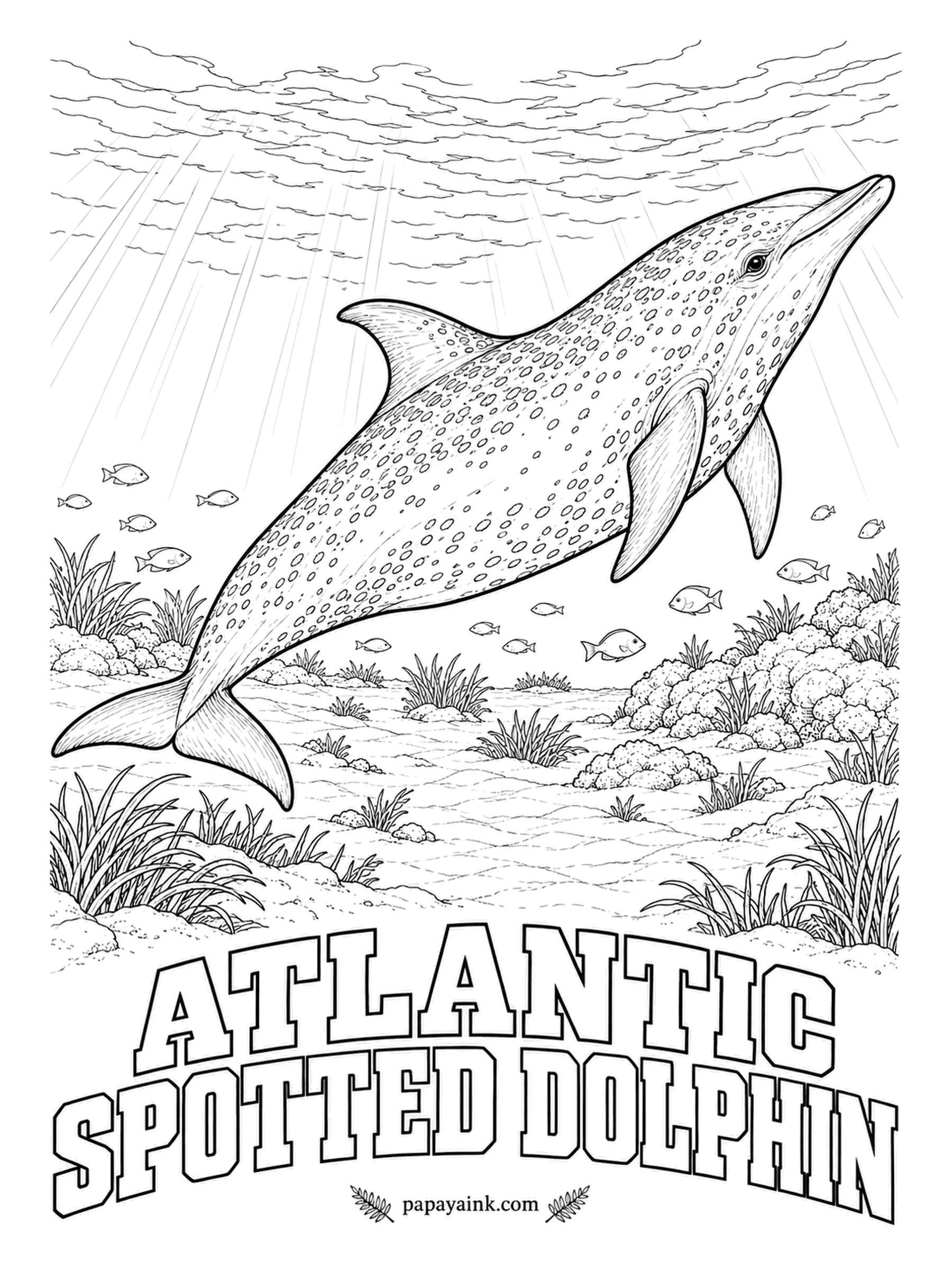
A whale is a mammal that went back to the sea. Its closest living relative on land is the hippo, it breathes air through a blowhole on top of its head, and a newborn calf drinks milk underwater. Dolphins and porpoises belong to the same family tree, which is why a river dolphin and a blue whale share a page here. Each coloring page is a portrait of a real species in its real habitat, with the name lettered along the bottom so you know exactly who you are looking at, from the giants that strain krill through baleen to the toothed hunters that find squid by sound in total darkness.
Click any picture and the PDF opens in a new tab, ready to print or save. Every sheet is US Letter and fits A4 without scaling. The line art is clean enough for crayons, and detailed enough that pencils and fine markers have plenty to do in the water, the kelp and the rock.
Whales are not all gray, and that is the fun of coloring them. Many have a dark back and a pale belly, so paint the top in deep slate or blue-black and let the underside go cream. The patterns are the part worth getting right: the scars, spots, eye patches and side stripes in these drawings are the marks scientists use to tell species apart, and each caption tells you what the real animal looks like. A soft blue wash across the empty water behind the animal makes even a quick job look finished.
Show me
Showing only black & white pages.
Showing only pages with a color sample. 80 other pages are hidden.
No black & white pages here yet – showing everything.
No pages with a color sample here yet – showing everything.




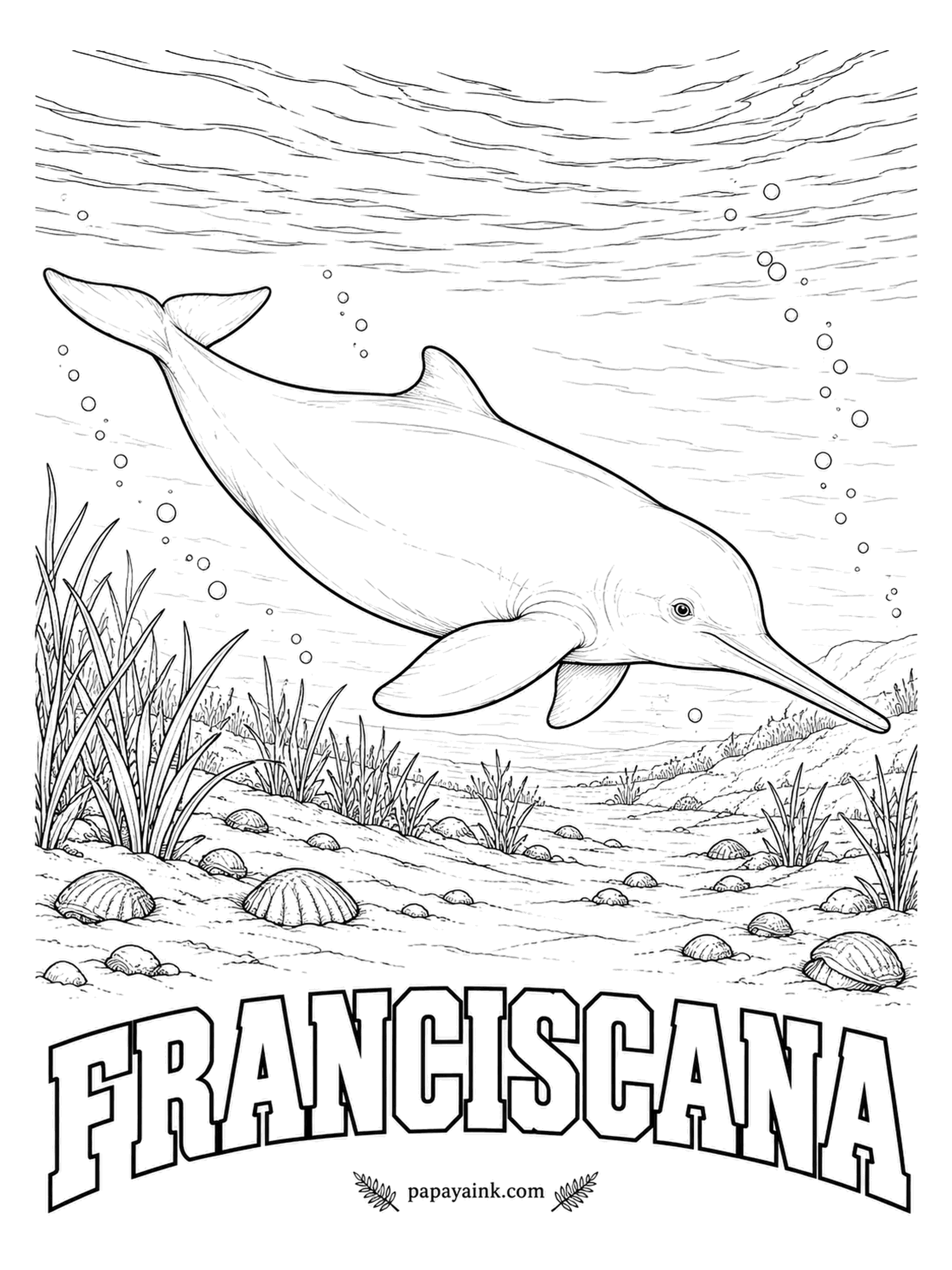


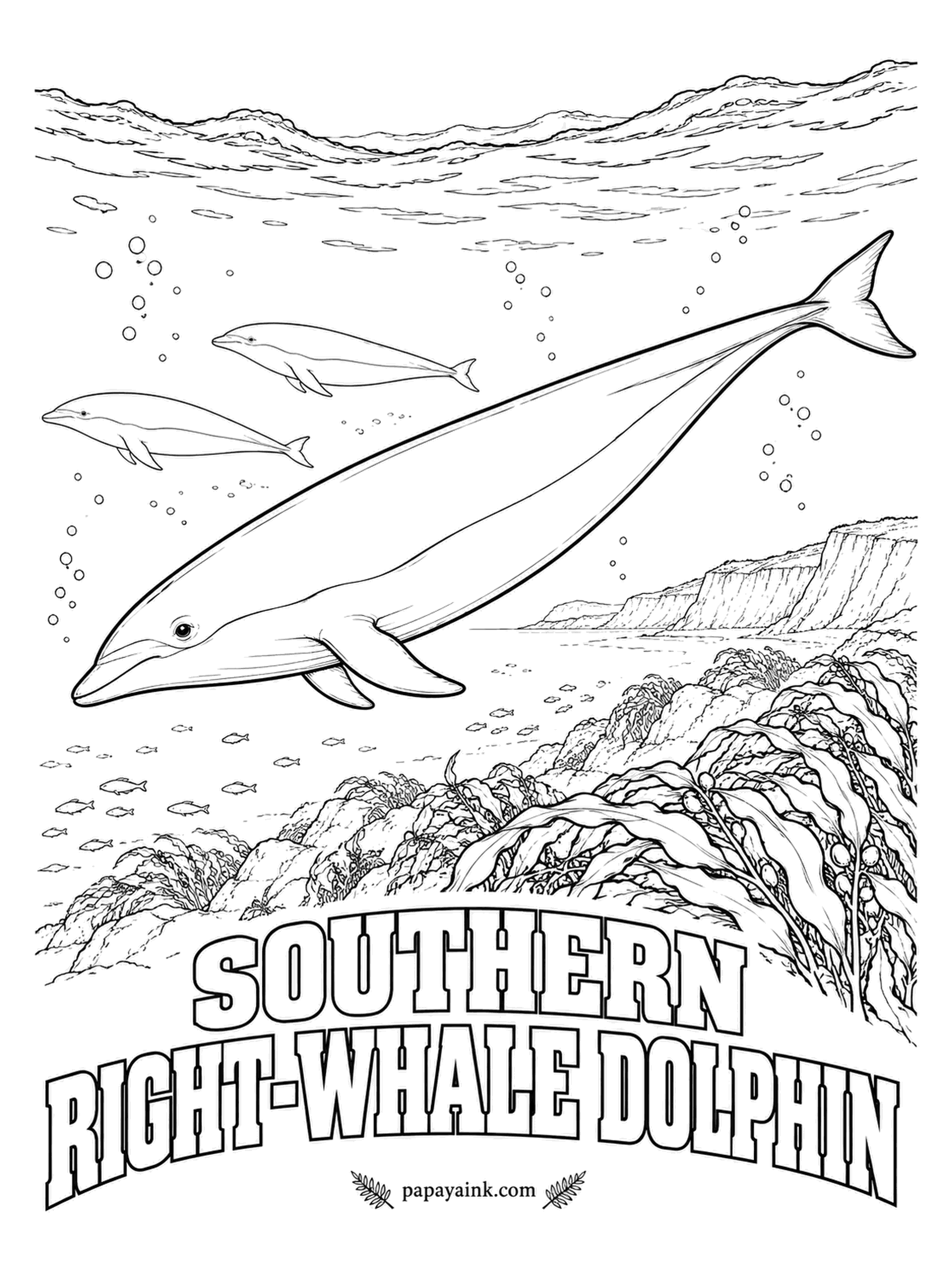


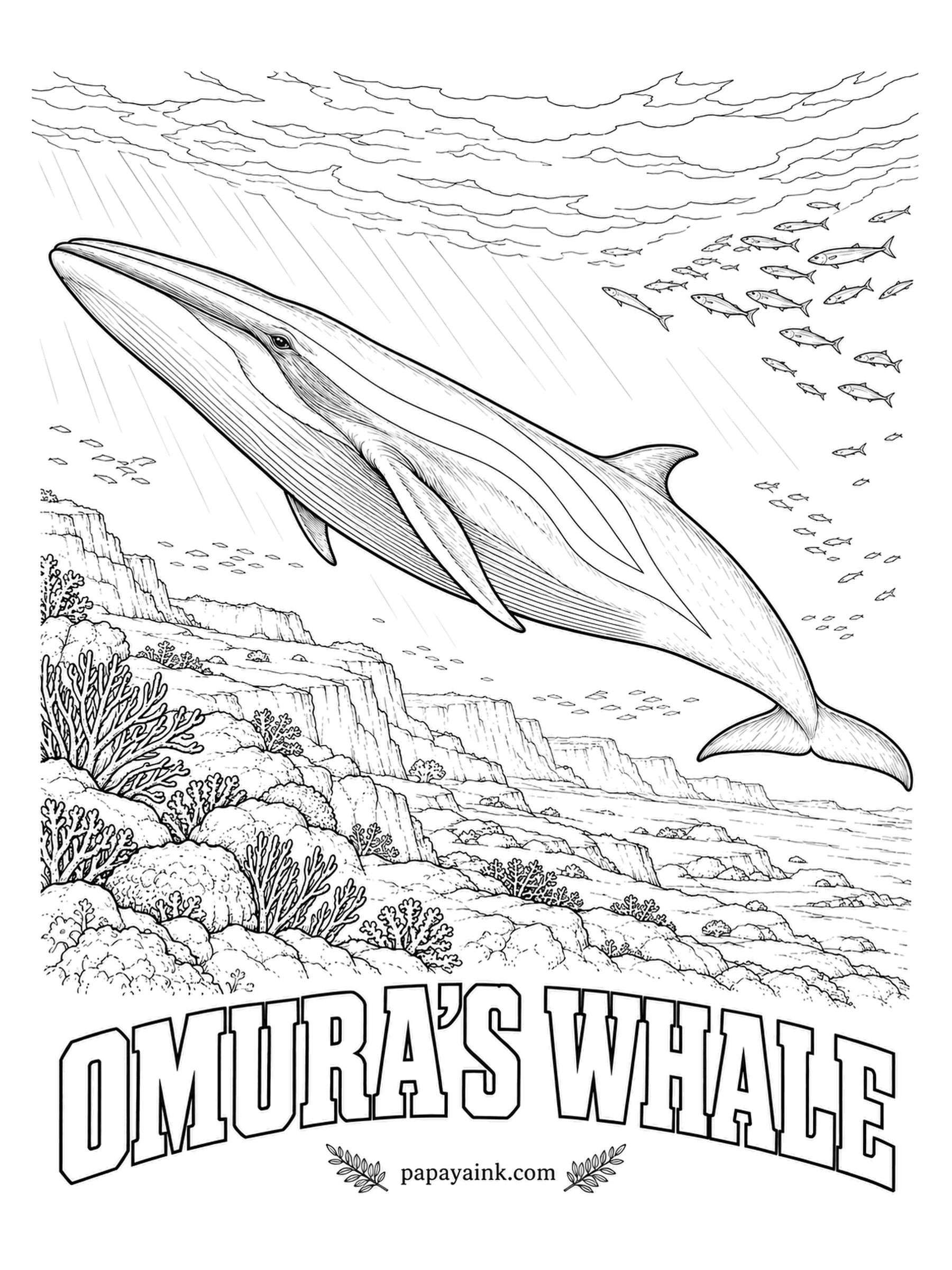


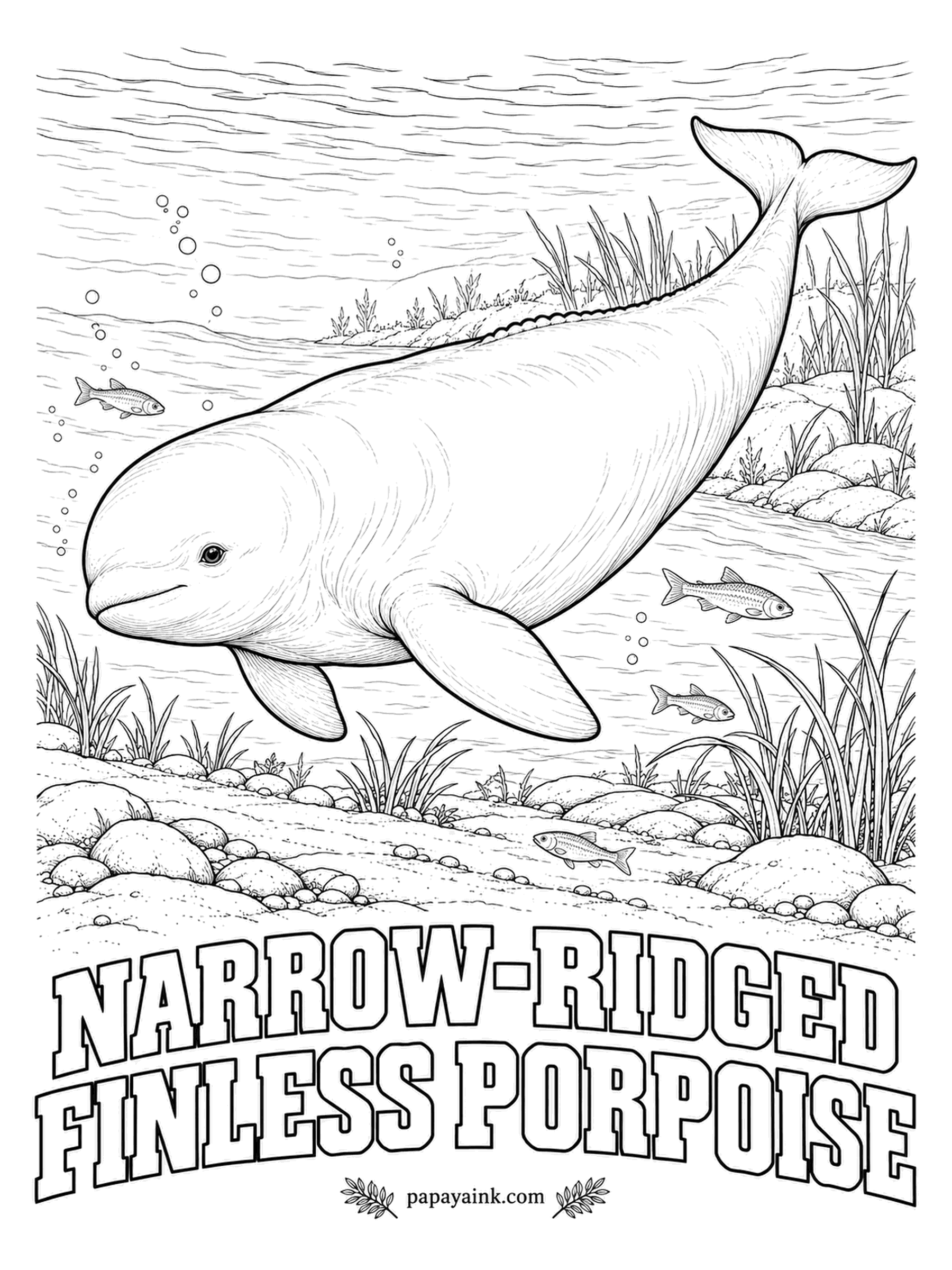


Fun Things to Make with These Coloring Pages
- Scale chart – color several whales and dolphins, cut them out, and tape them on a wall in order of real size, a human silhouette drawn beside them for comparison. The blue whale alone will need the longest wall you have.
- Ocean window – color the whale, cut around it, and glue it inside a shoebox lid painted deep blue, with shredded green paper for kelp and a layer of cling film across the front for the water.
- Spot the species – cover the name at the bottom of a finished page with a strip of paper and let friends guess the animal from the pattern alone, then lift the strip. Orcas are easy; fin whales fool everyone.
- Depth map – tape finished pages down a stairwell or hallway from surface swimmers at the top to deep divers at the bottom, with a sign at each level saying how deep that species goes.
- Migration string – pin a finished gray whale or humpback to a map of the Pacific and run a length of yarn along its migration route from the breeding lagoons to the feeding grounds.
- Glow water – color the whale by day, then paint the empty water around it with glow-in-the-dark paint. Hang it in a child's room and switch off the light for a night-ocean effect.
- Mobile – cut out five or six finished dolphins and porpoises, punch a hole in each dorsal fin, and hang them from a branch or wire hanger at different heights so they turn in the air like a pod.
- Fact card – fold a sheet of card in half, glue the colored whale on the front and write three facts from the caption inside. A stack of these makes a homemade field guide to the ocean.