Home›Free Printable Animal Coloring Pages
By: Papaya Ink Team · Last updated: October 14, 2026
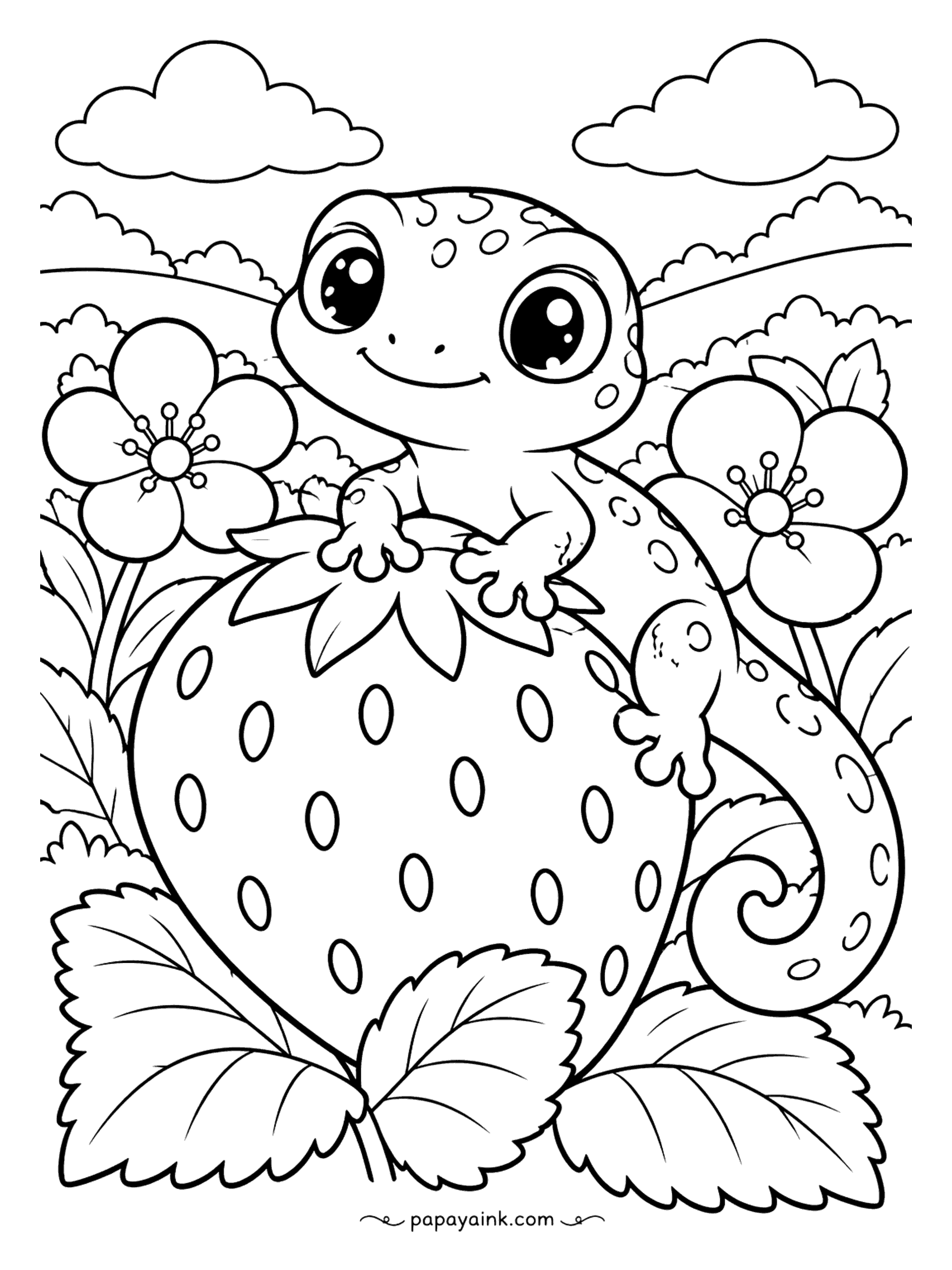
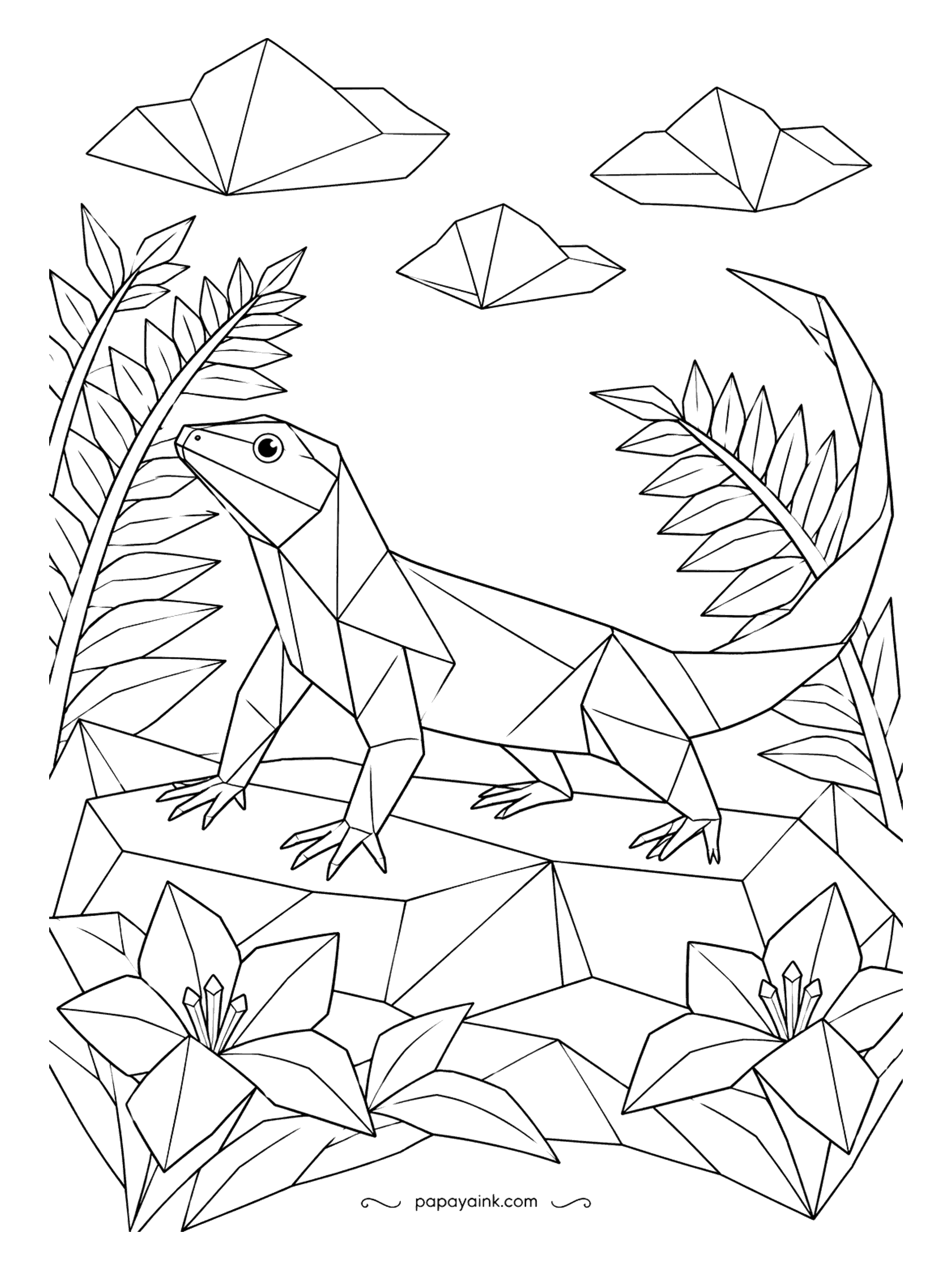
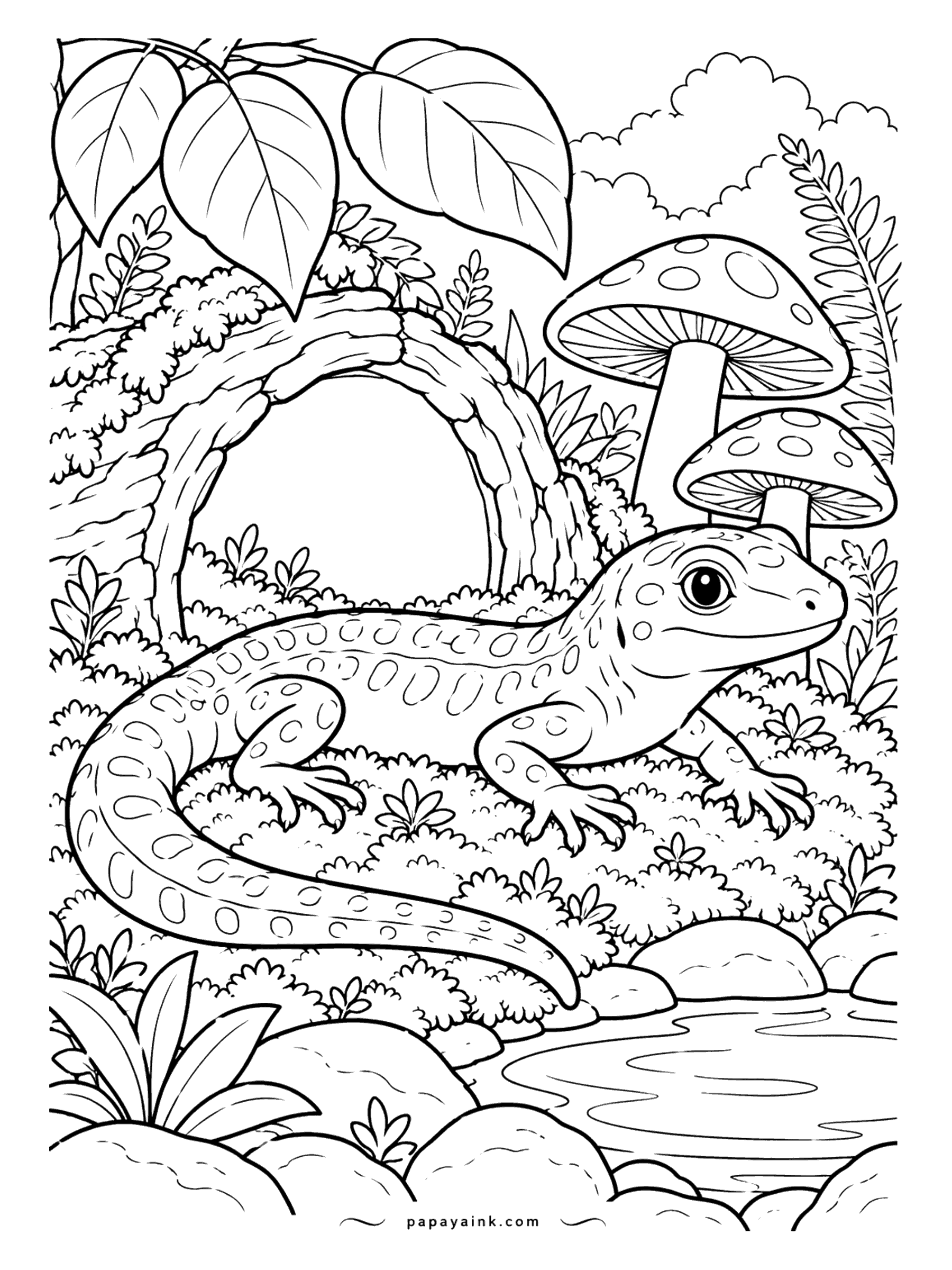
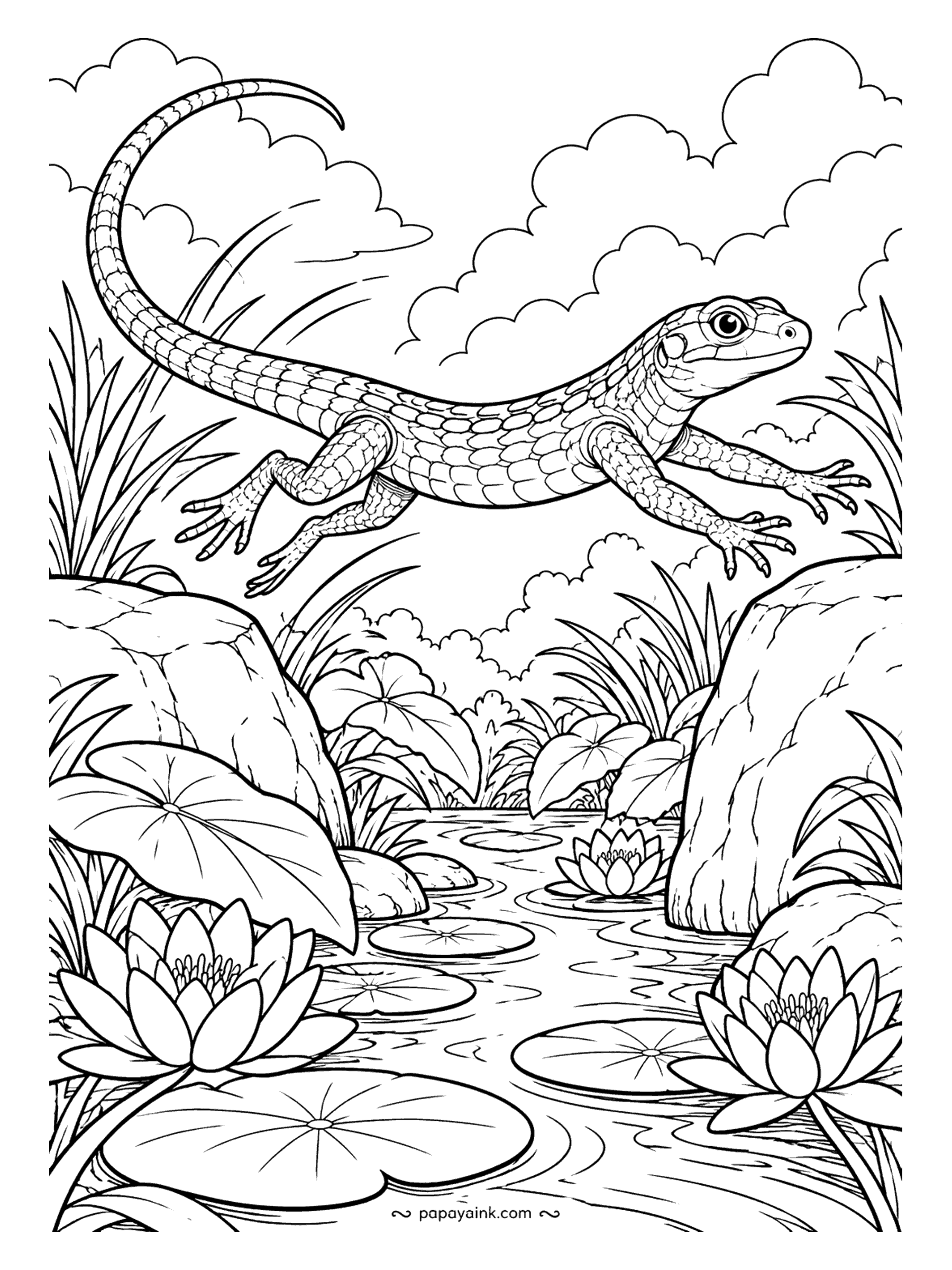
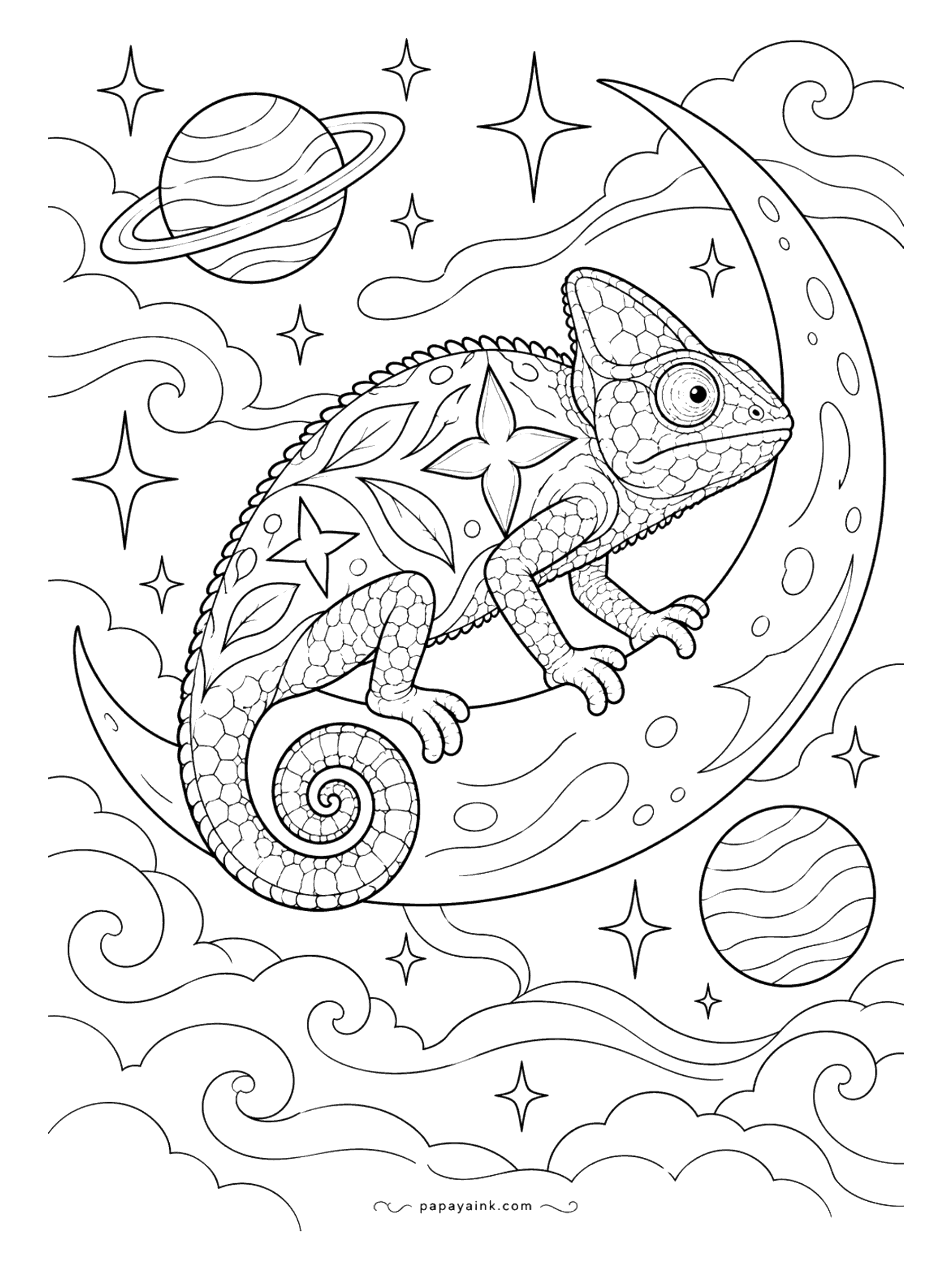
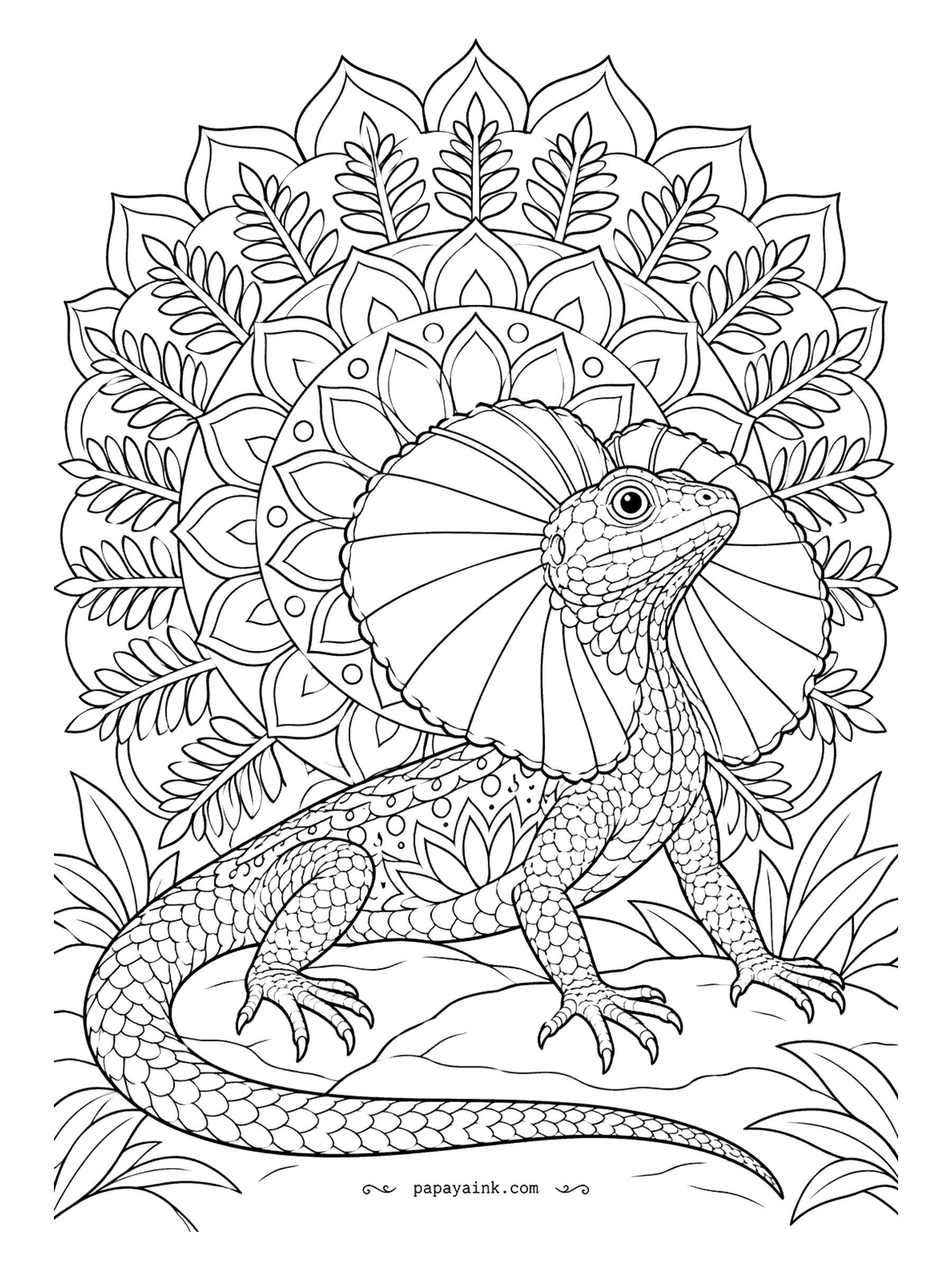
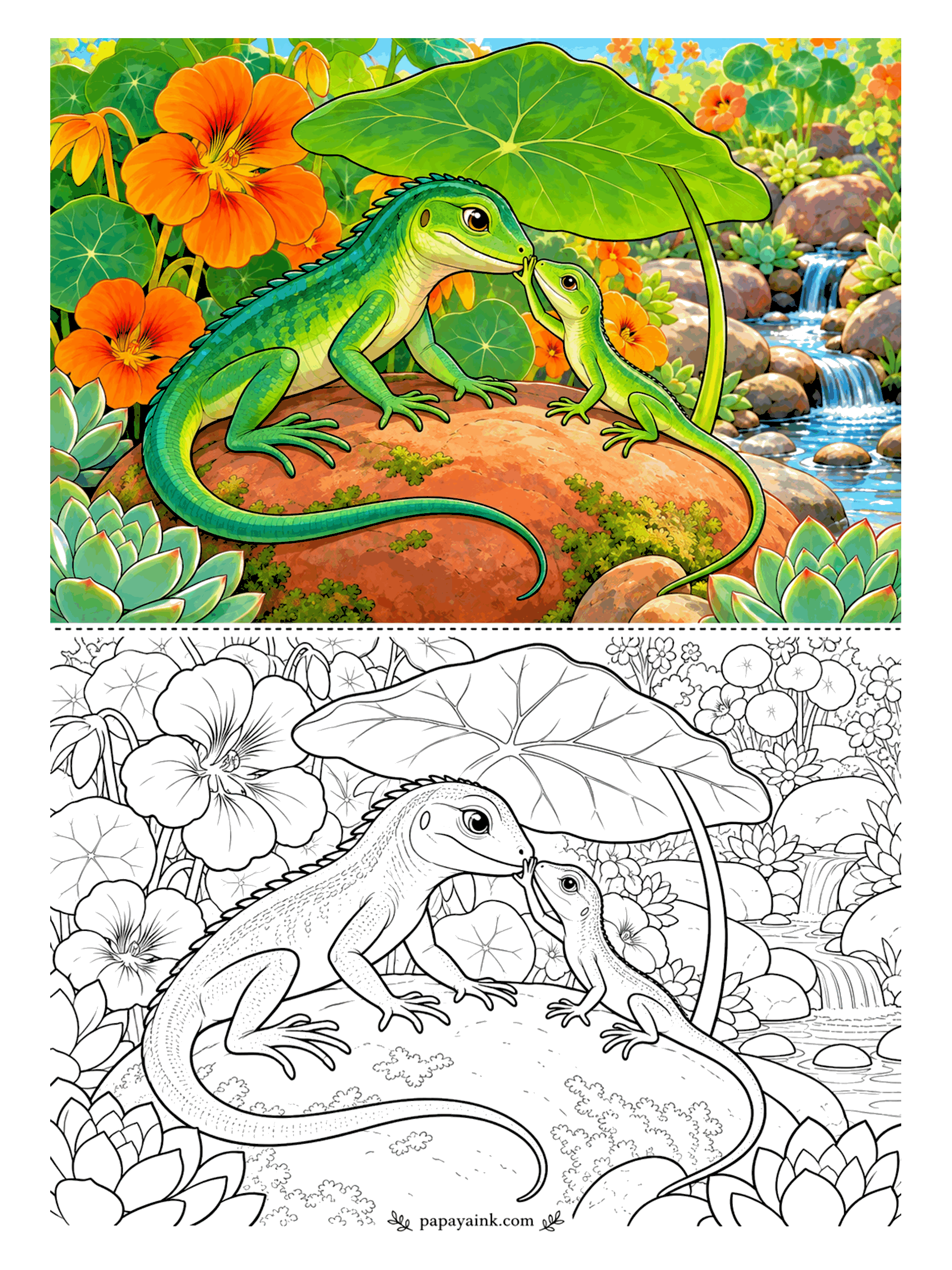
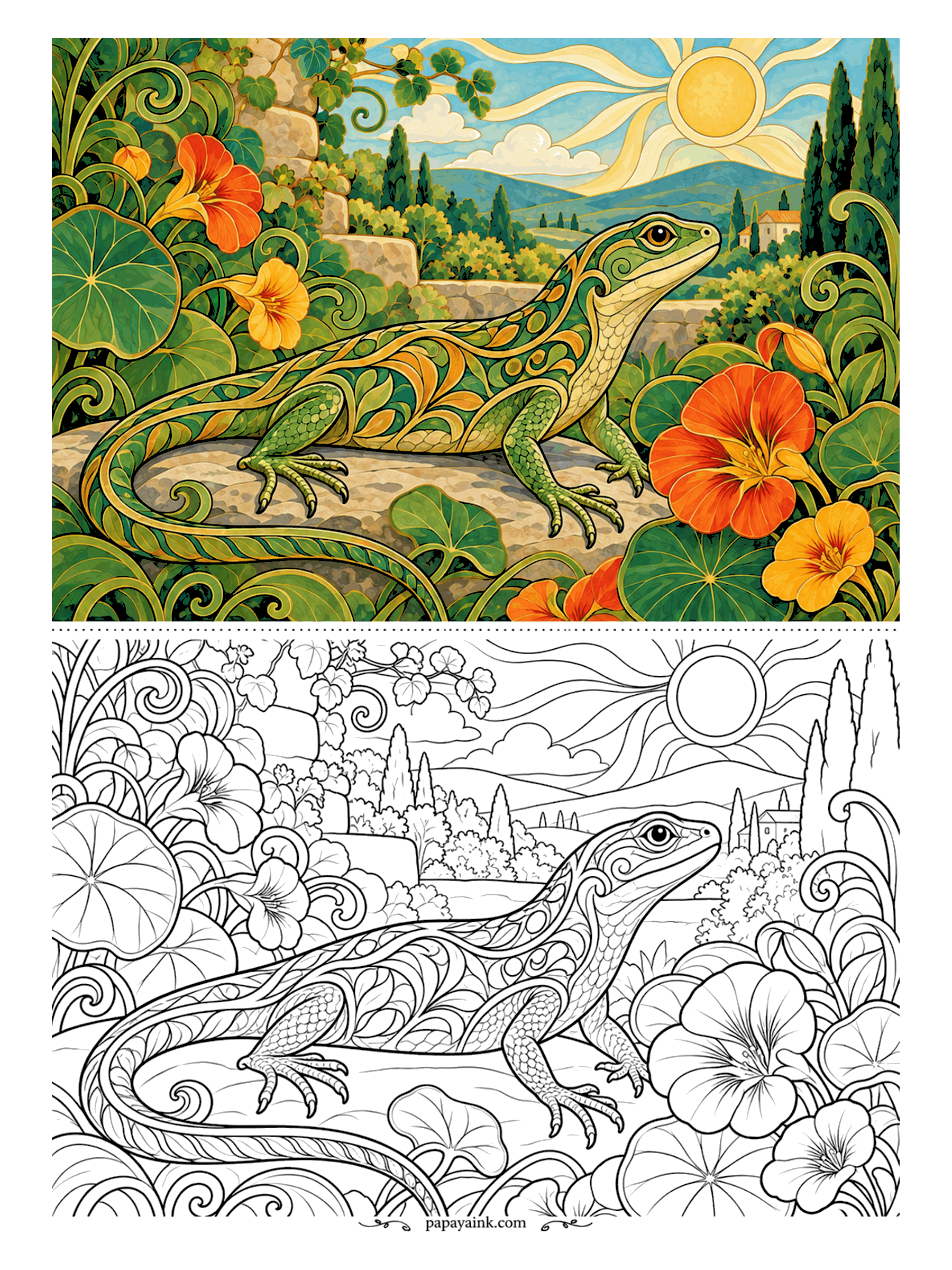
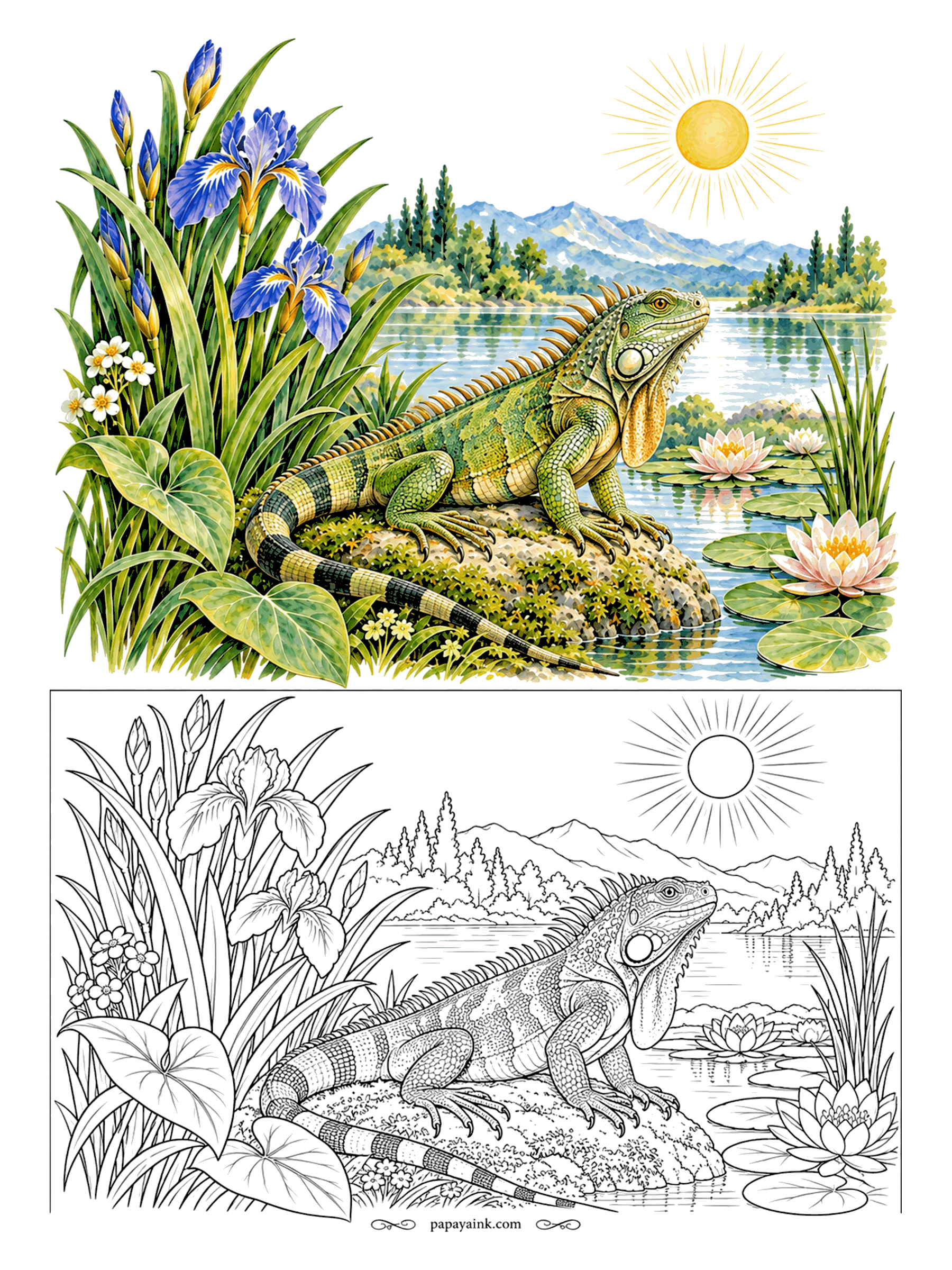
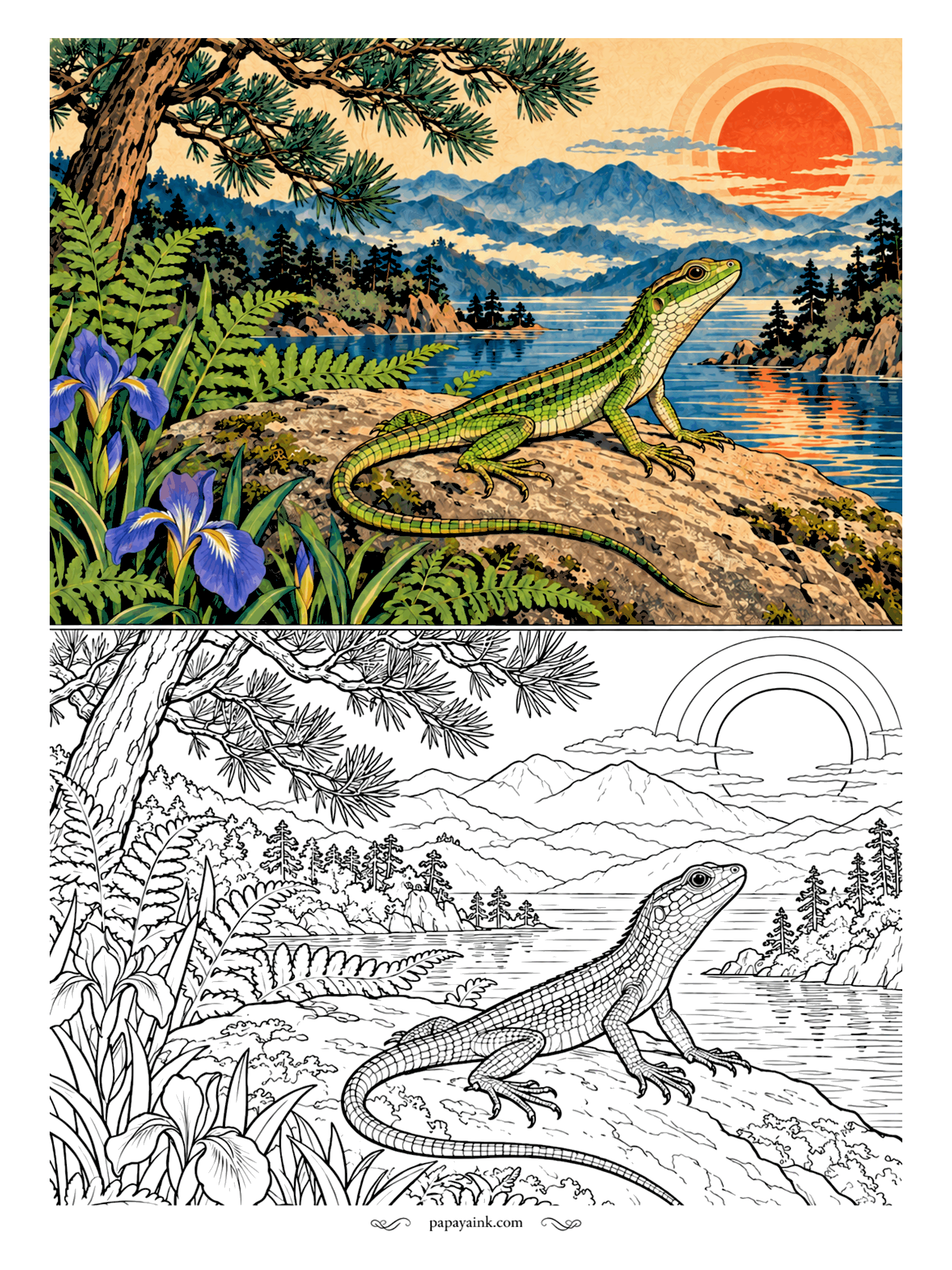
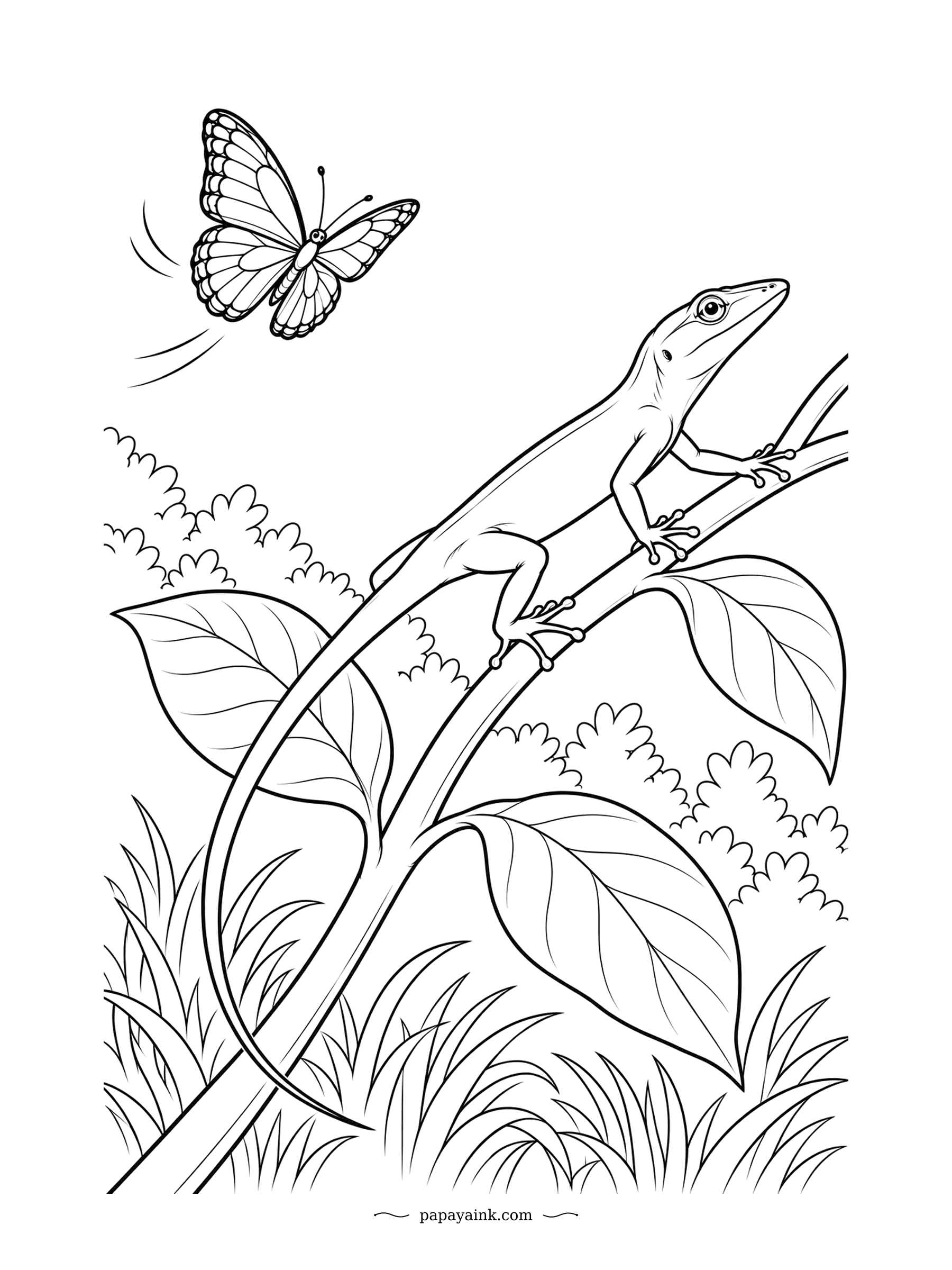
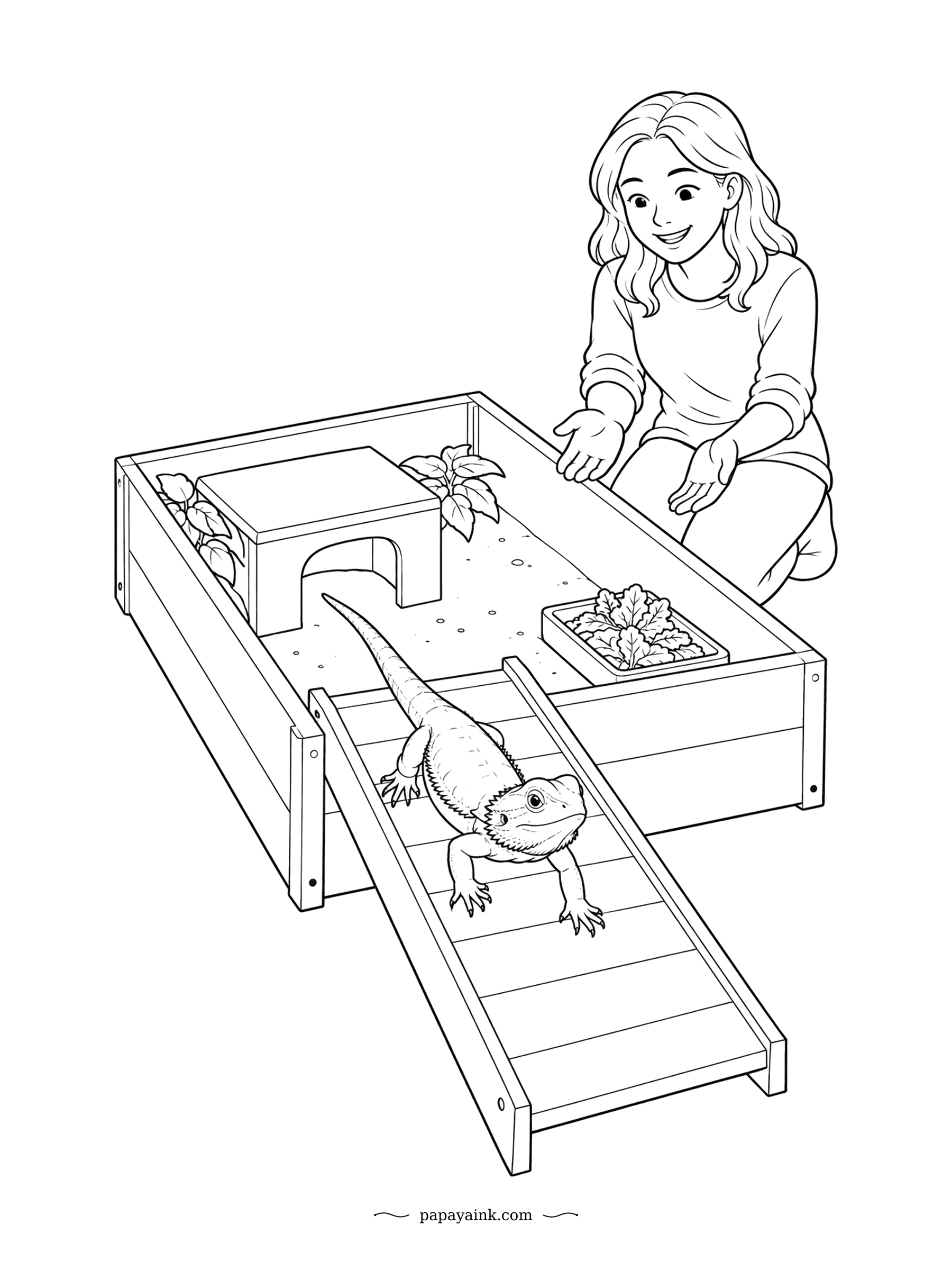
Lizards are the one animal where the pattern is already drawn for you. Scales, spines, a beaded throat, a tail that coils like a spring: these lizard coloring pages lean on that gift and send it through a different art style on every sheet – a bearded dragon drawn like a naturalist's plate, a chameleon in stained glass, an iguana built from flat polygons, a gecko stitched together like a quilt. Every lizard is an original Papaya Ink drawing. Most sheets are meant for an adult with a full pencil case, with a couple of rounder, simpler ones for a child at the same table.
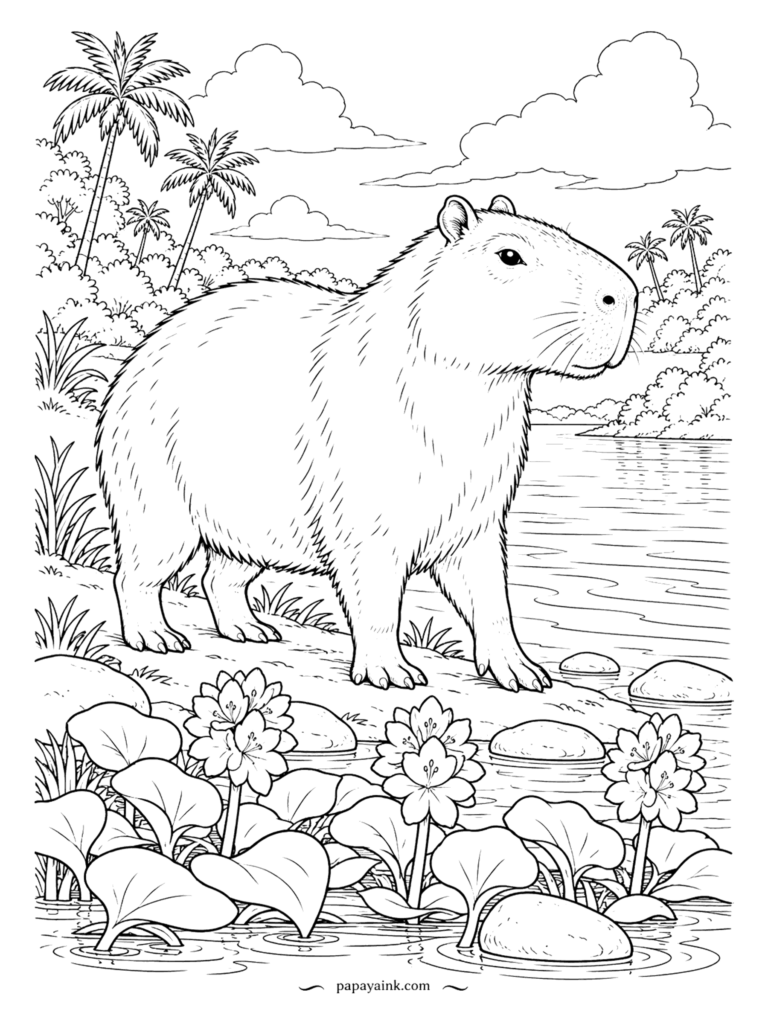
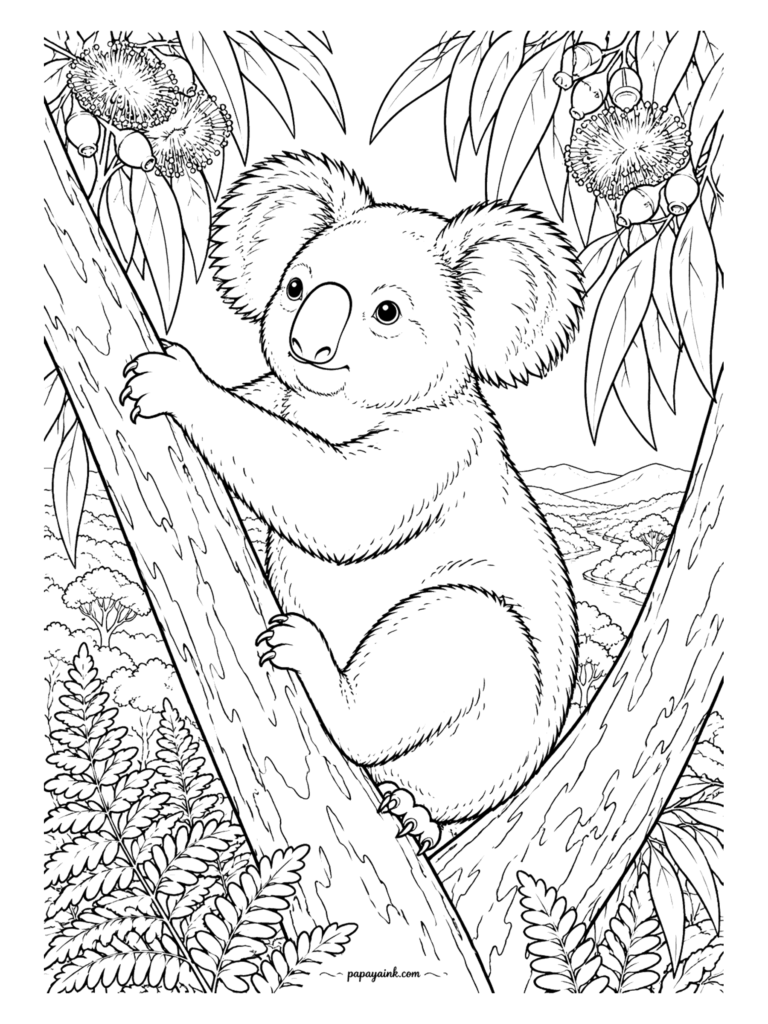
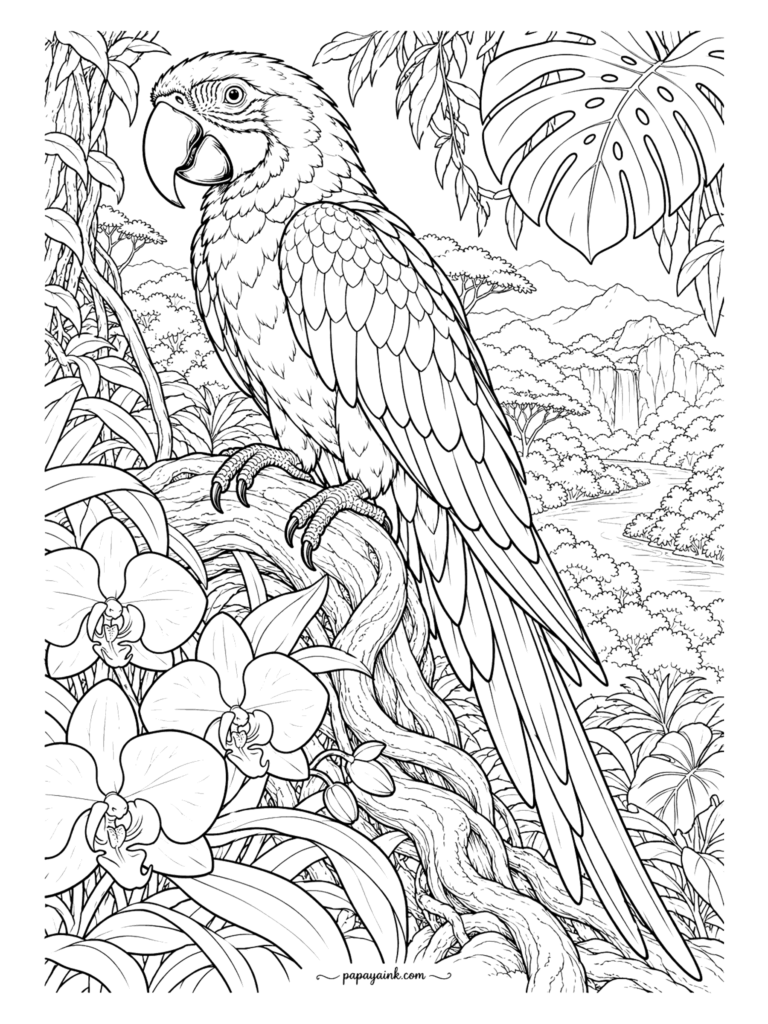
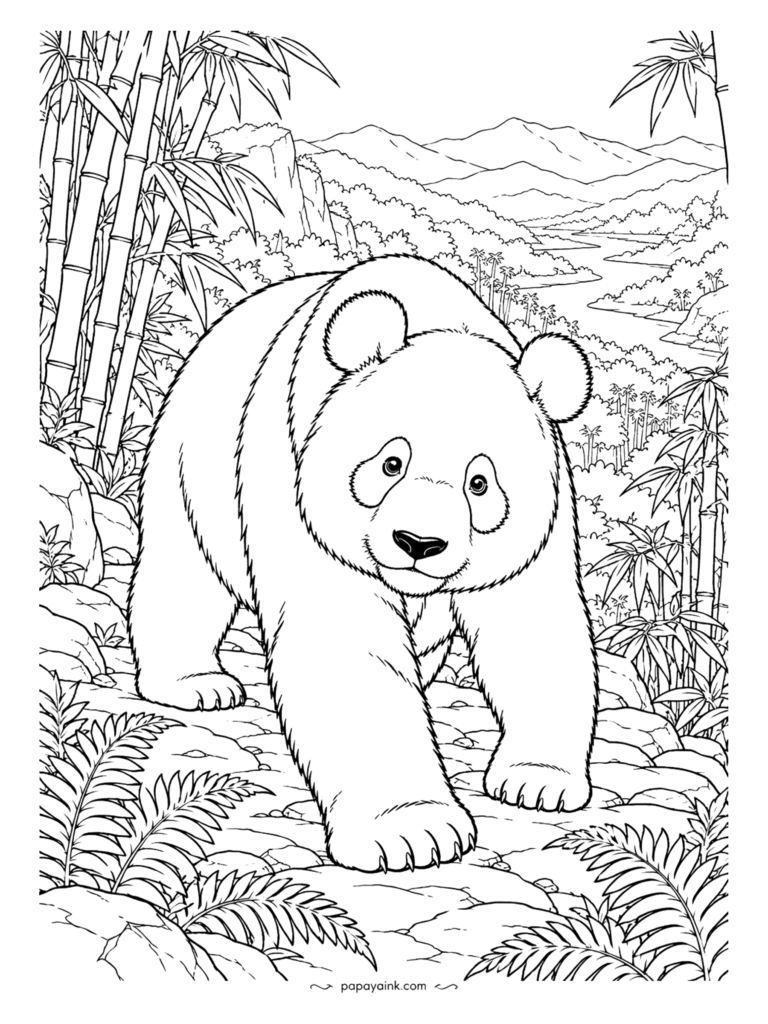
Click any picture and the PDF opens in a new tab, sized for US Letter and fitting A4 just as well, or take the whole set as one PDF book with the button just below. One tip before you start: lizards do not have to be green. Browns and greys are the honest choice, but a crested gecko goes orange, a panther chameleon runs through half the paint box, and a dune at dusk is pink.
Show me
Showing only black & white pages. 5 other pages are hidden.
Showing only pages with a color sample. 80 other pages are hidden.
No black & white pages here yet – showing everything.
No pages with a color sample here yet – showing everything.










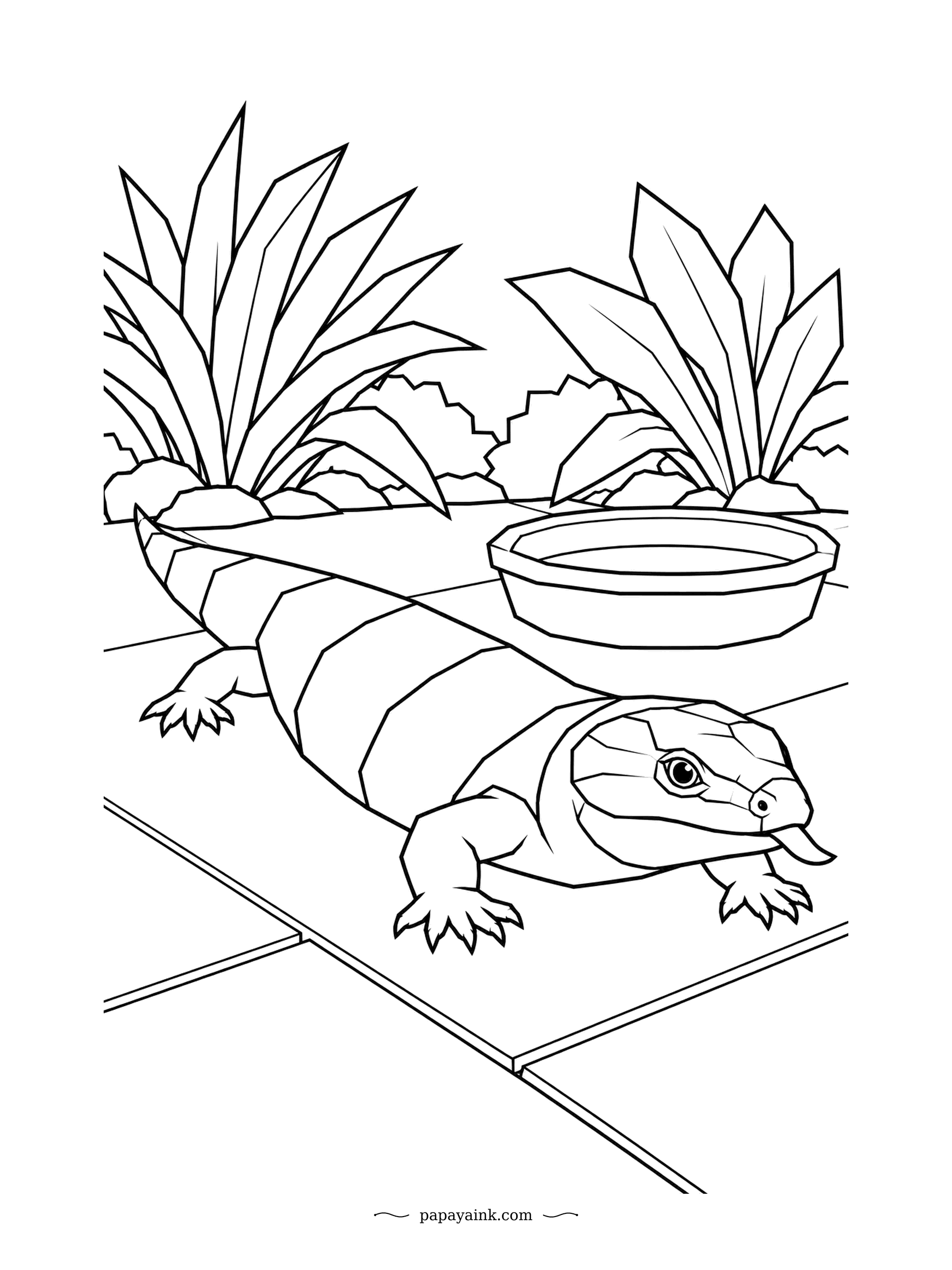

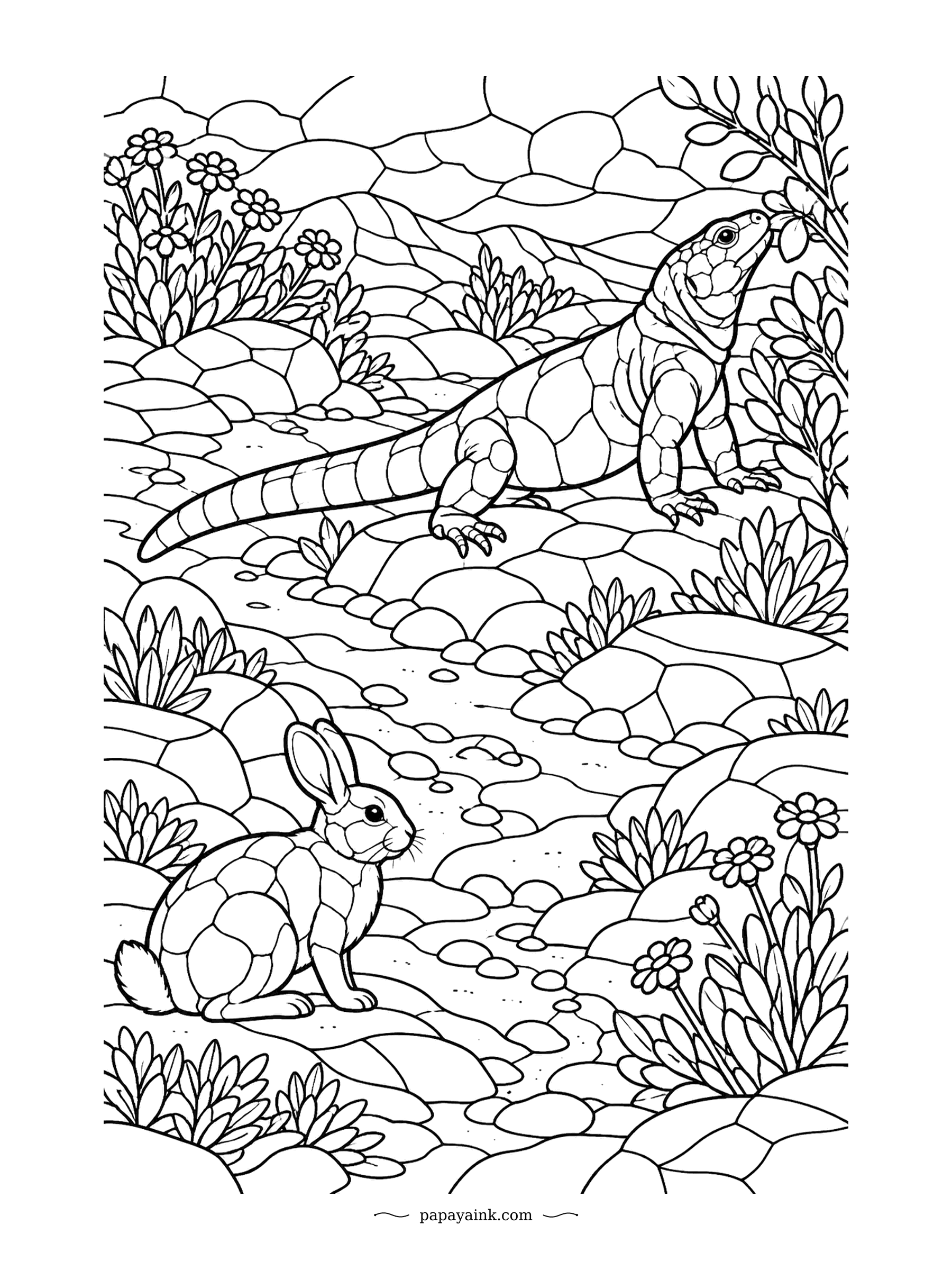


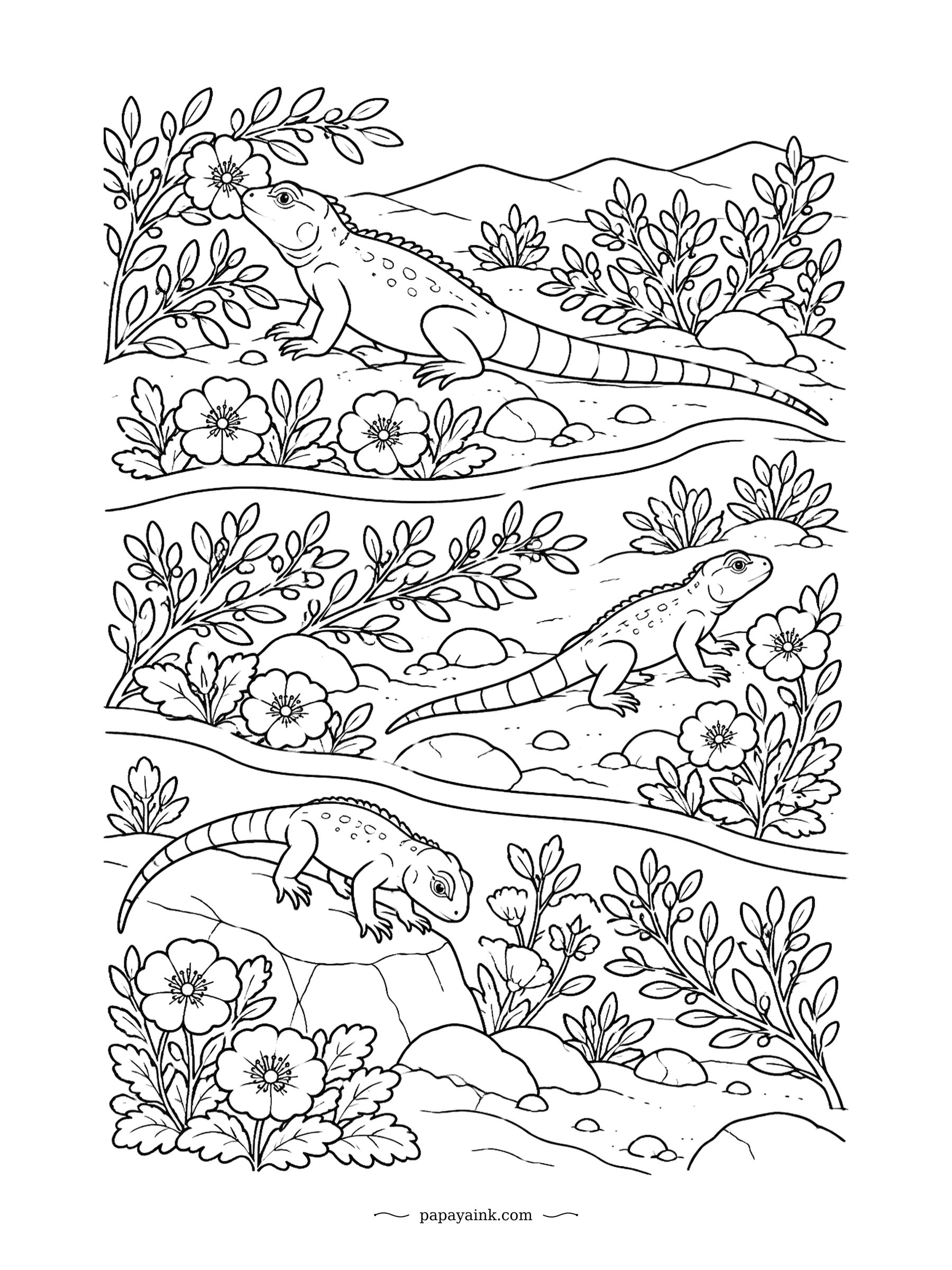


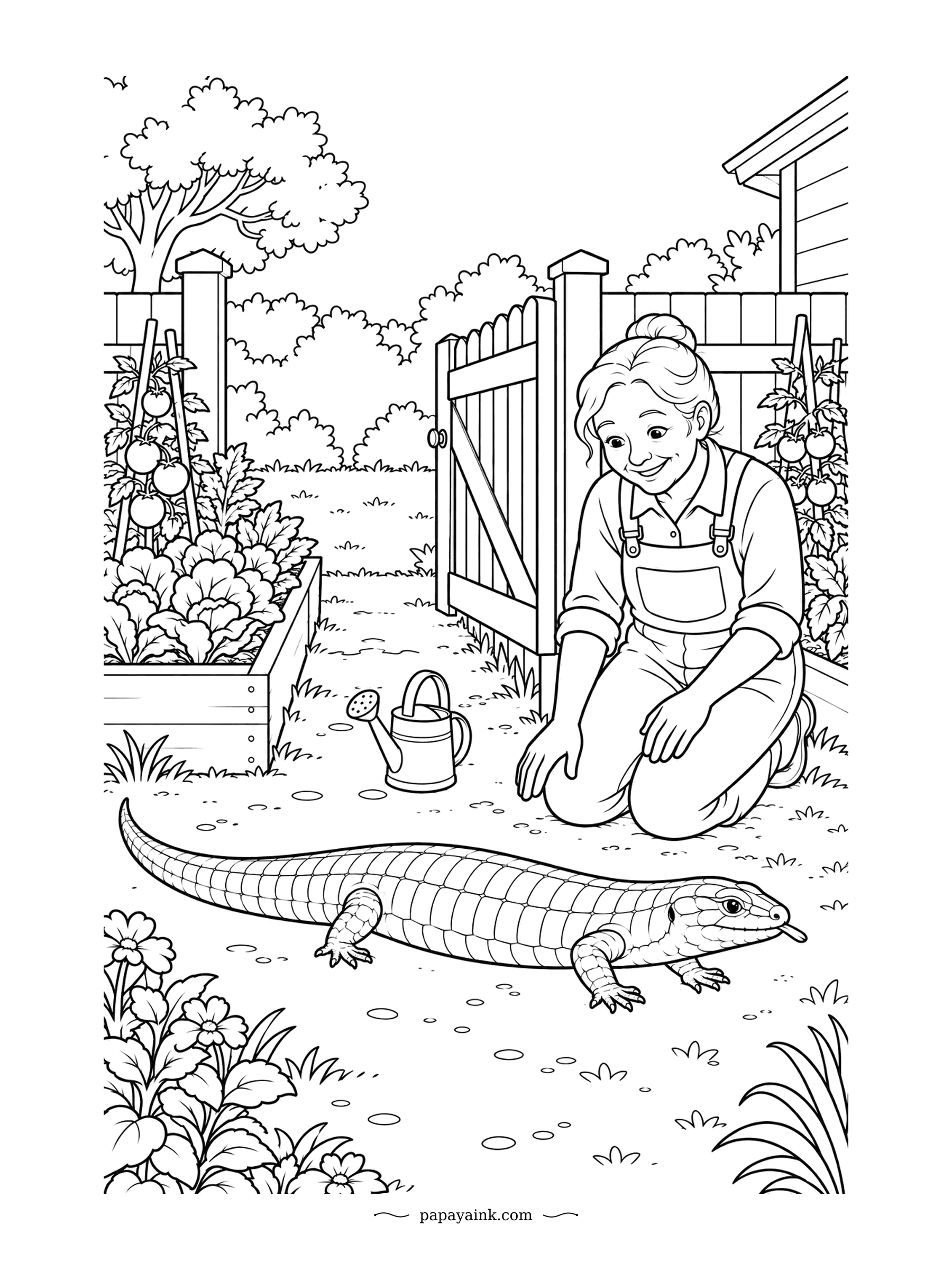
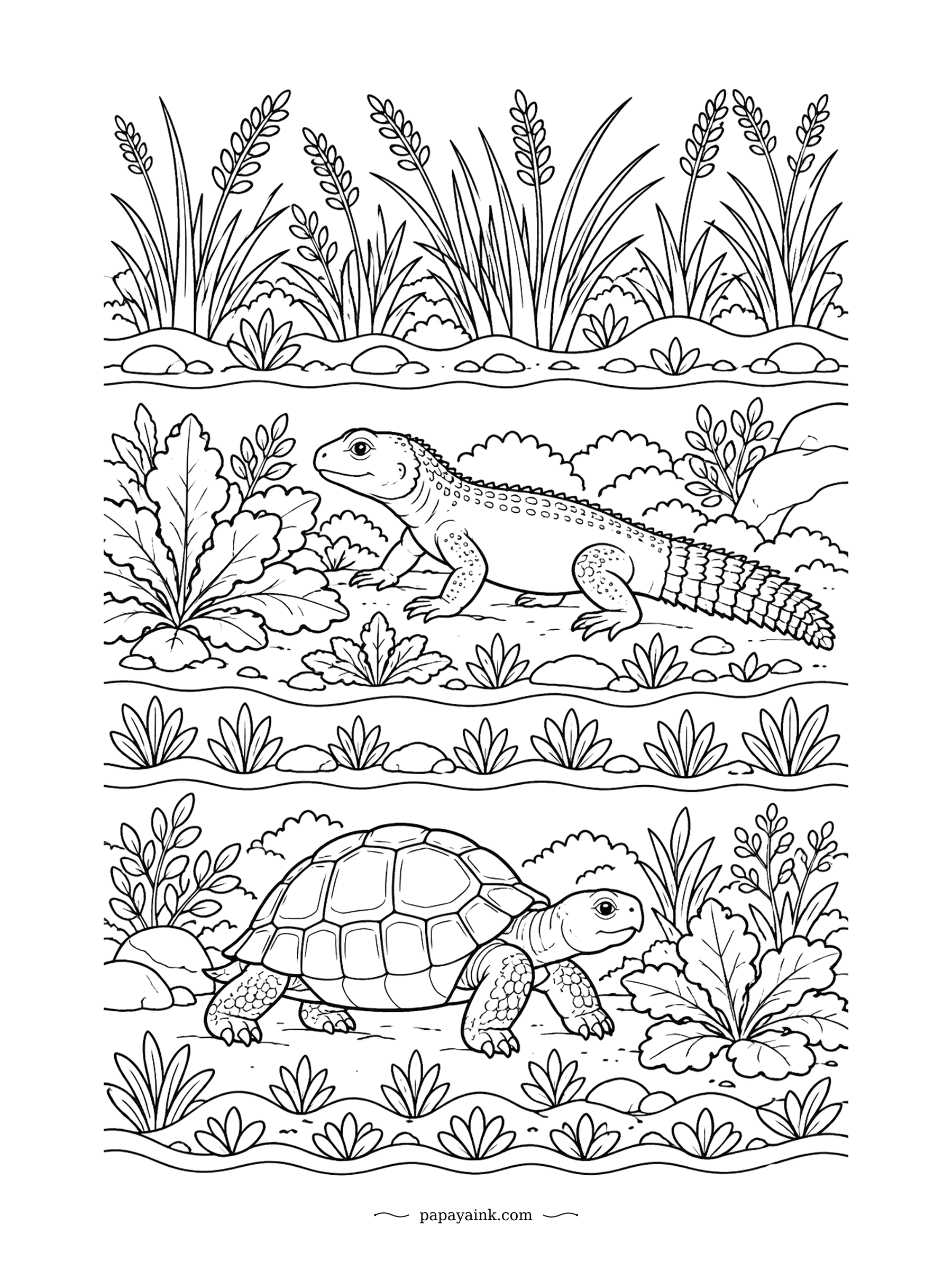


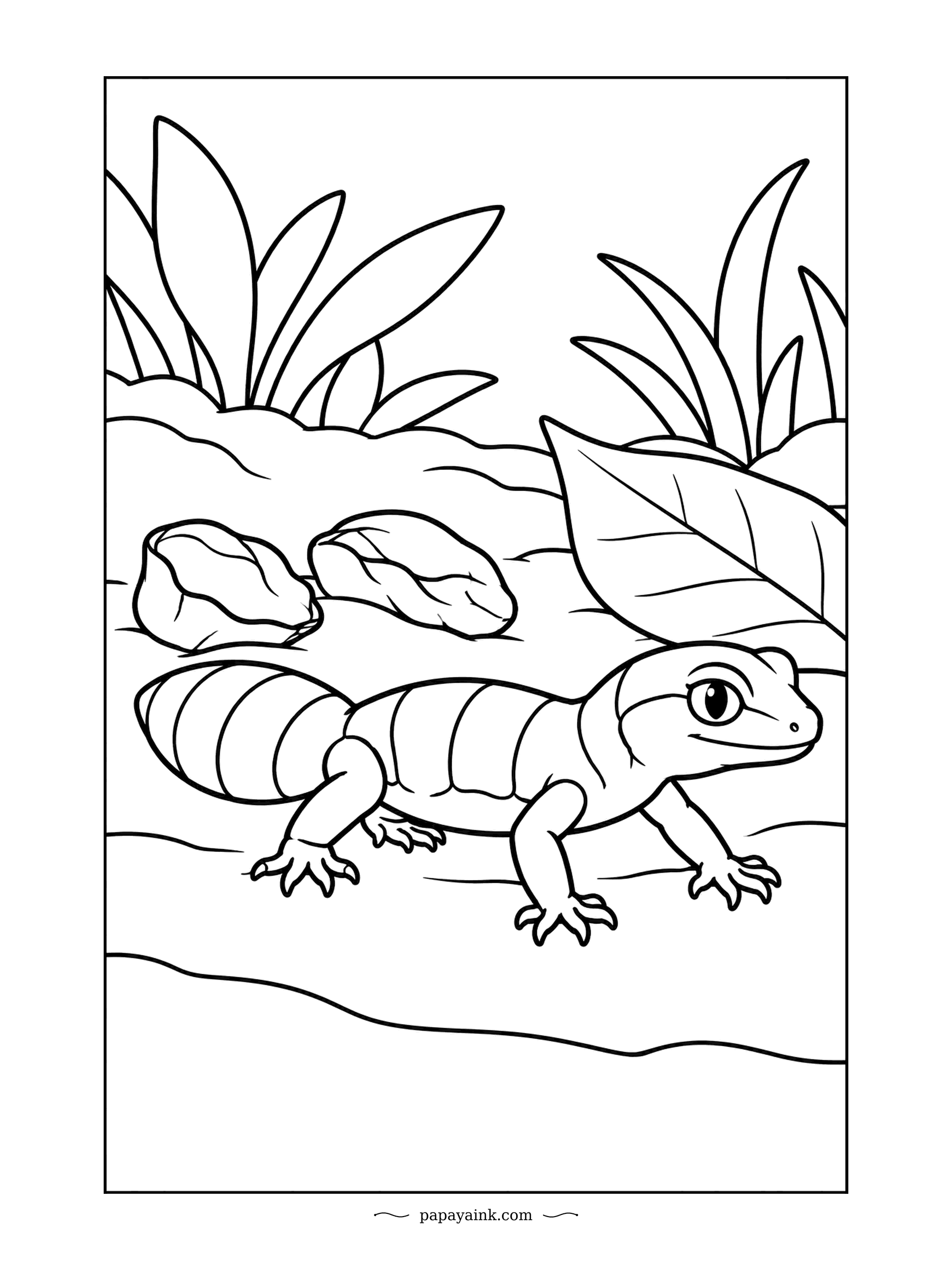

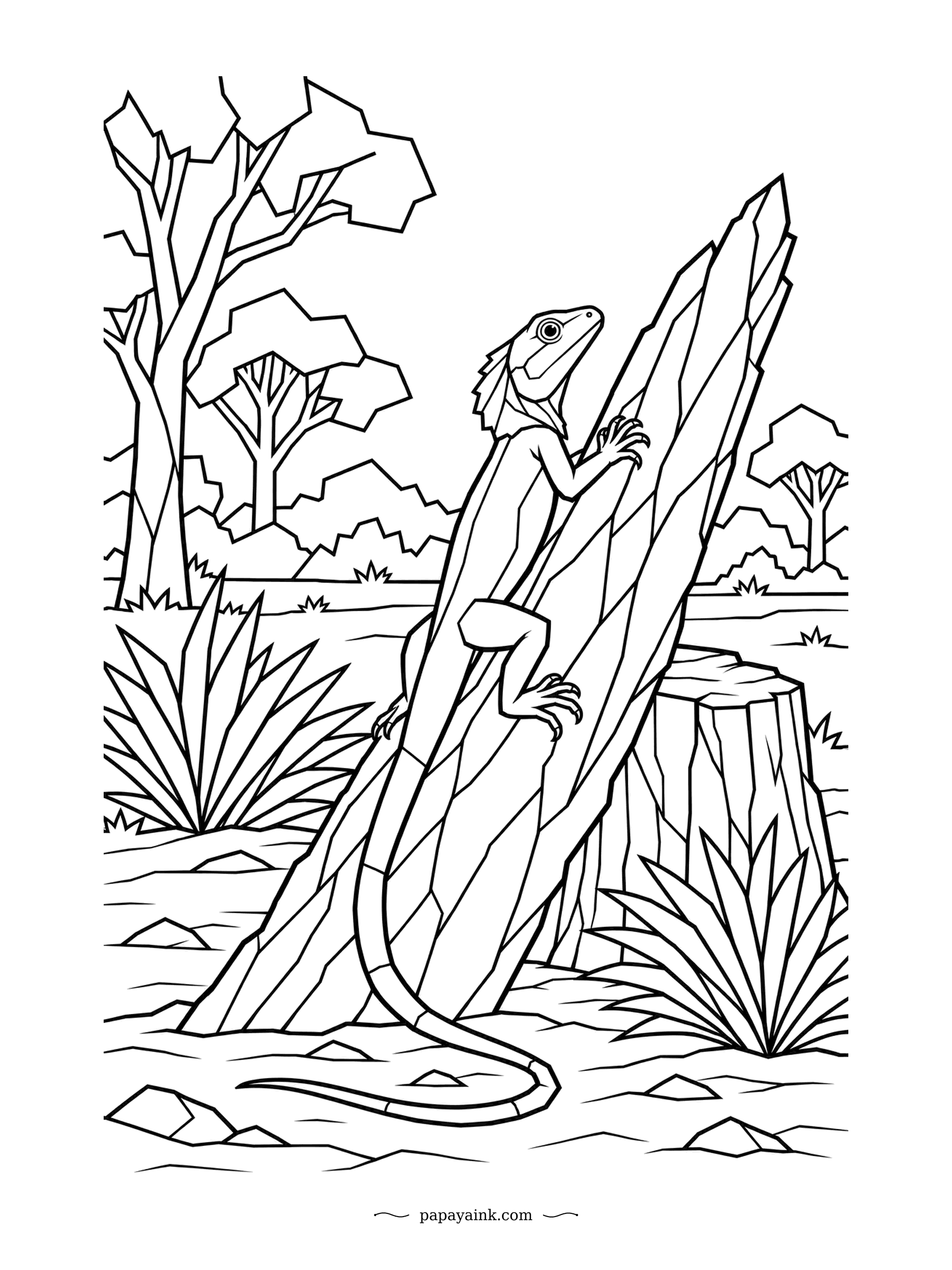
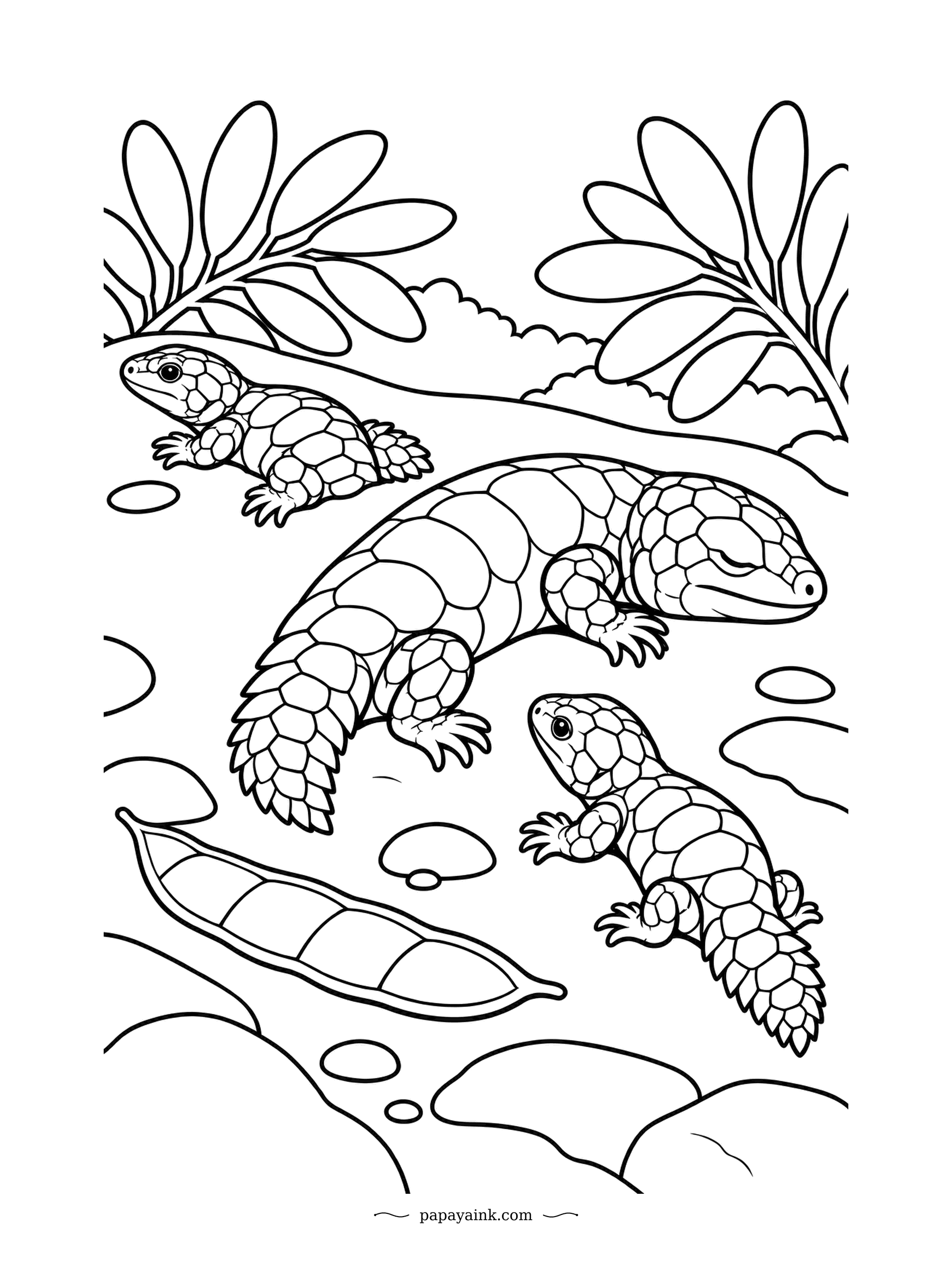
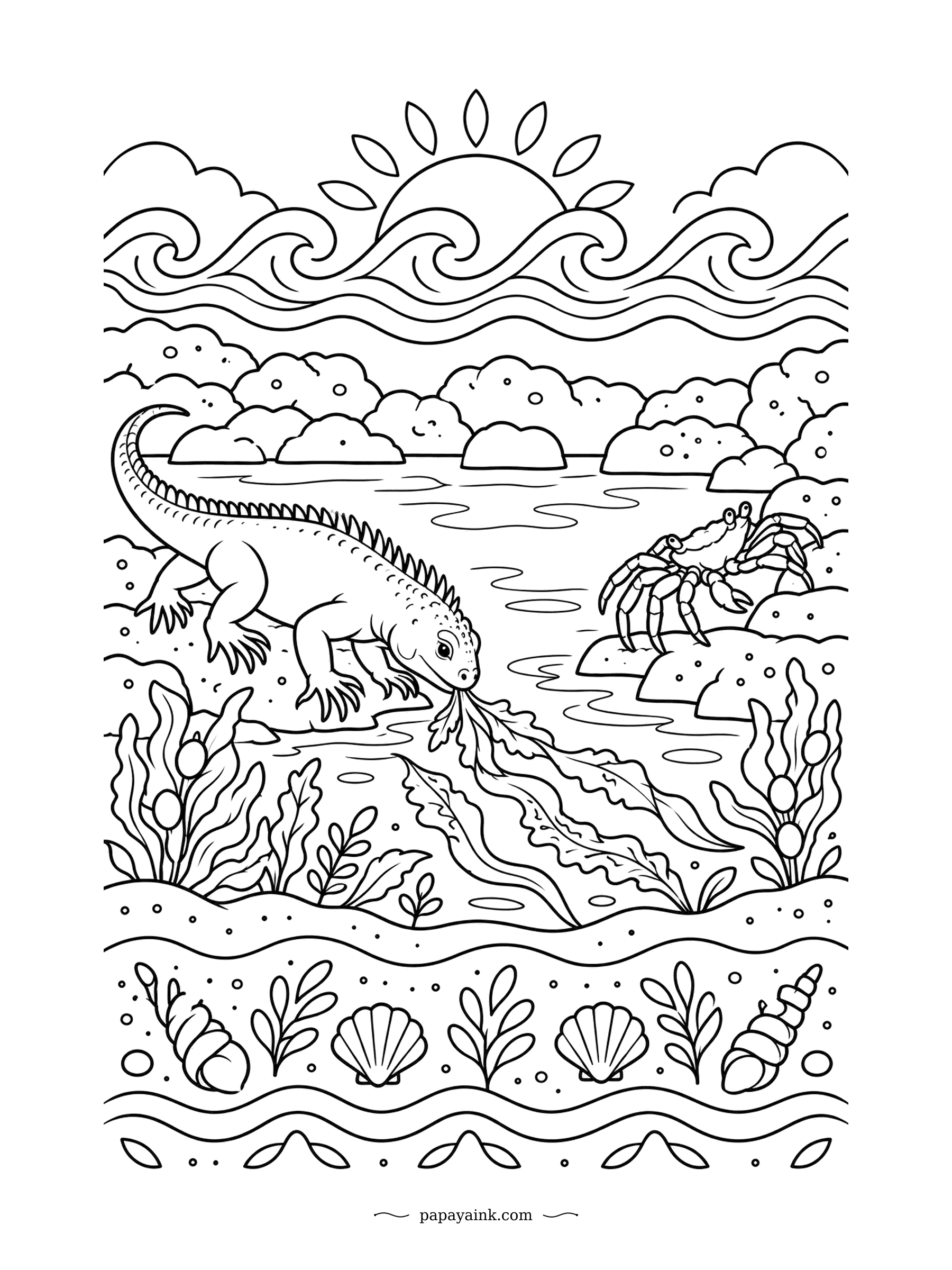

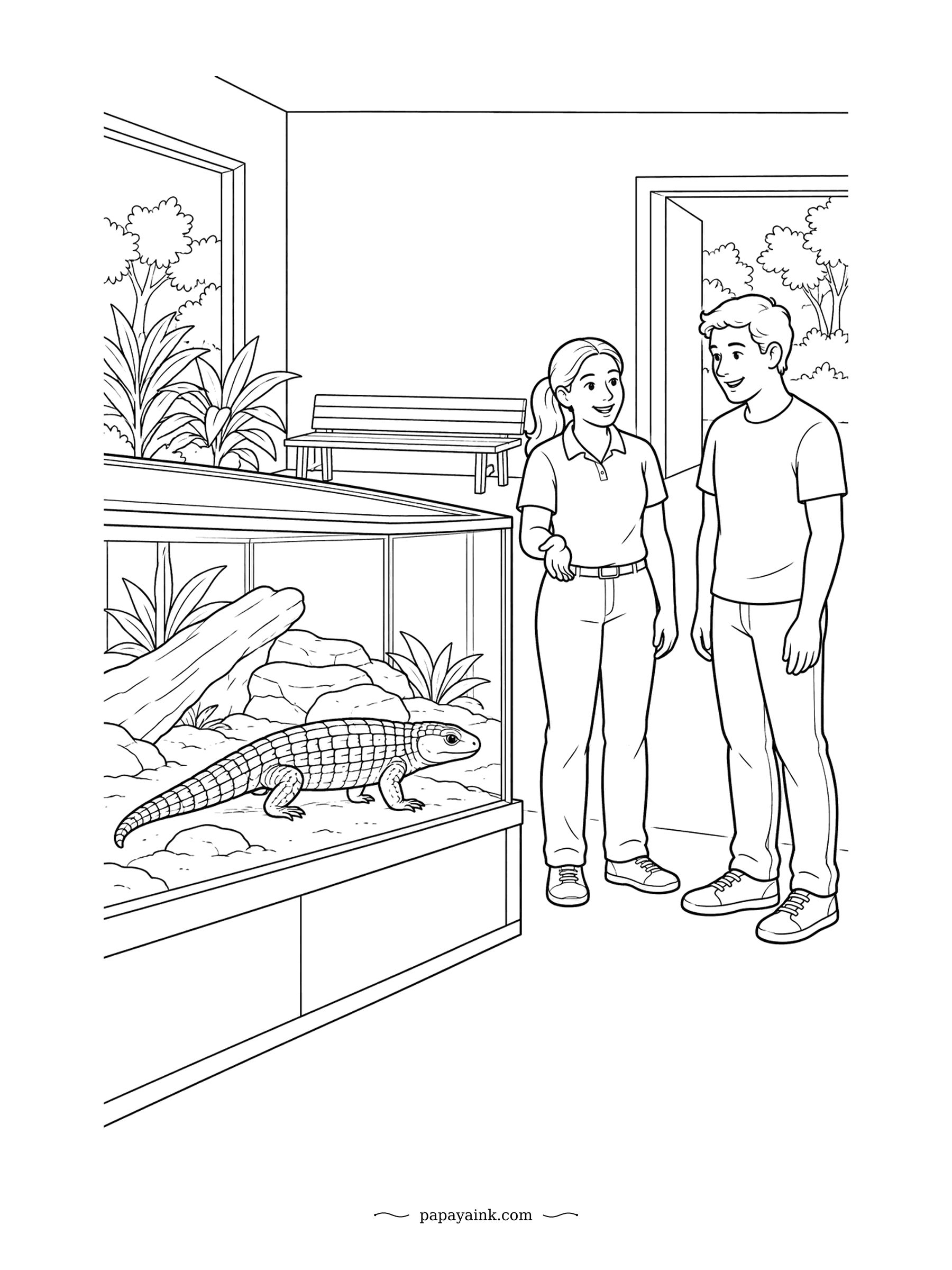

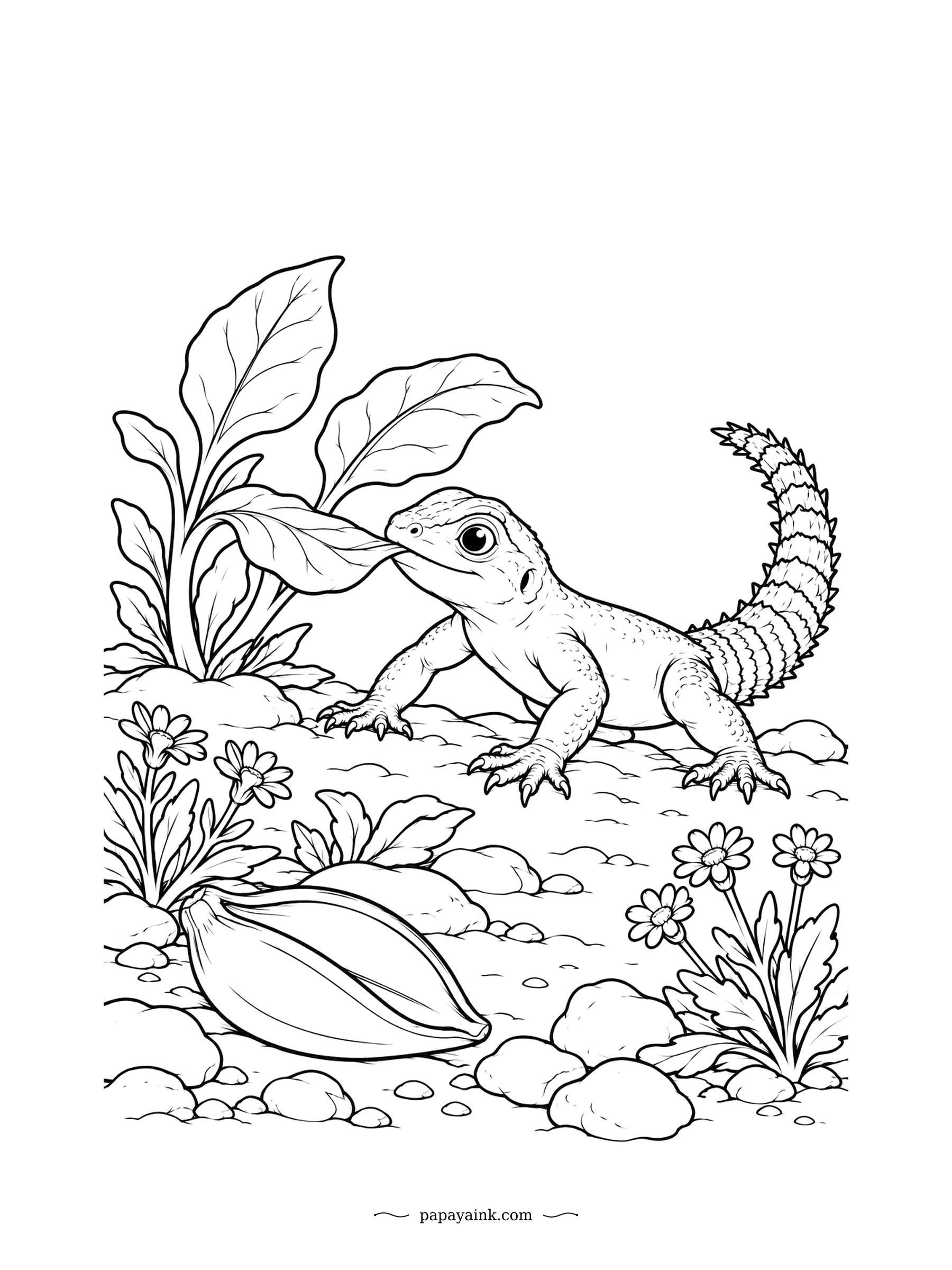
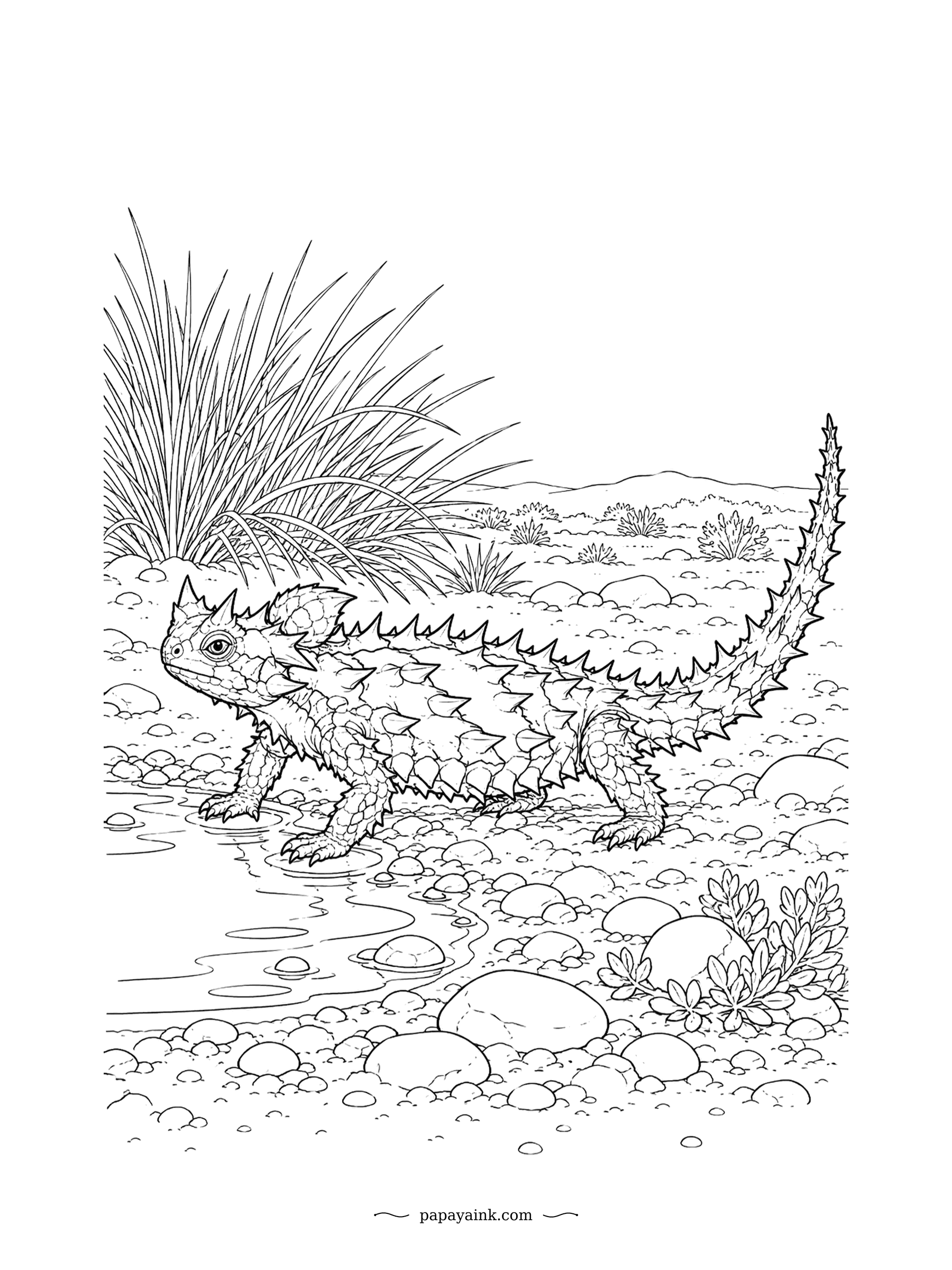


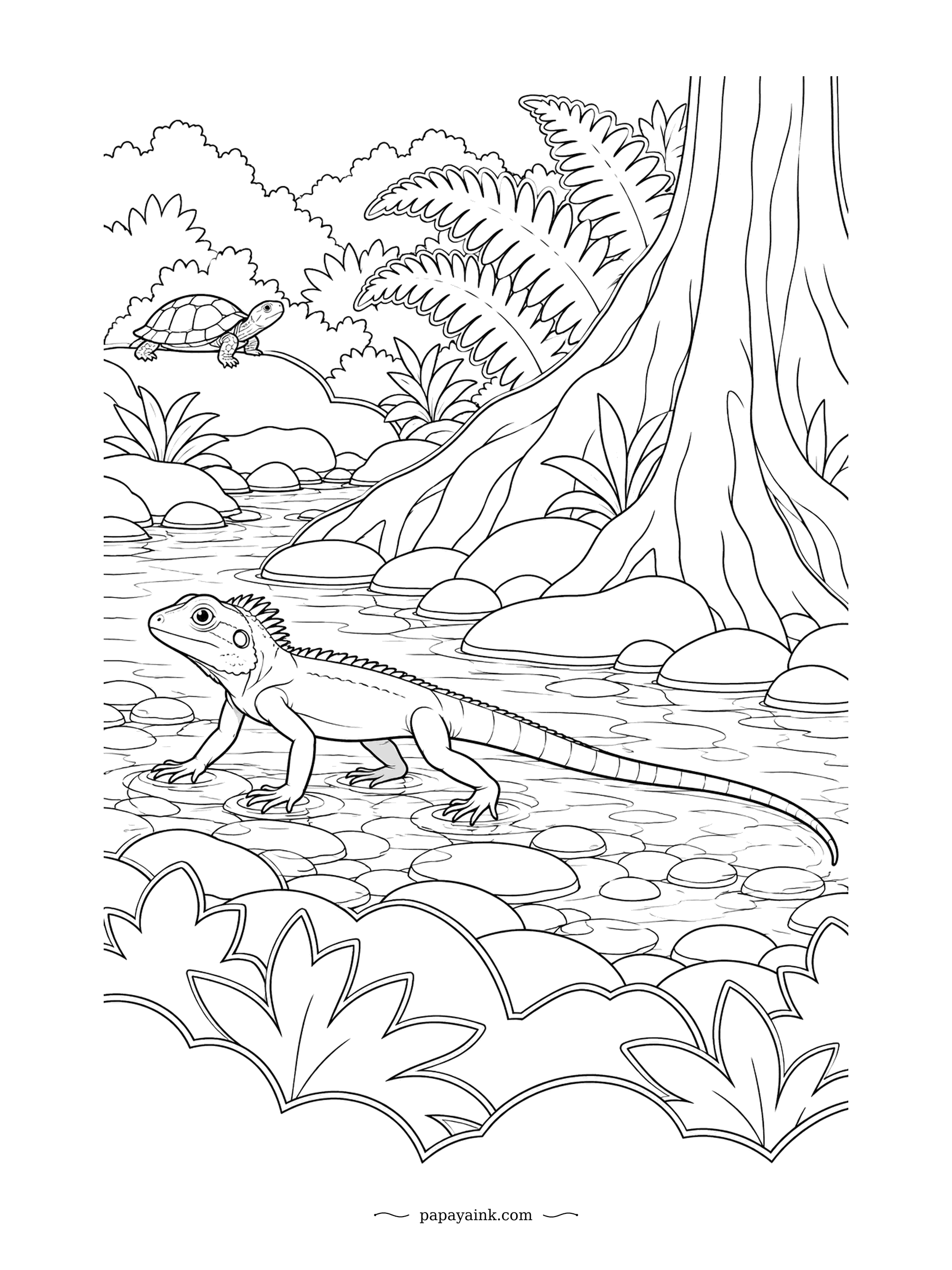


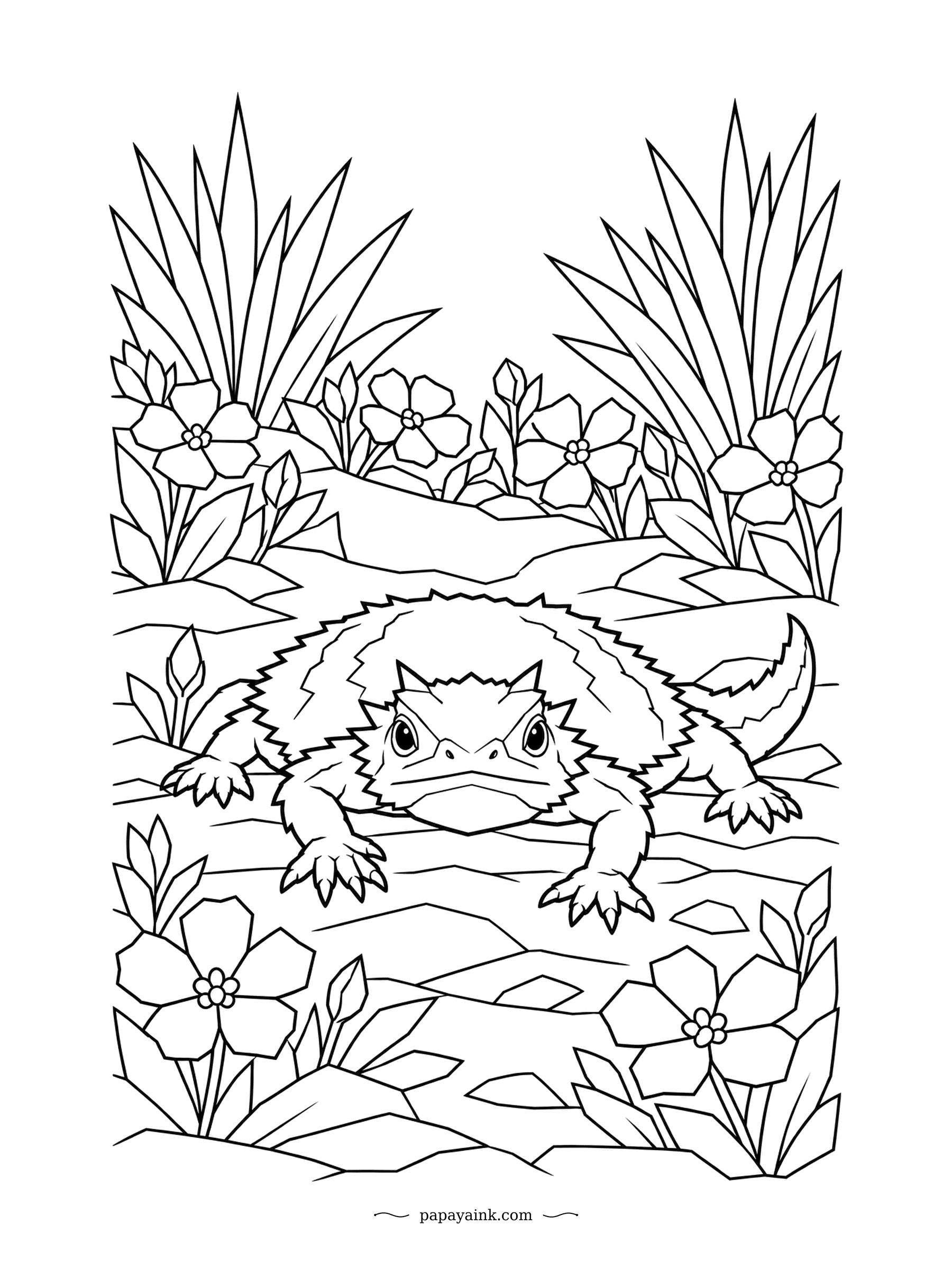


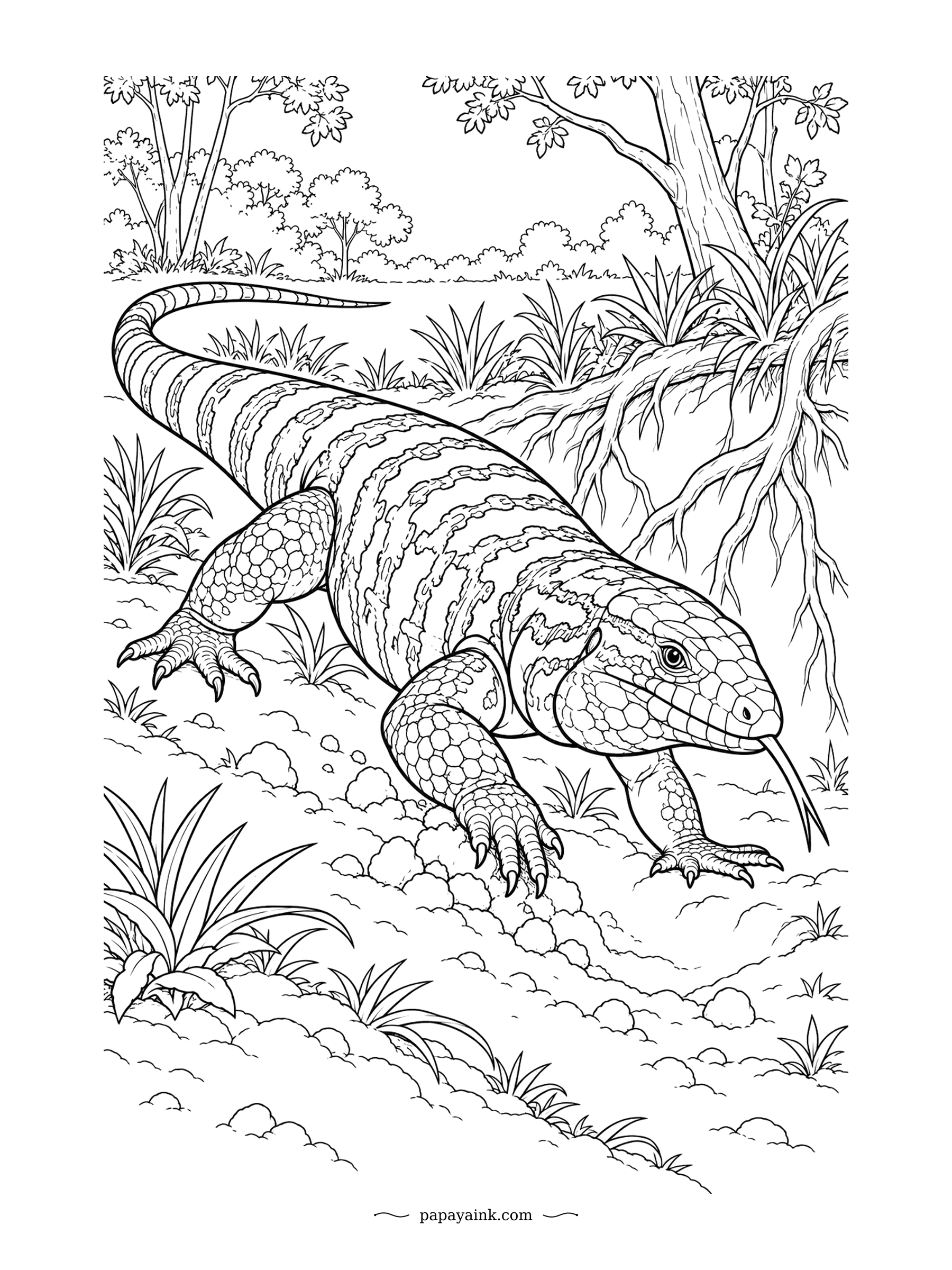


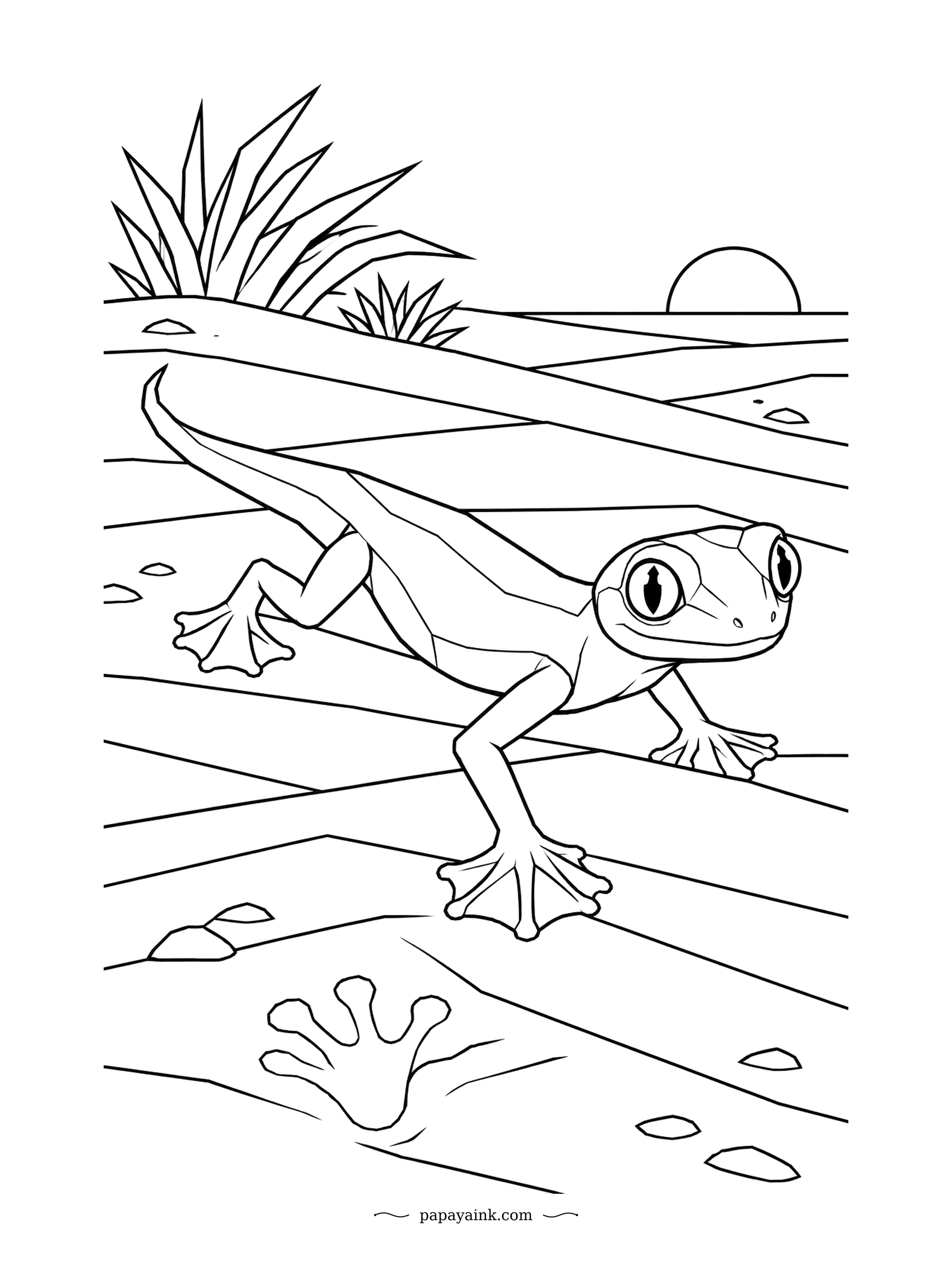
Fun Things to Make with These Coloring Pages
- Scale-pattern practice – before coloring the body, pick one scale and test three ways to fill it: solid, lighter at the center, darker at the edge. Whichever looks most like skin, repeat it across the whole lizard.
- Sun-catcher – color a sheet with thick outlines using markers, rub the back with a cotton ball dipped in vegetable oil, let it dry and tape it to a window. The paper turns translucent and the colors glow.
- Terrarium diorama – cut the finished lizard out, fold a tab under its feet and stand it inside a shoebox lined with paper rocks and paper leaves. Clip a small lamp above it and the shoebox becomes a terrarium.
- Mood-change pair – print the same sheet twice and color it once in resting colors, once in display colors, bright and loud. Pin both side by side; it is the fastest lesson in why lizards change color.
- Tail bookmark – color the lizard, cut it out along the outline and cover it in clear tape or laminate it. Tuck the body between the pages and the long tail sticks out of the book like a ribbon.
- Metallic finish – lizard skin shines, so once the base colors are down, go over the spine and the largest scales with a gold or bronze gel pen. Tilt the sheet under a lamp and the scales catch the light.
- Field guide card – once the coloring is done, write the lizard's name, where it lives and one thing it eats on an index card and clip it to the corner. A stack of these becomes a homemade reptile guide.
- Watercolor wash – color the lizard with pencils first, then brush a thin wash of watercolor over the background only. The pencil wax resists the paint, so the lizard stays crisp while the scenery goes soft.