Home›Free Printable Coloring Pages
By: Papaya Ink Team · Last updated: October 19, 2026
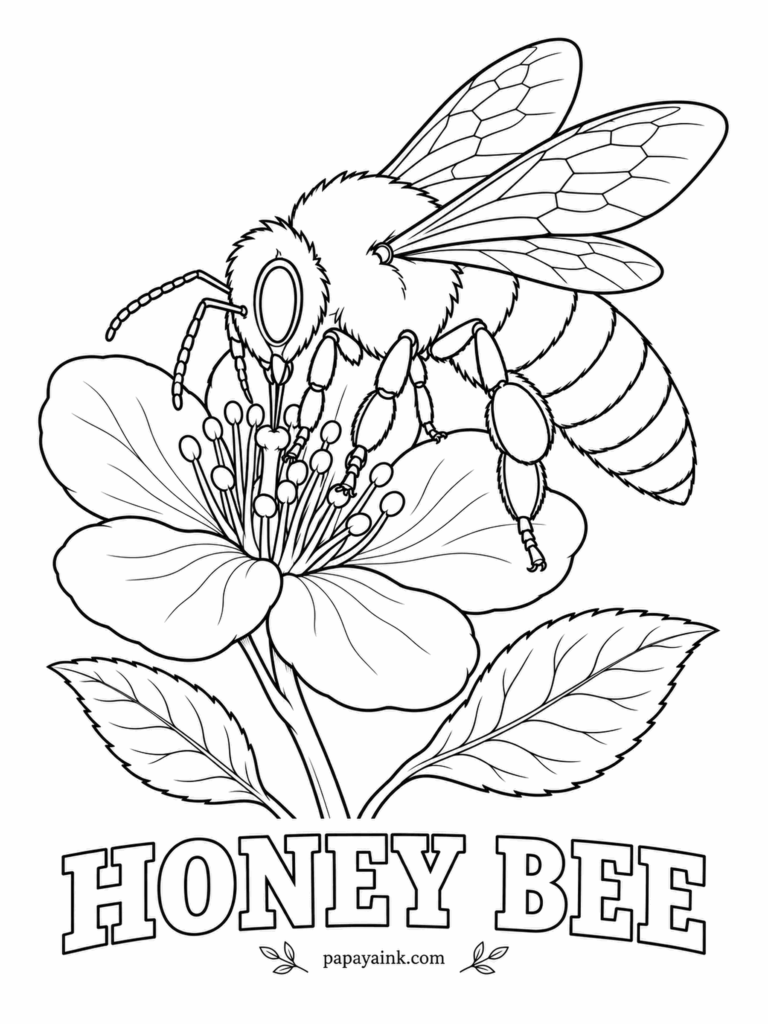
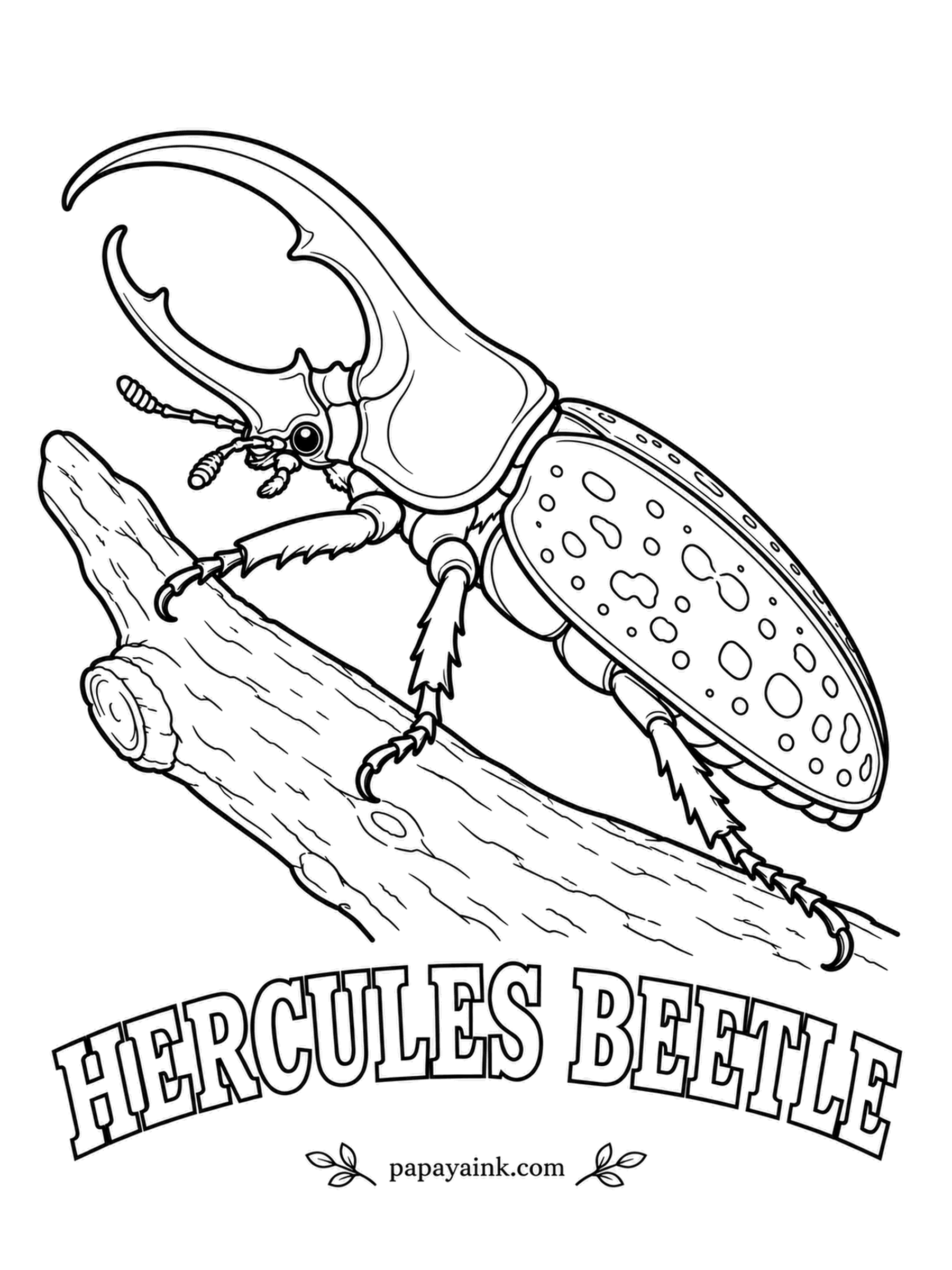
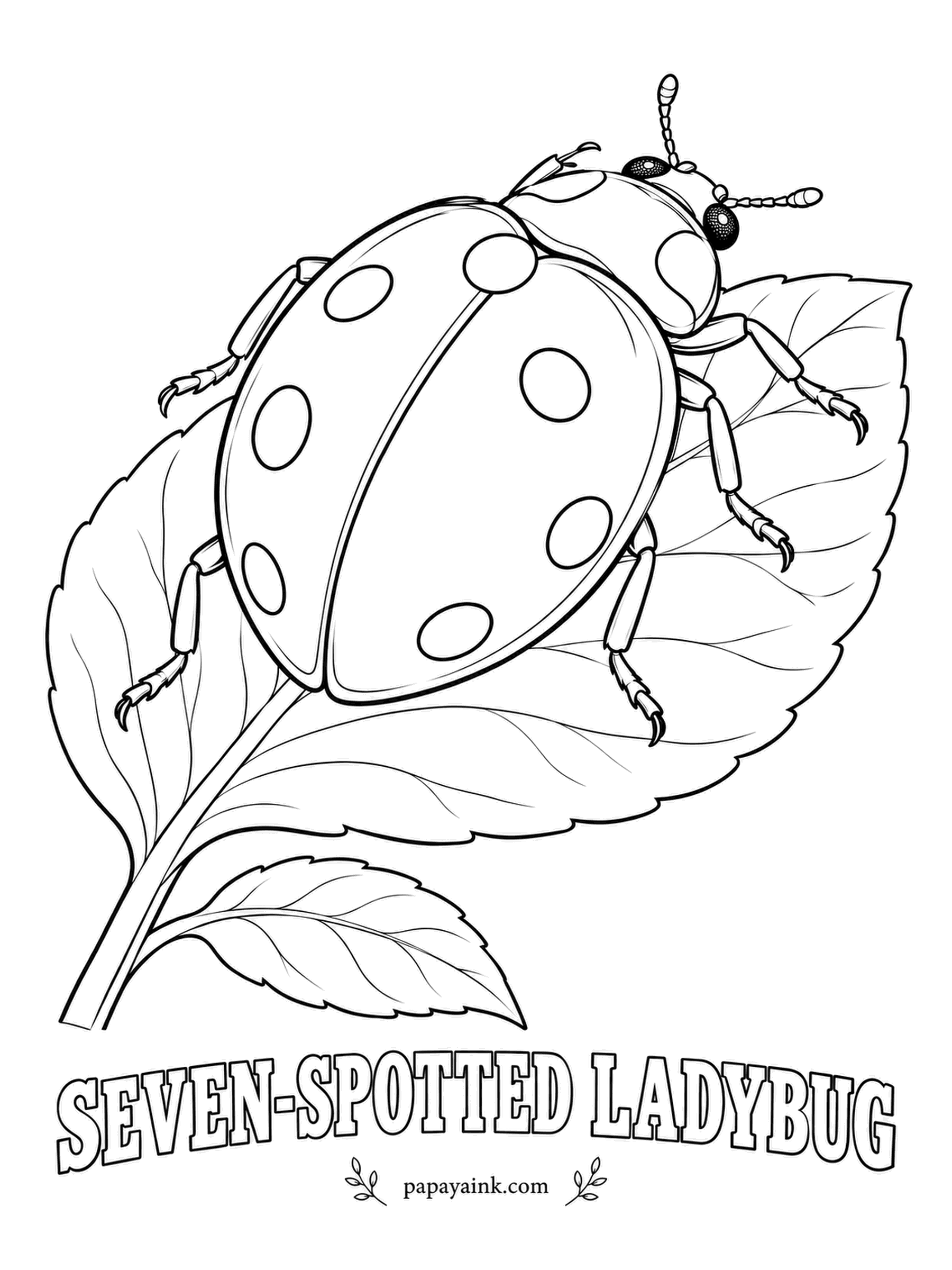
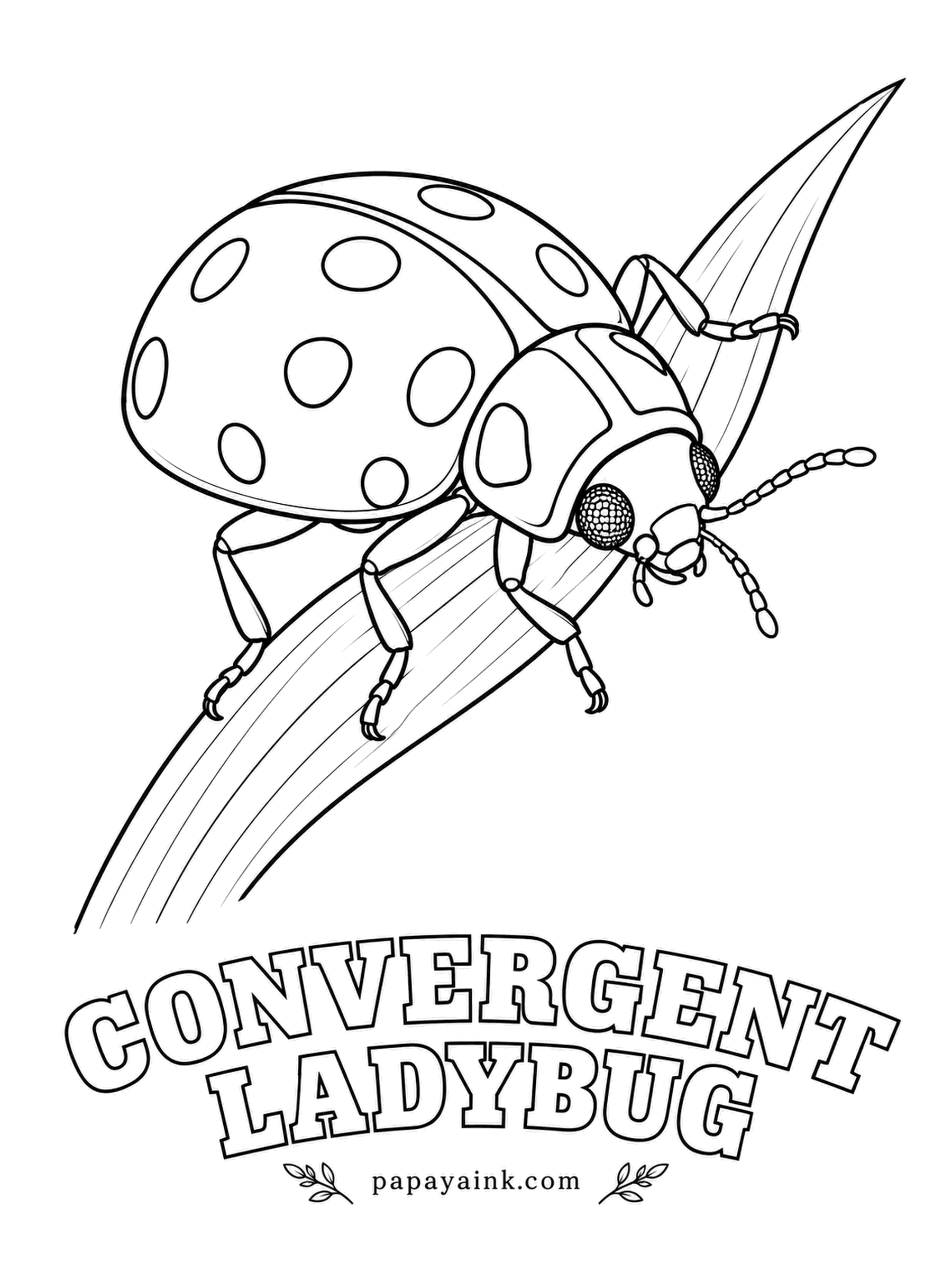
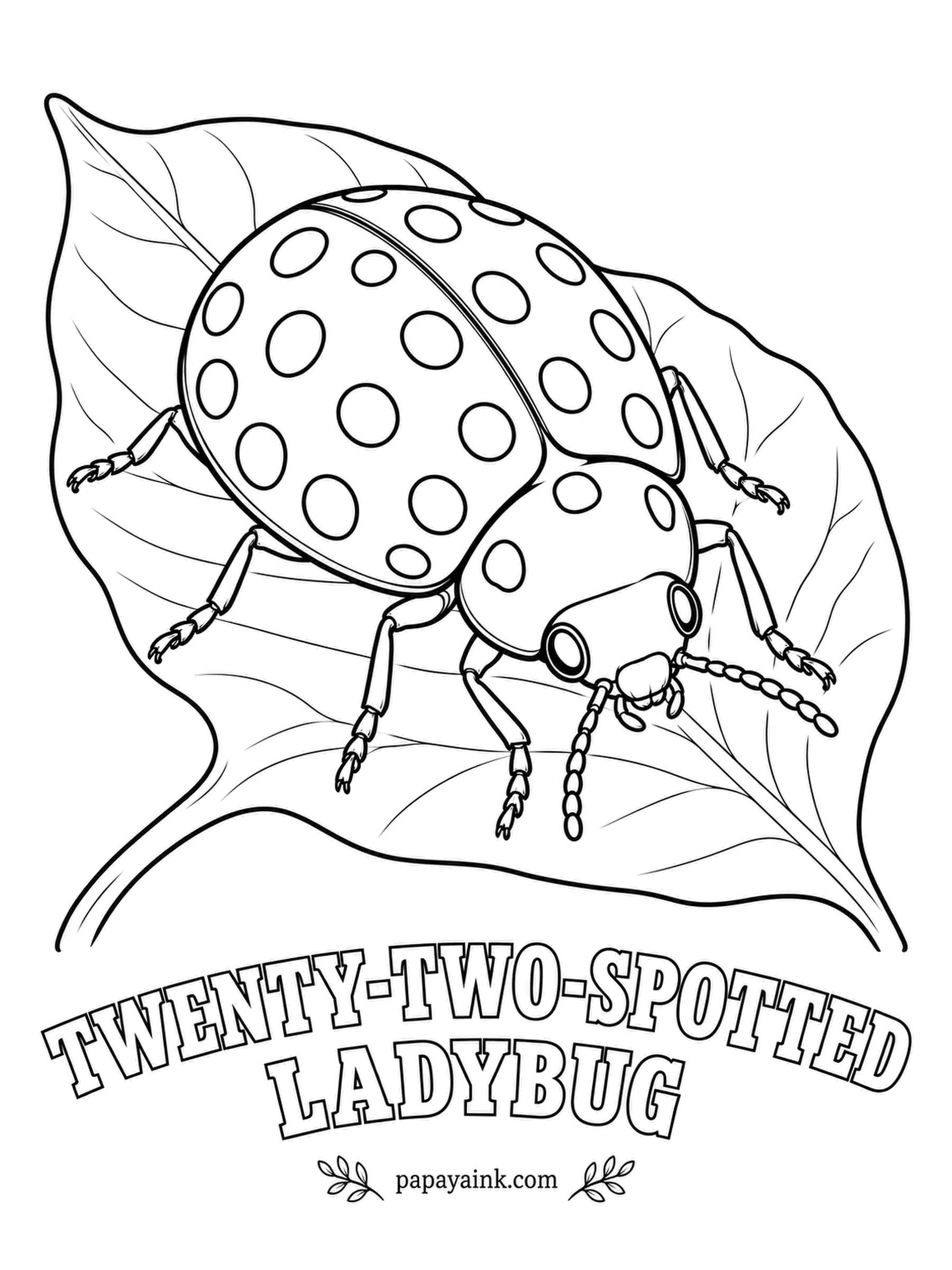
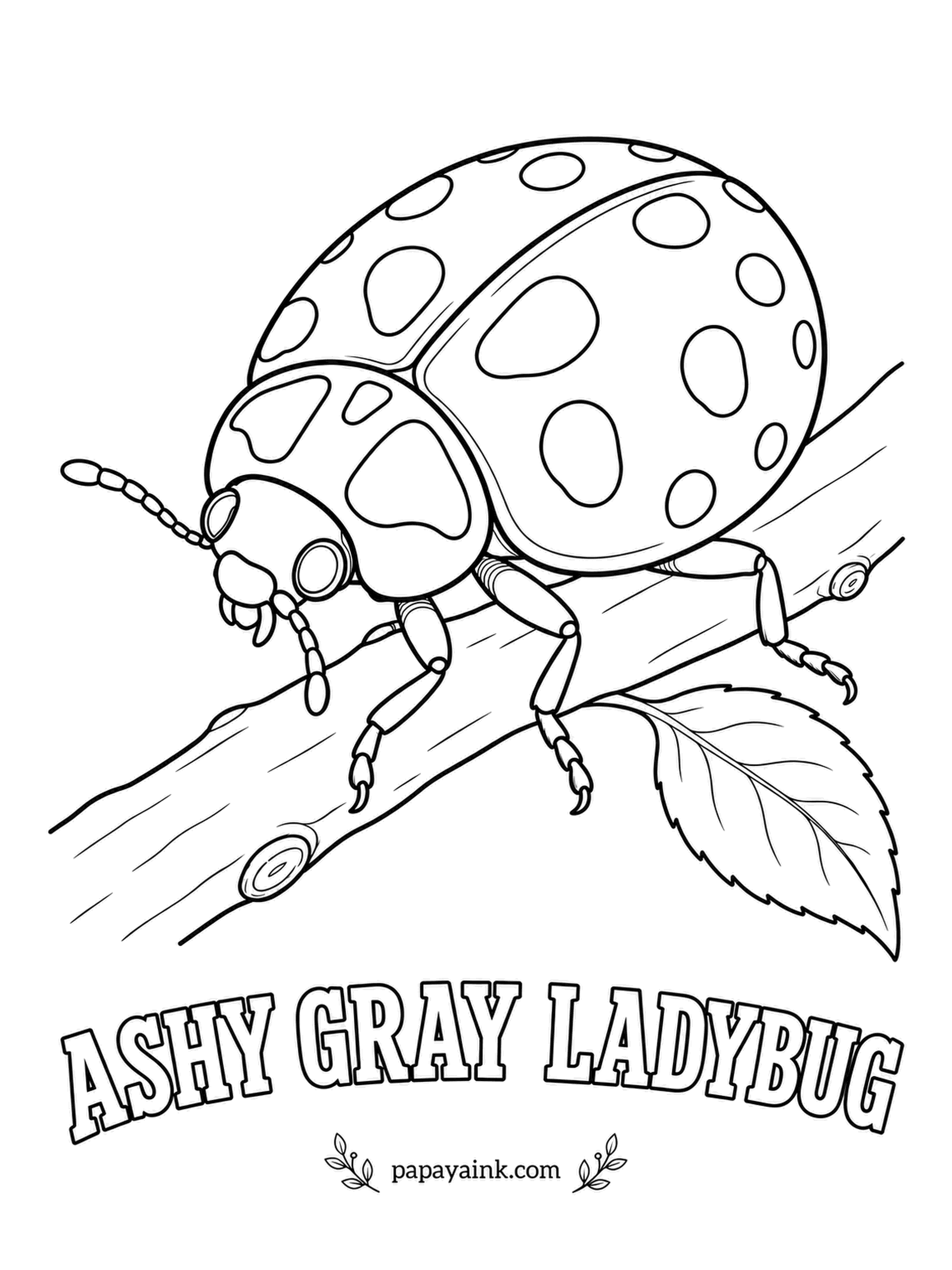
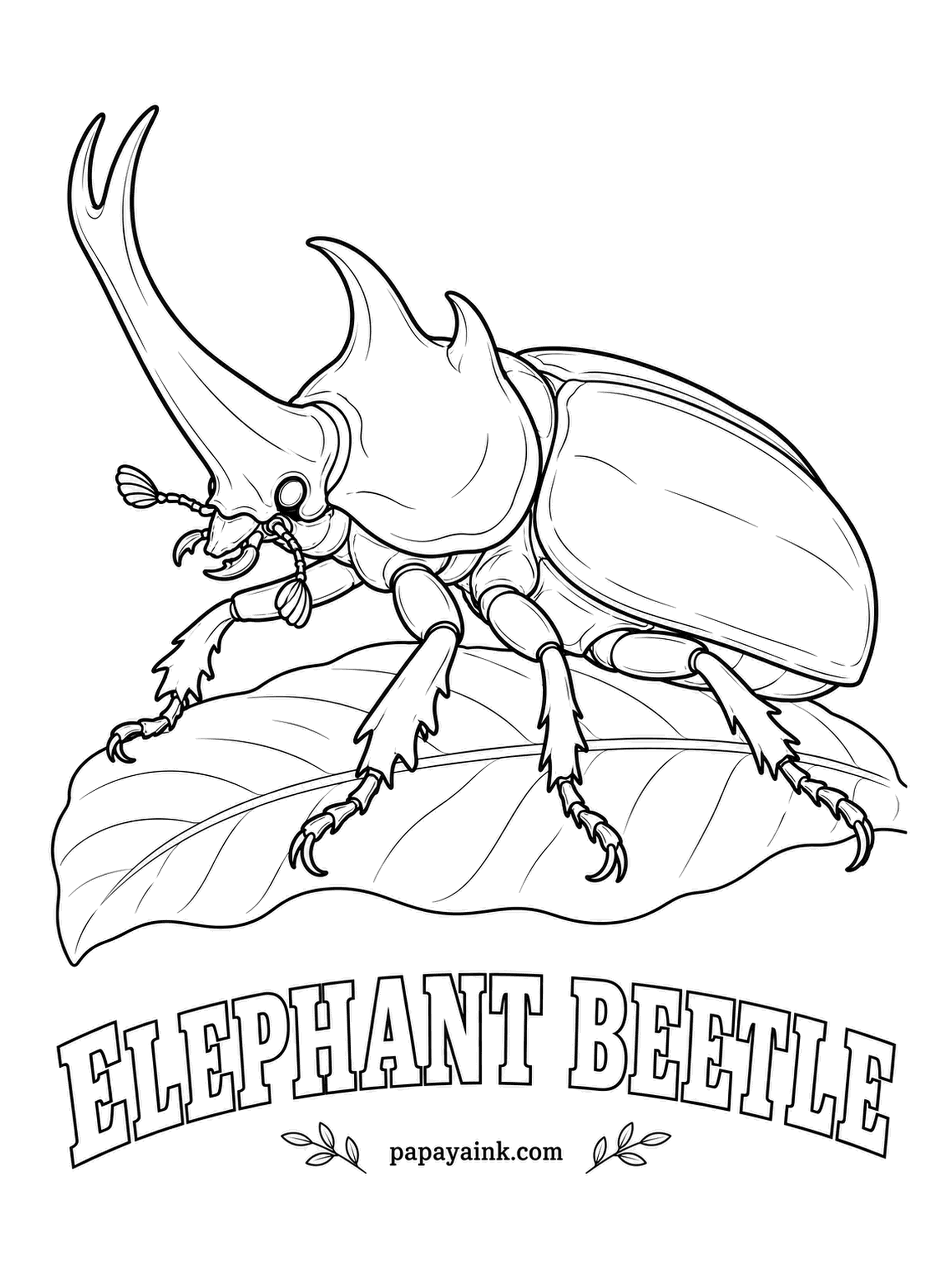
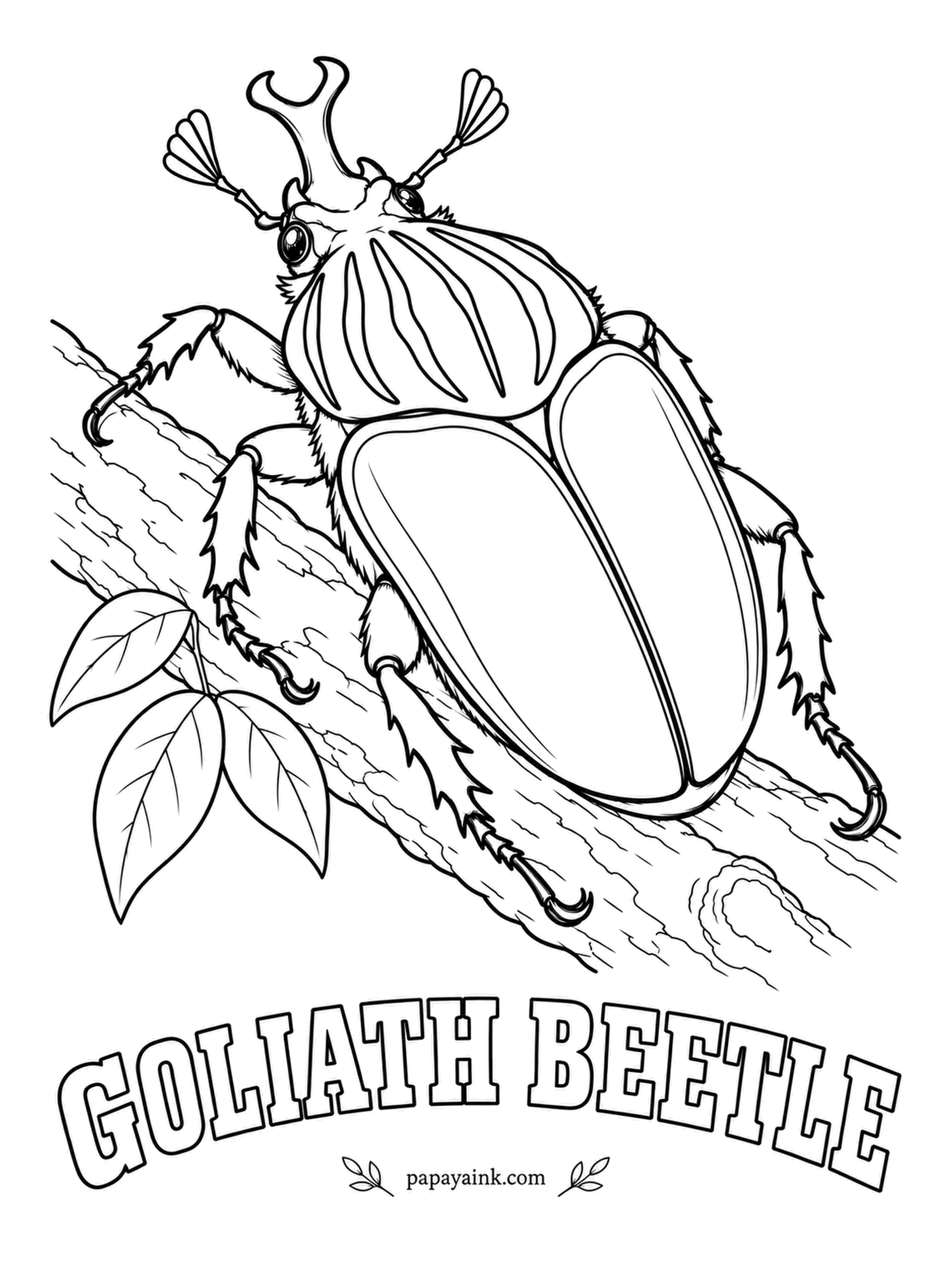
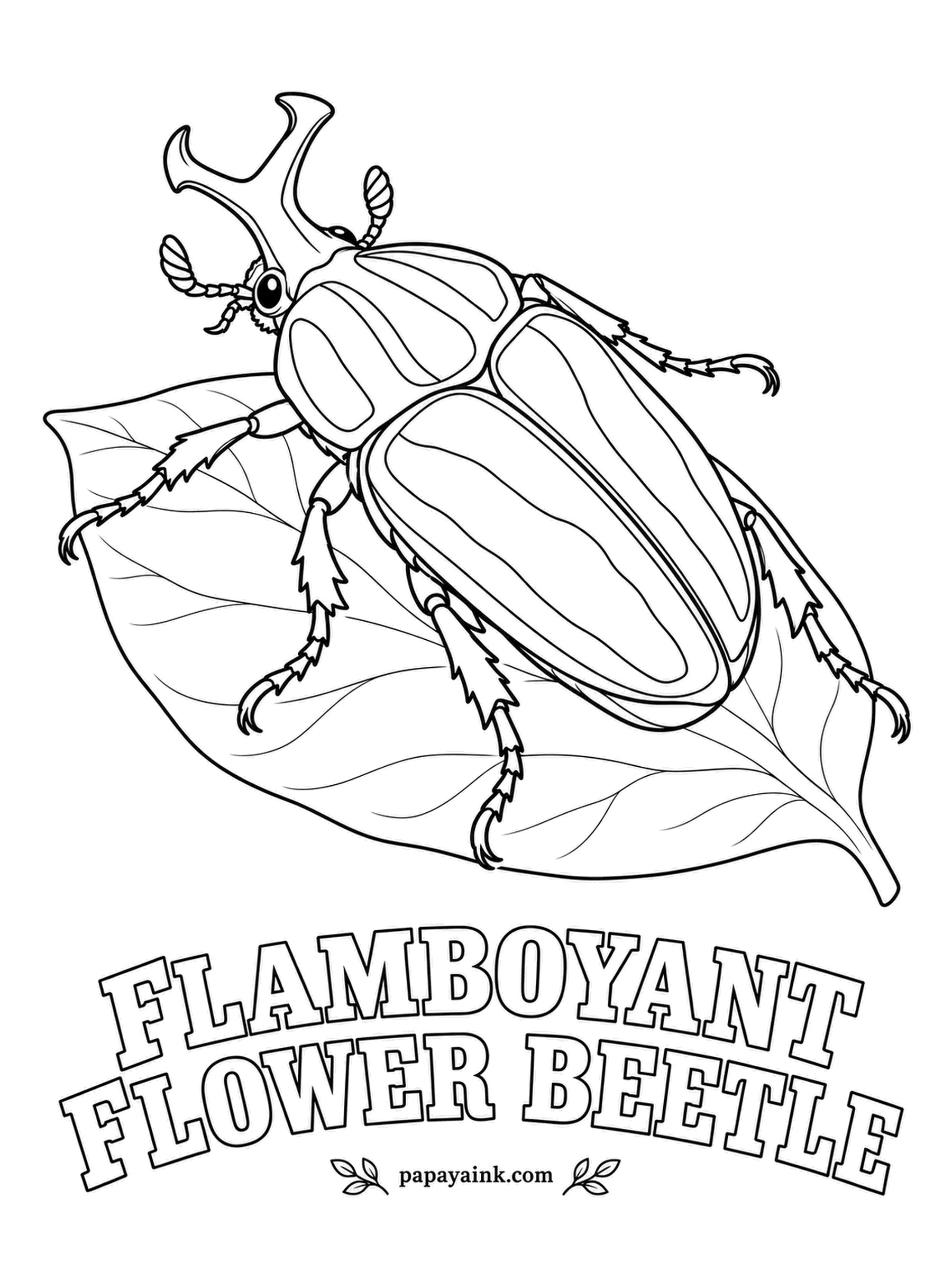
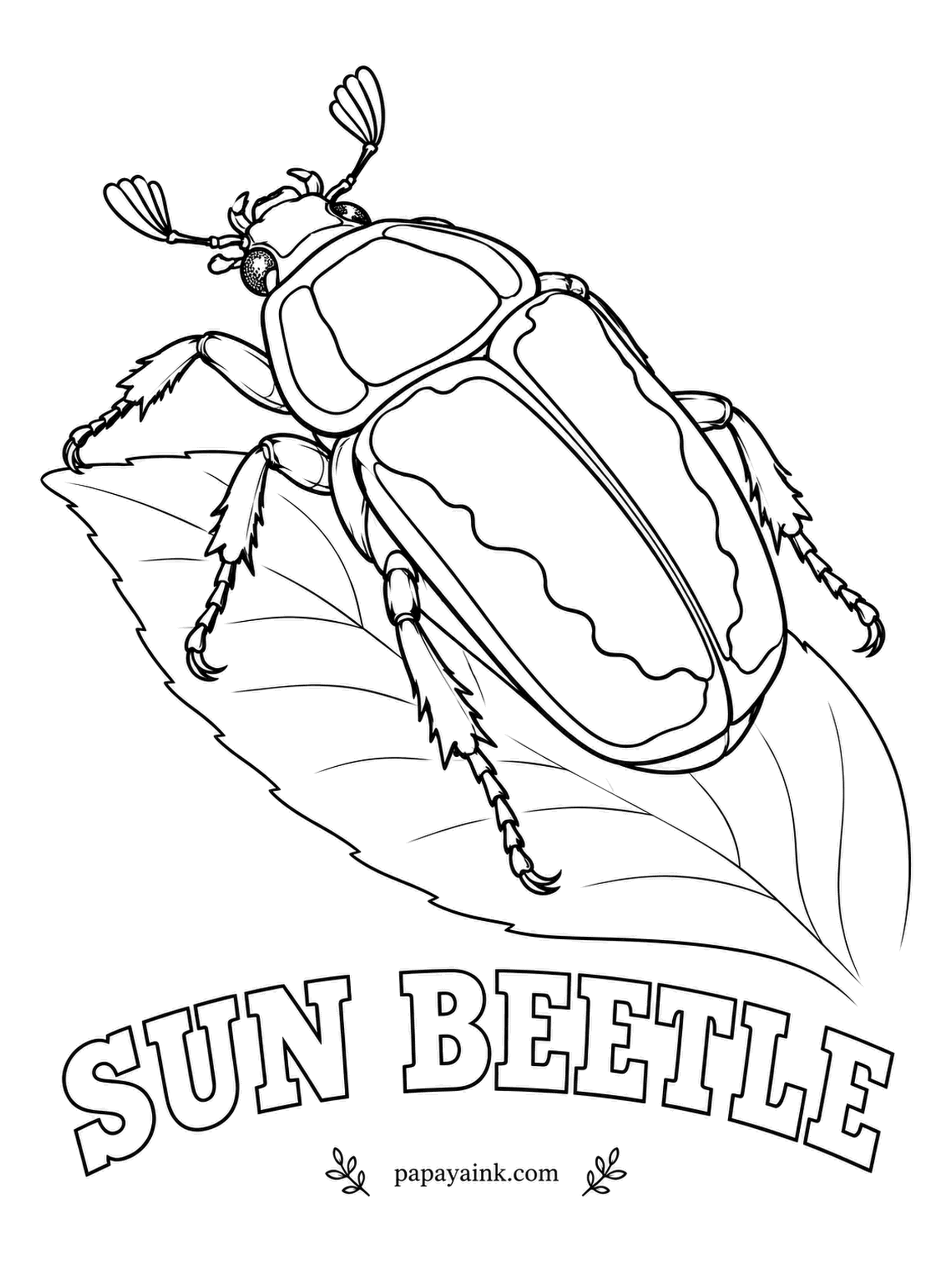
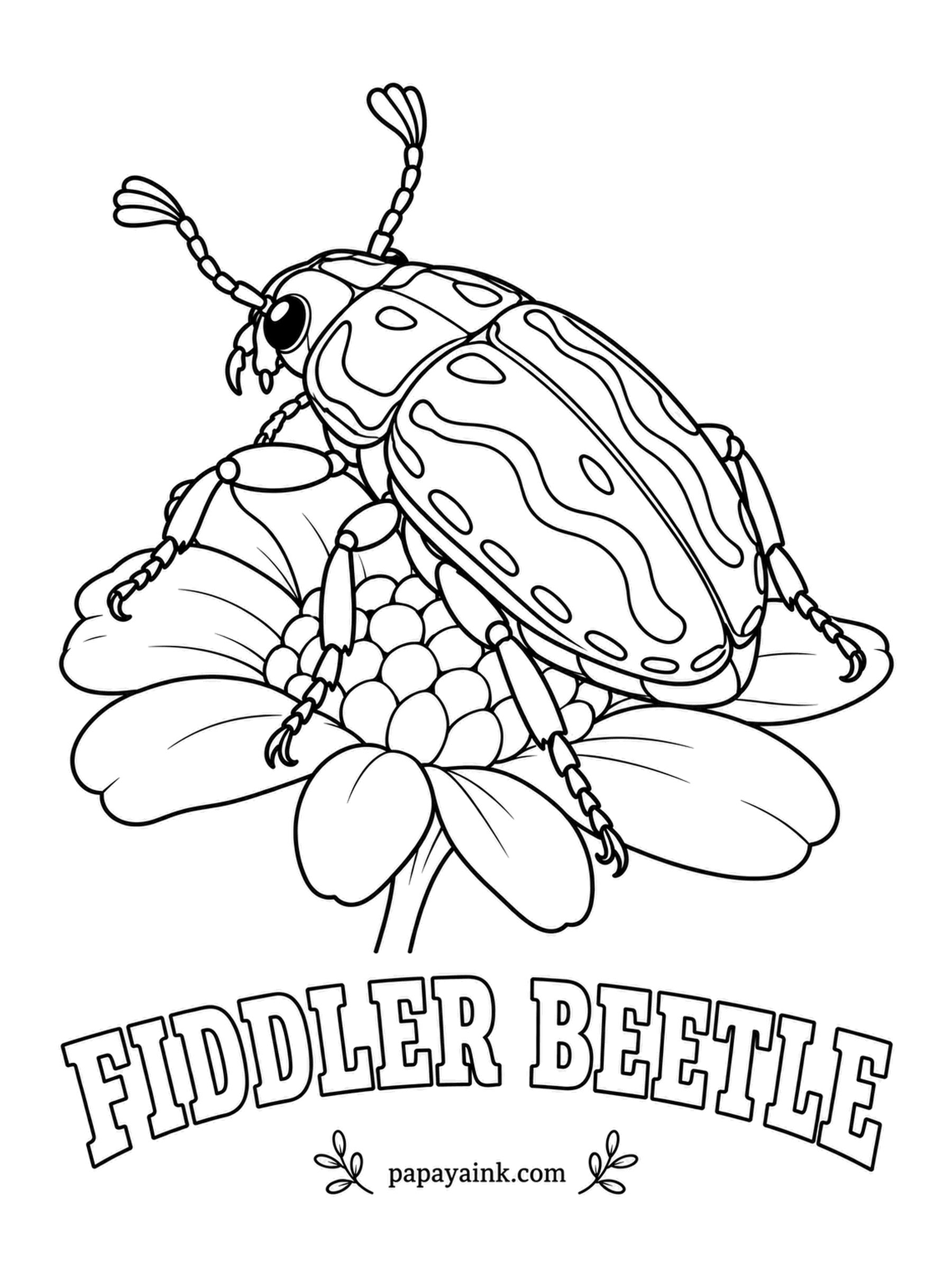
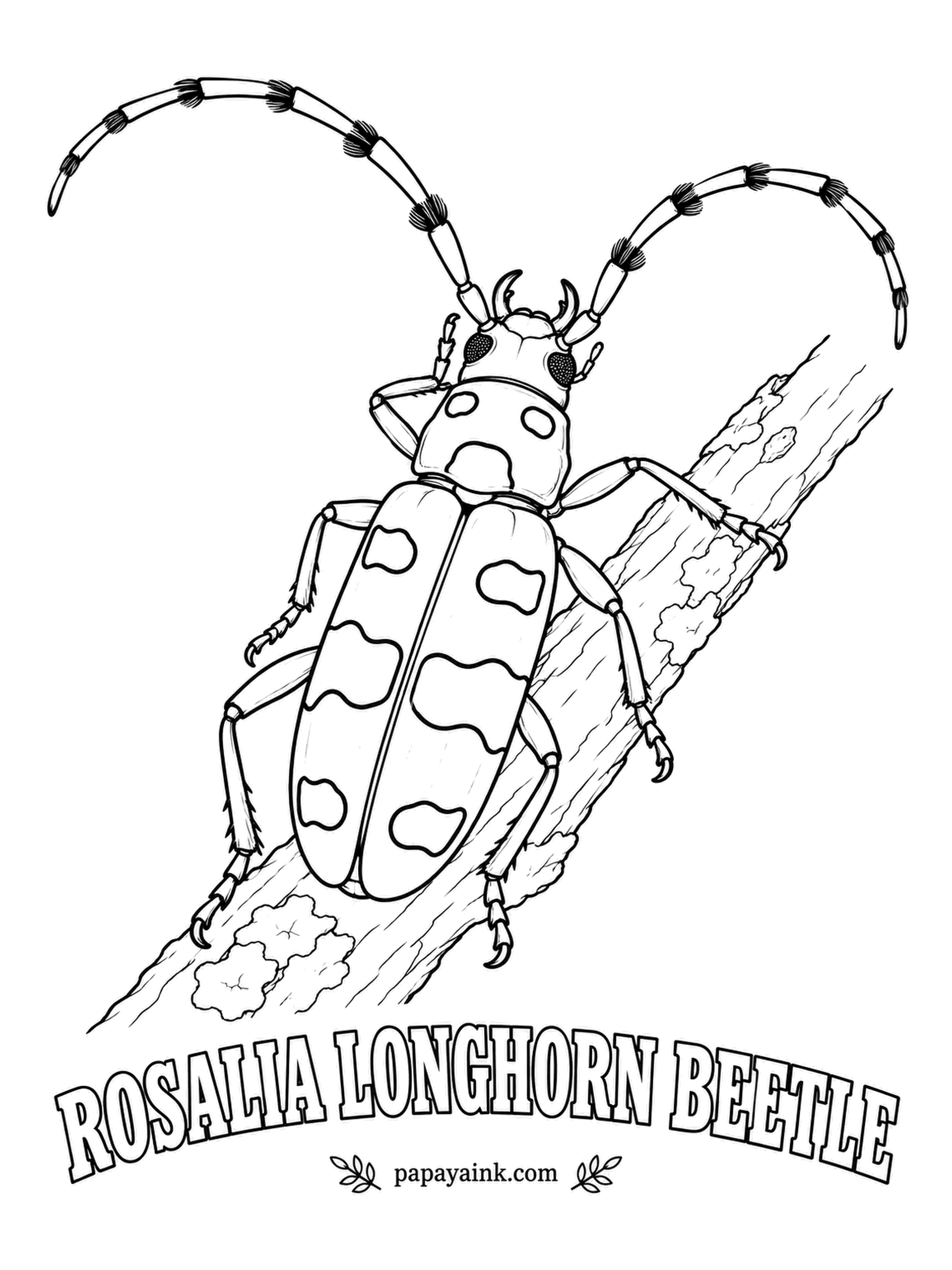
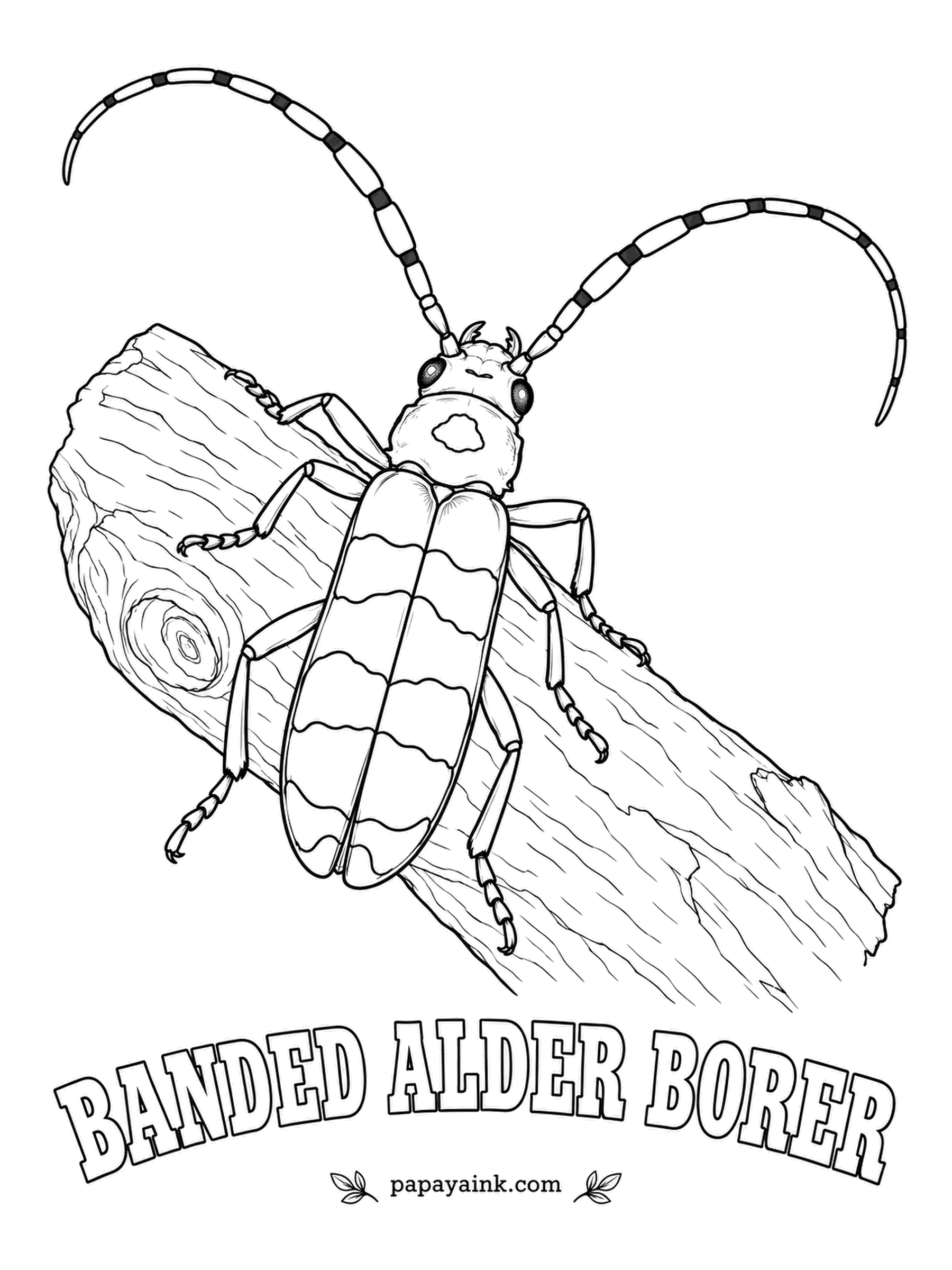
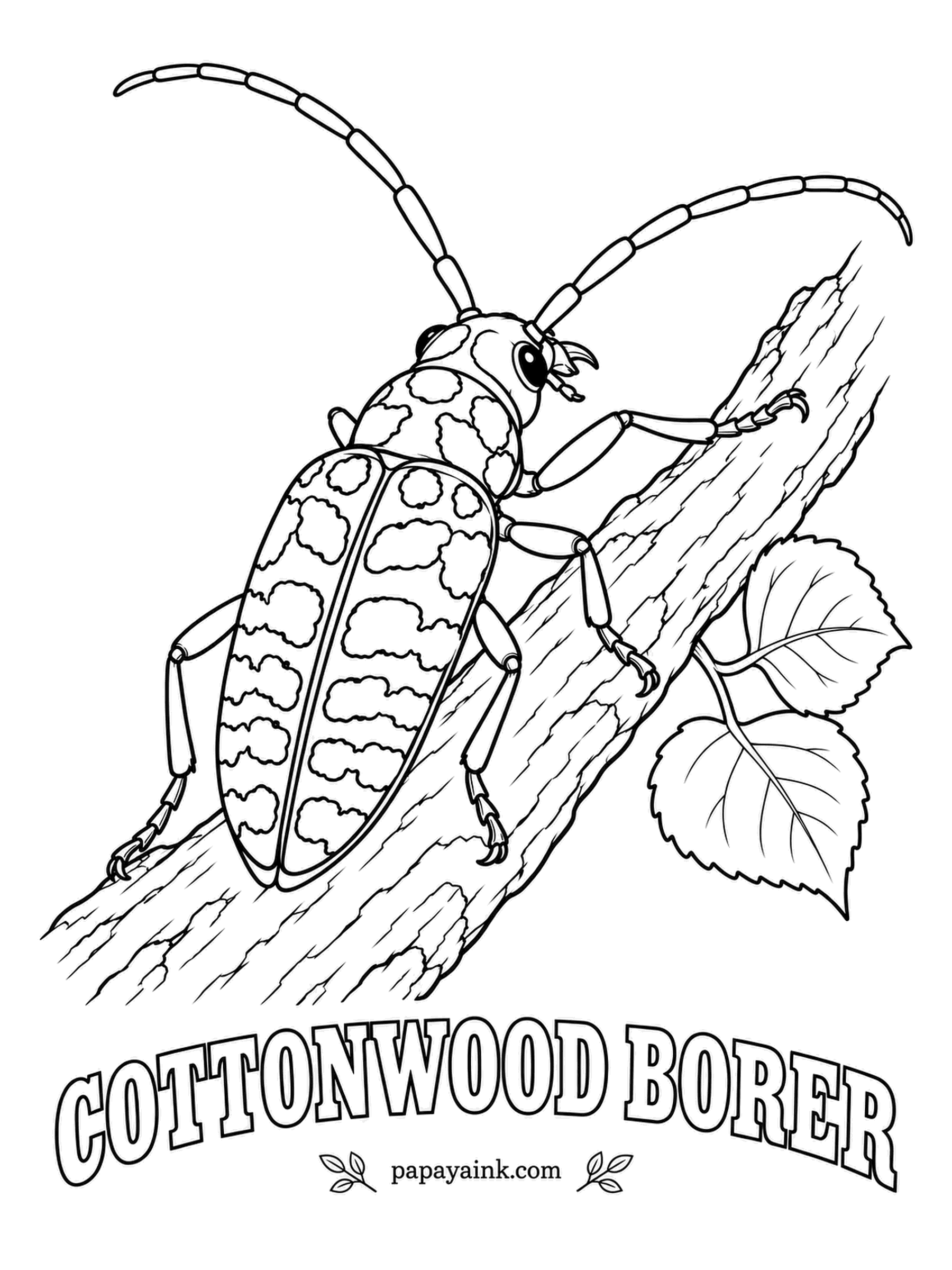
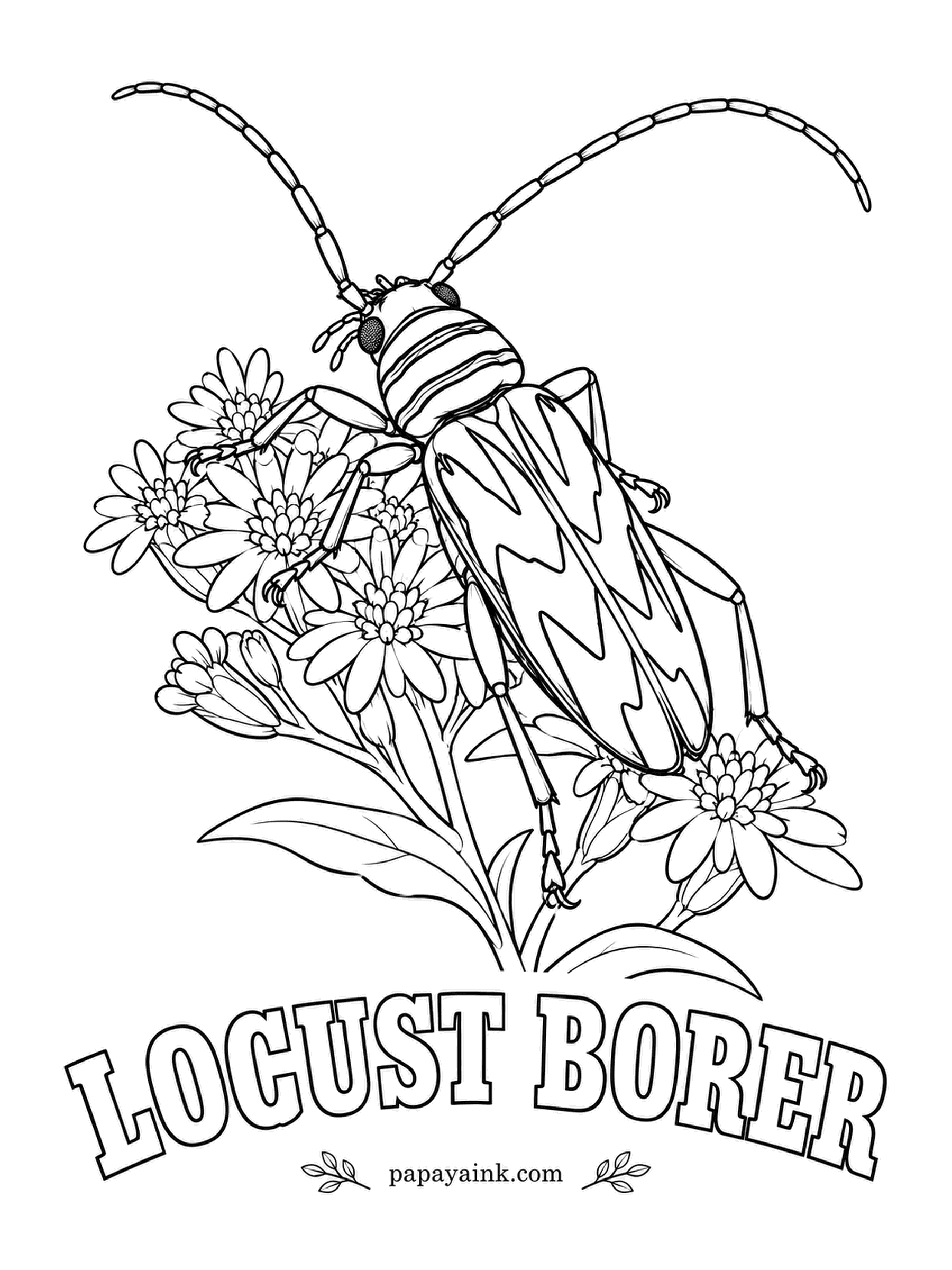
Beetles are the most successful body plan in the animal kingdom. About 400,000 species have been described so far, close to one in four of all known animals, and they live everywhere from rainforest canopies to backyard compost heaps. Their secret is armor: the front pair of wings has hardened into a shell, the elytra, which closes over the delicate flying wings like a case. The scientific name of the whole group, Coleoptera, simply means sheathed wings. Every drawing here is a real species with its common name lettered on the sheet – horned rhinoceros and Hercules beetles, stag beetles with antler-like jaws, and ladybugs, which are beetles too.
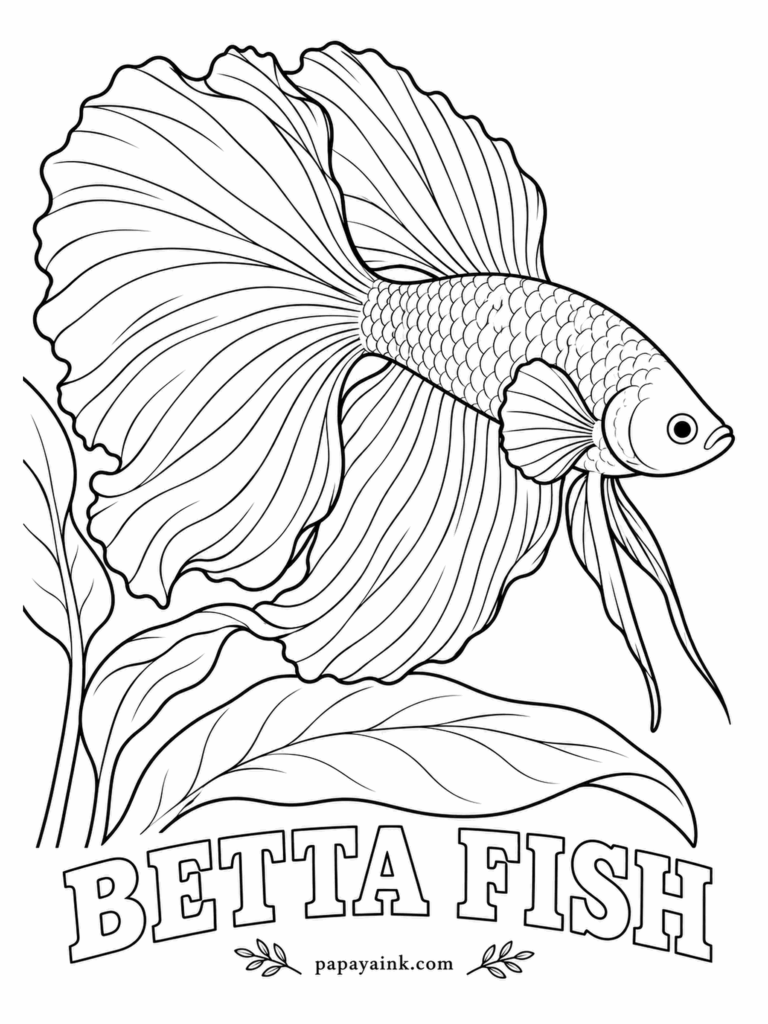
Click any picture and the printable PDF opens in a new tab, ready to print or save. Each sheet is sized for US Letter and prints cleanly on A4. The line work is detailed enough to hold an adult's attention for an evening – bark texture, leaf veins, segmented legs – while the large shells leave plenty of open space for bold color.
A little real-world observation makes these pages come alive. Most beetle shells are glossy, so leave a narrow white streak where light would strike the wing covers, and the shell will read as hard and polished instead of flat. Metallic species shine when two or three colors are layered over each other – green over blue, copper over gold – rather than filled in with a single pencil. On ladybugs, color the spots last with a sharp black pencil so the edges stay crisp, and check a photo of the real species first: plenty of ladybugs are yellow, pink or gray, not red.
Show me
Showing only black & white pages.
Showing only pages with a color sample. 80 other pages are hidden.
No black & white pages here yet – showing everything.
No pages with a color sample here yet – showing everything.







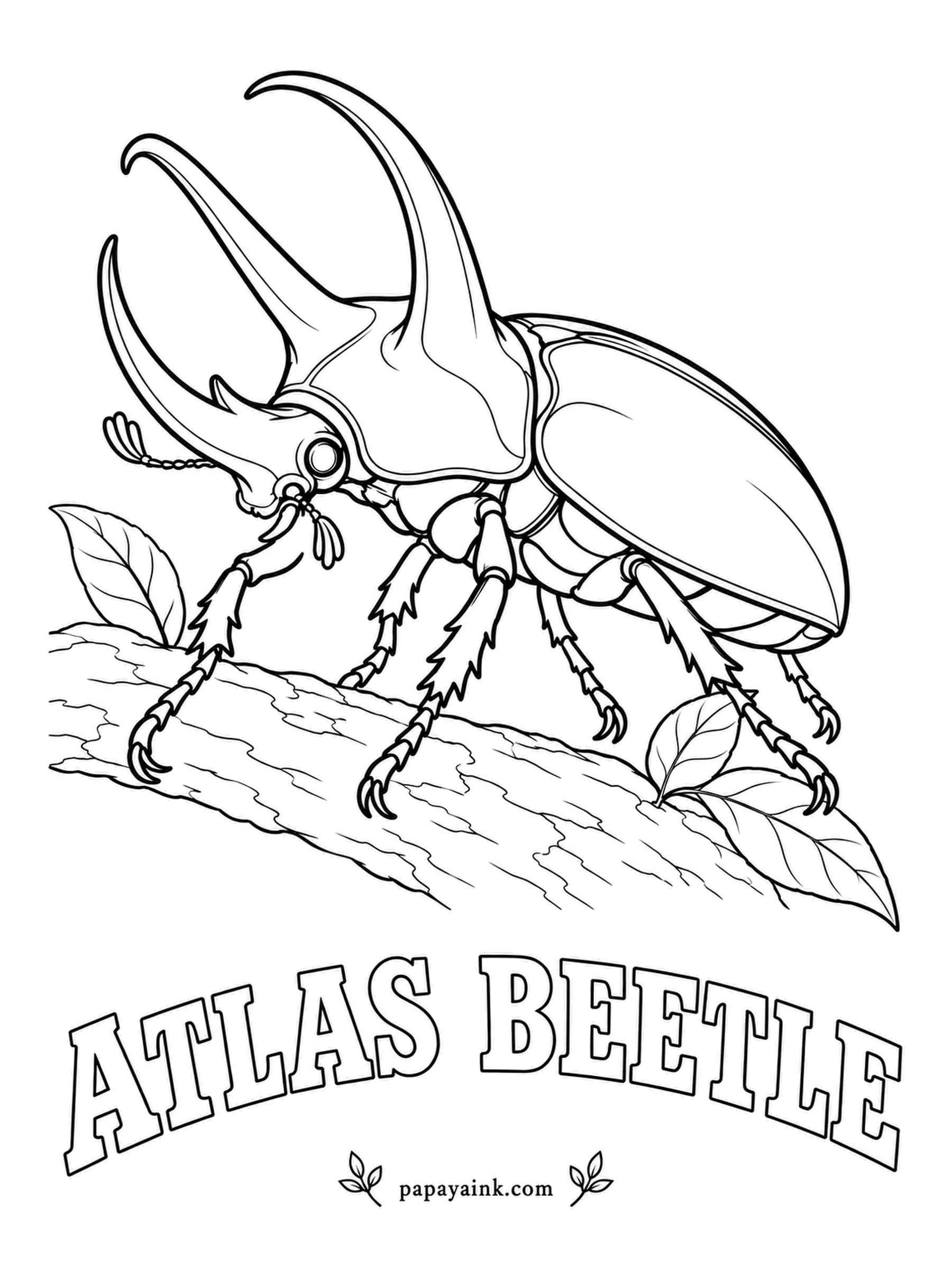
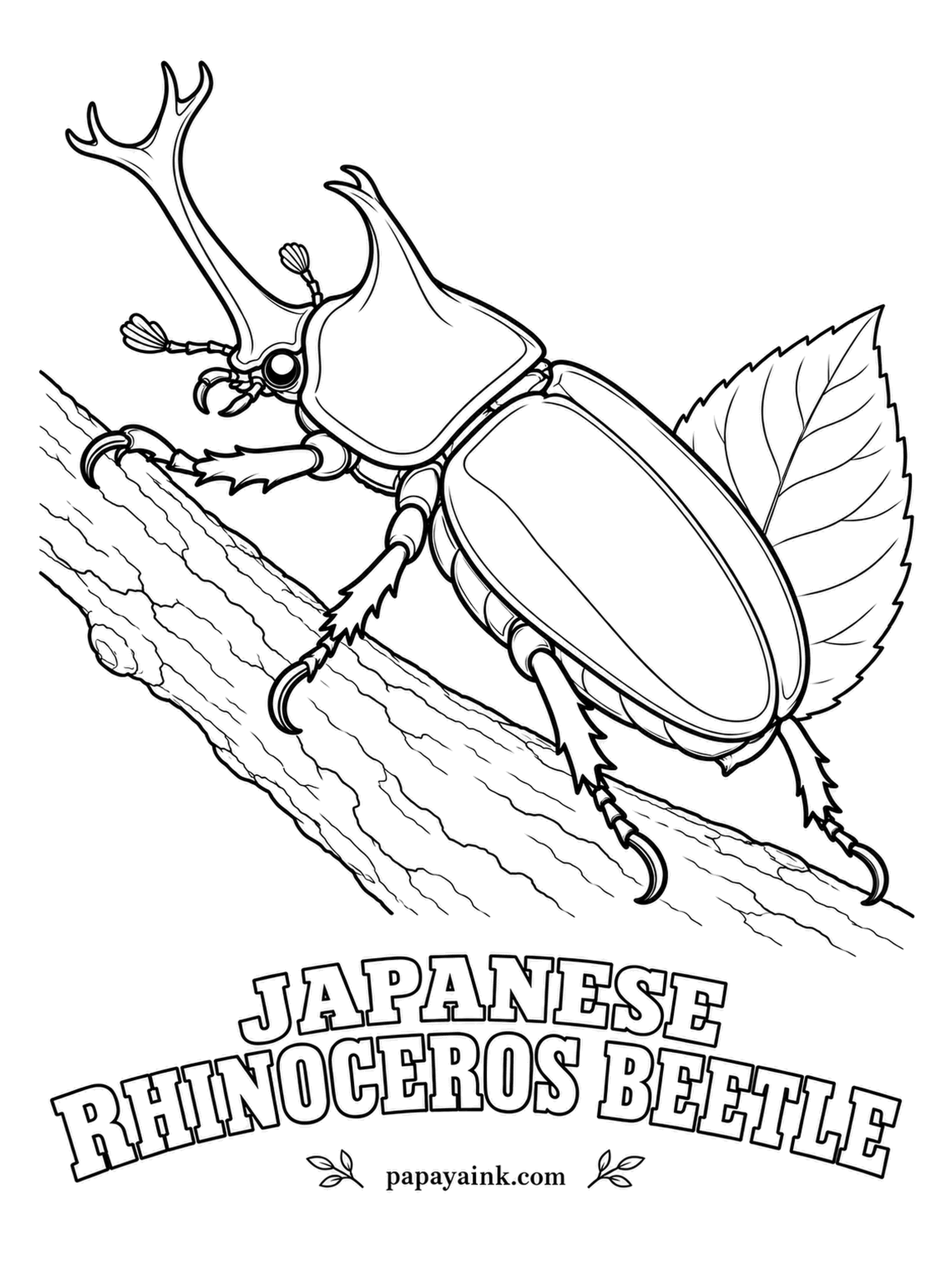
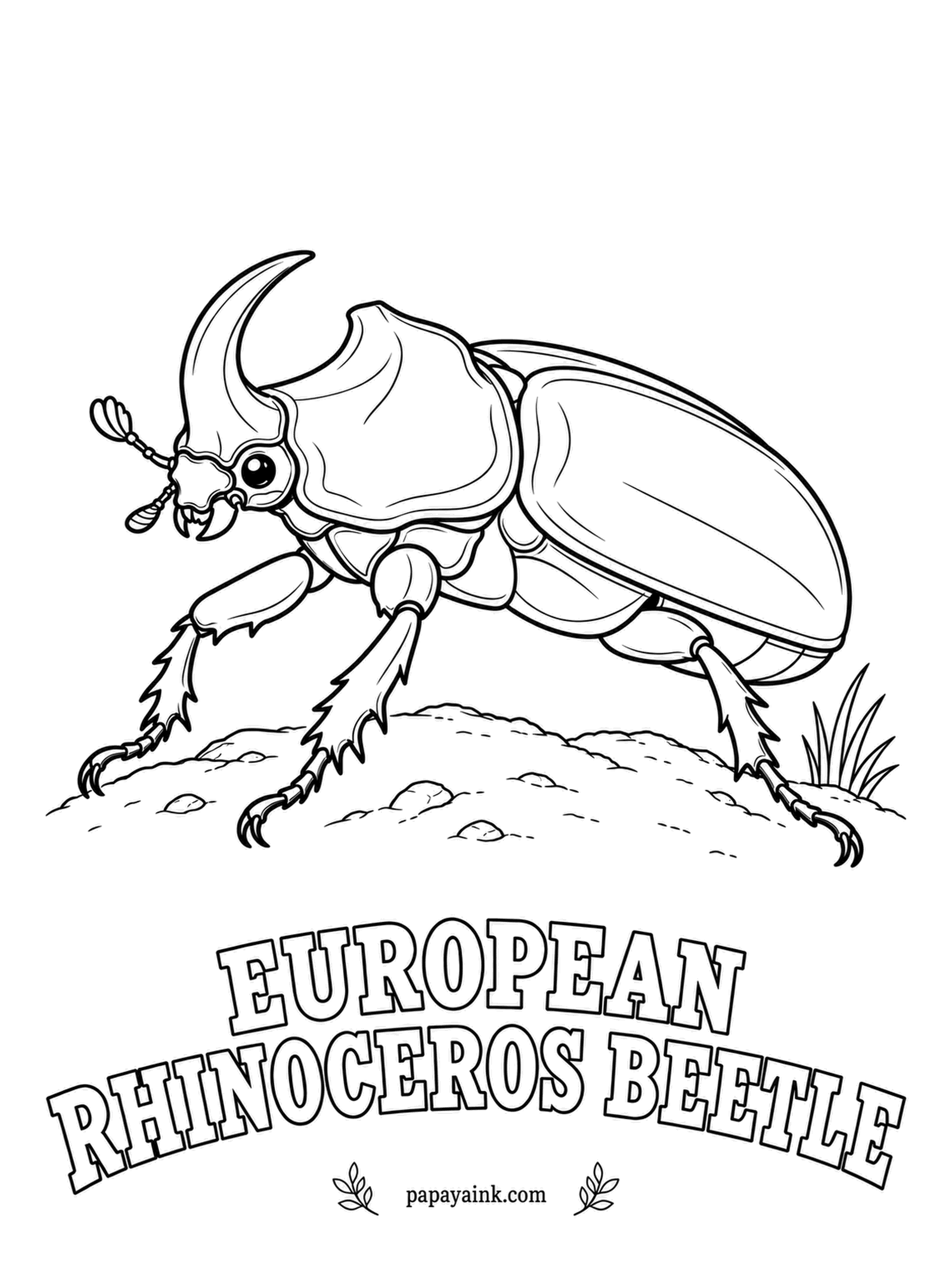
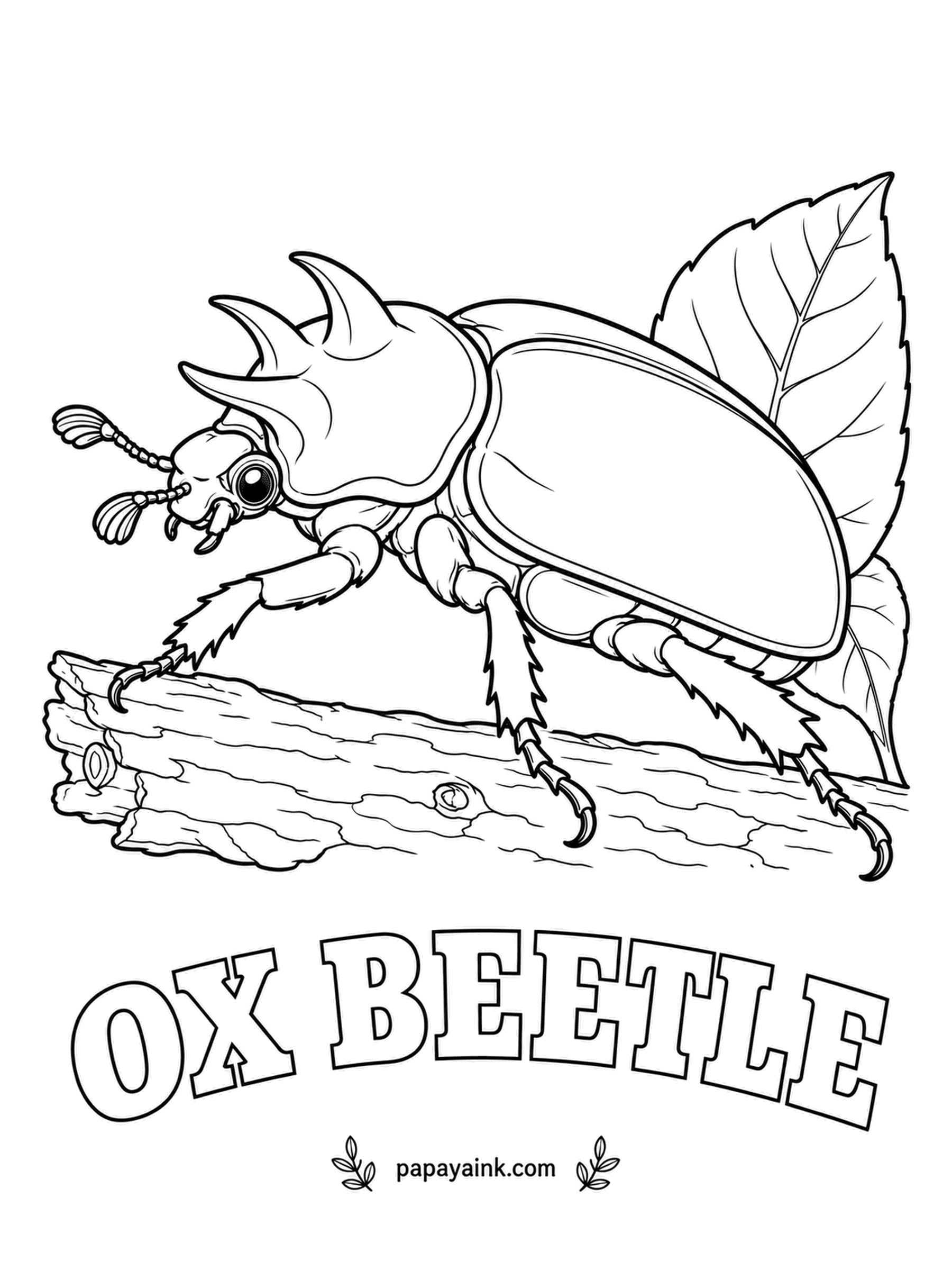

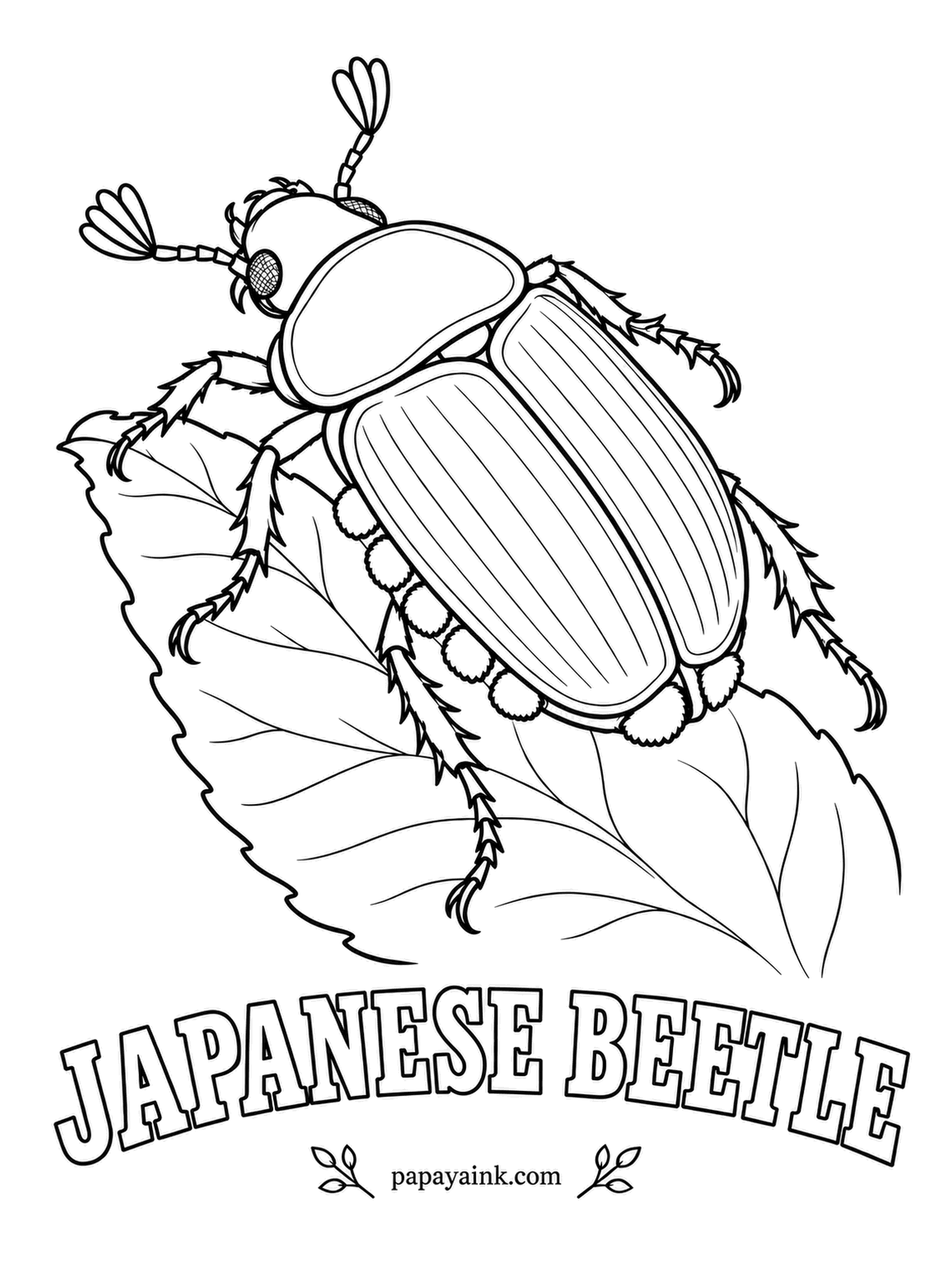
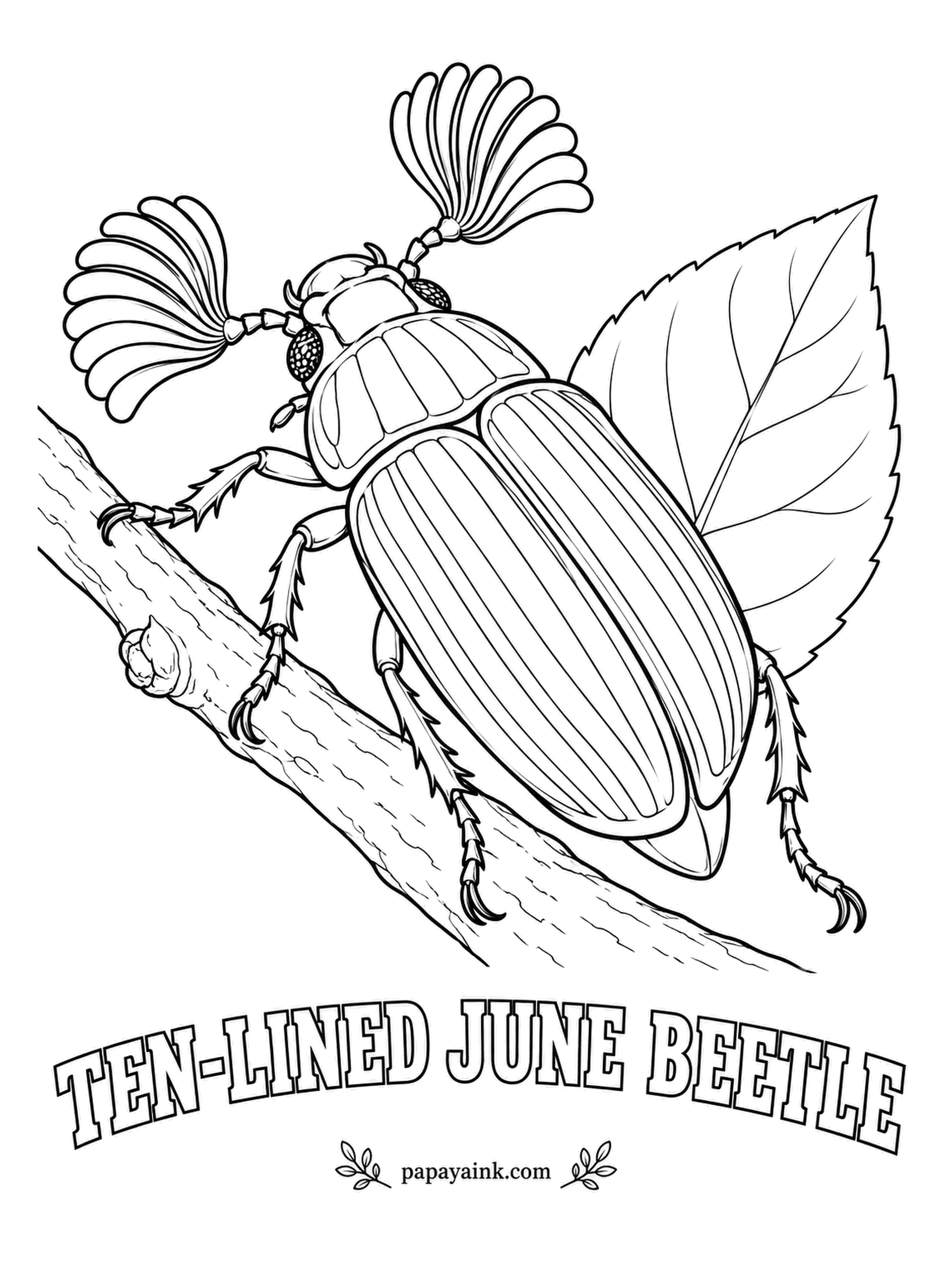
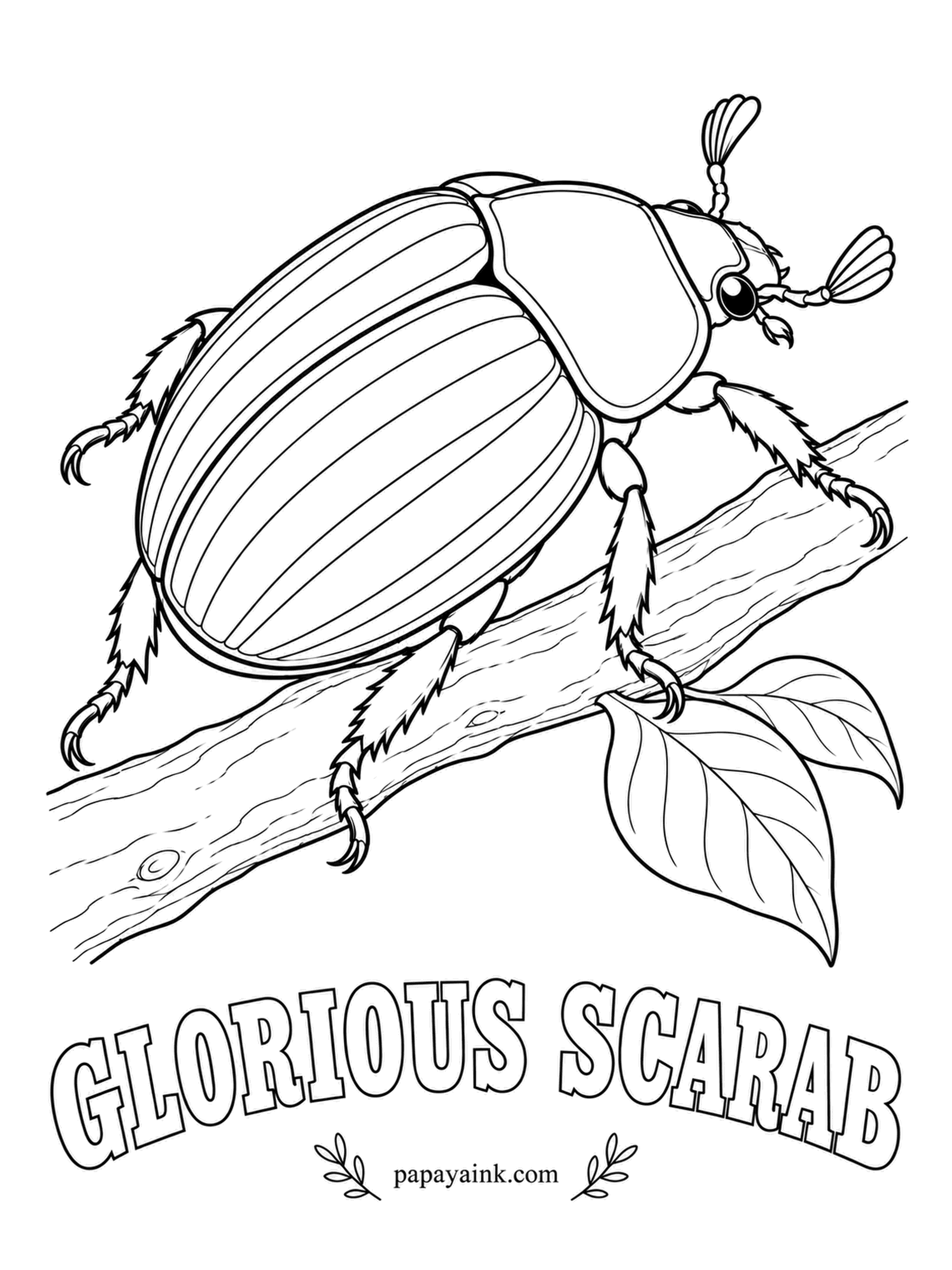

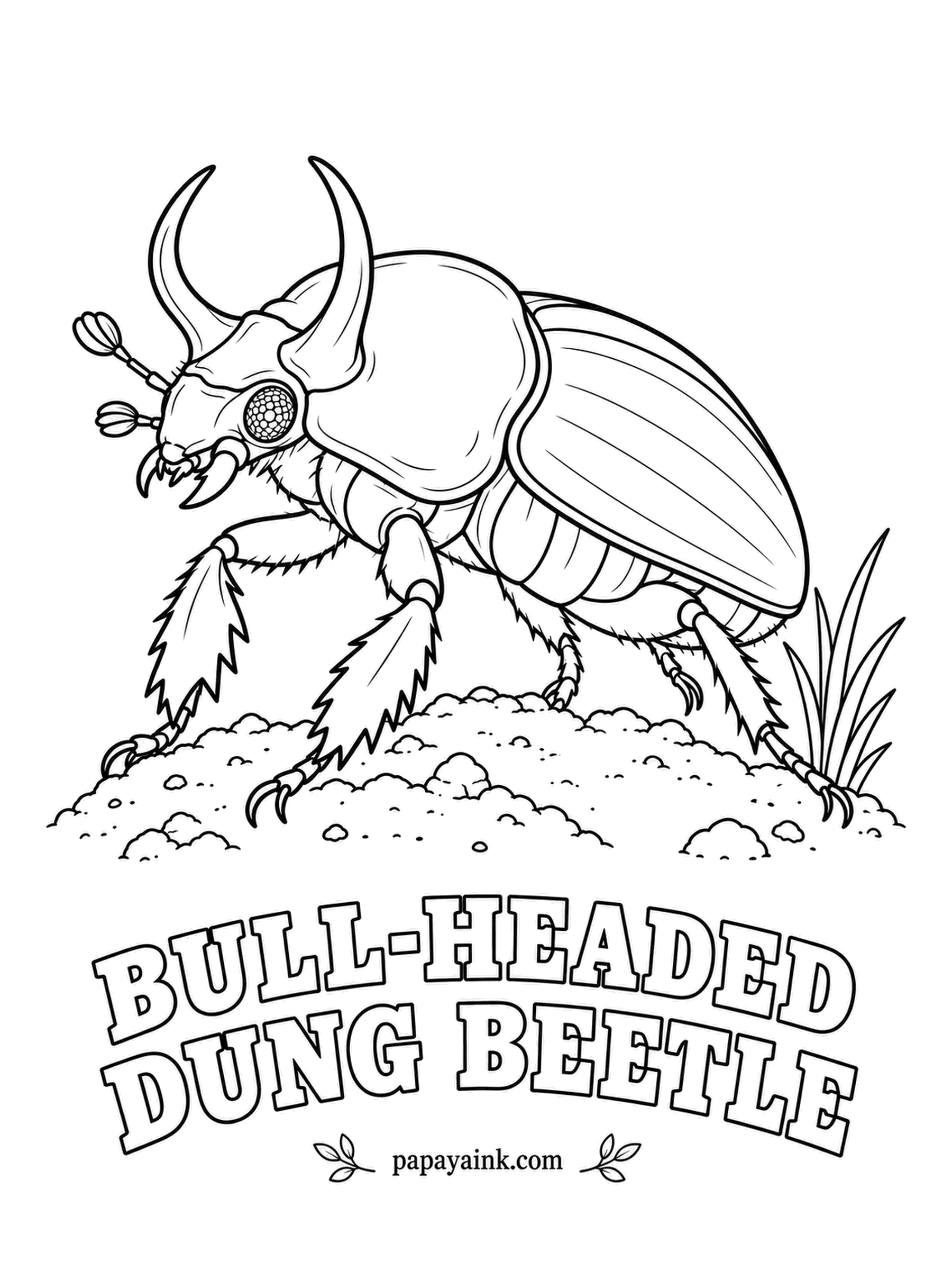
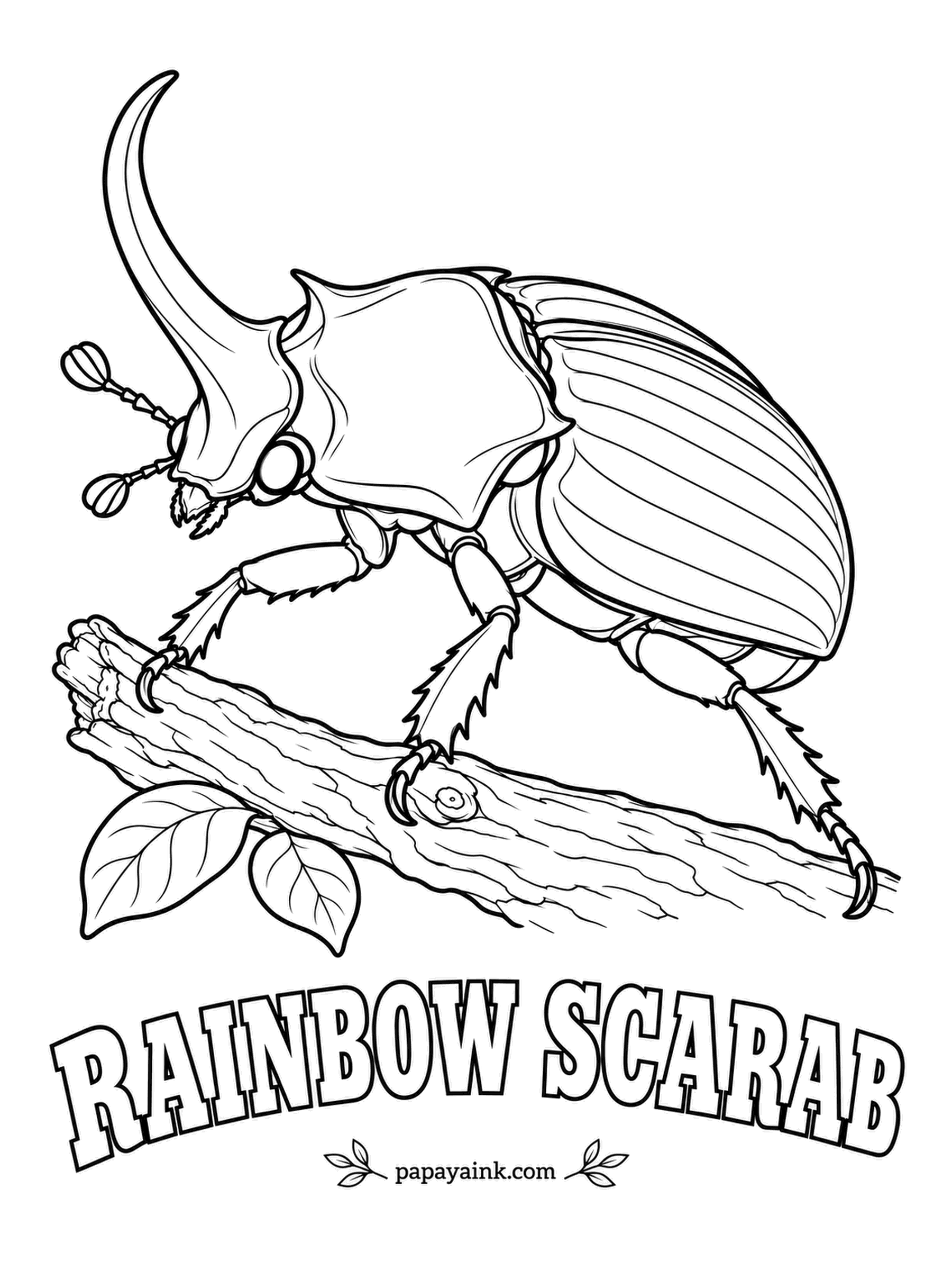

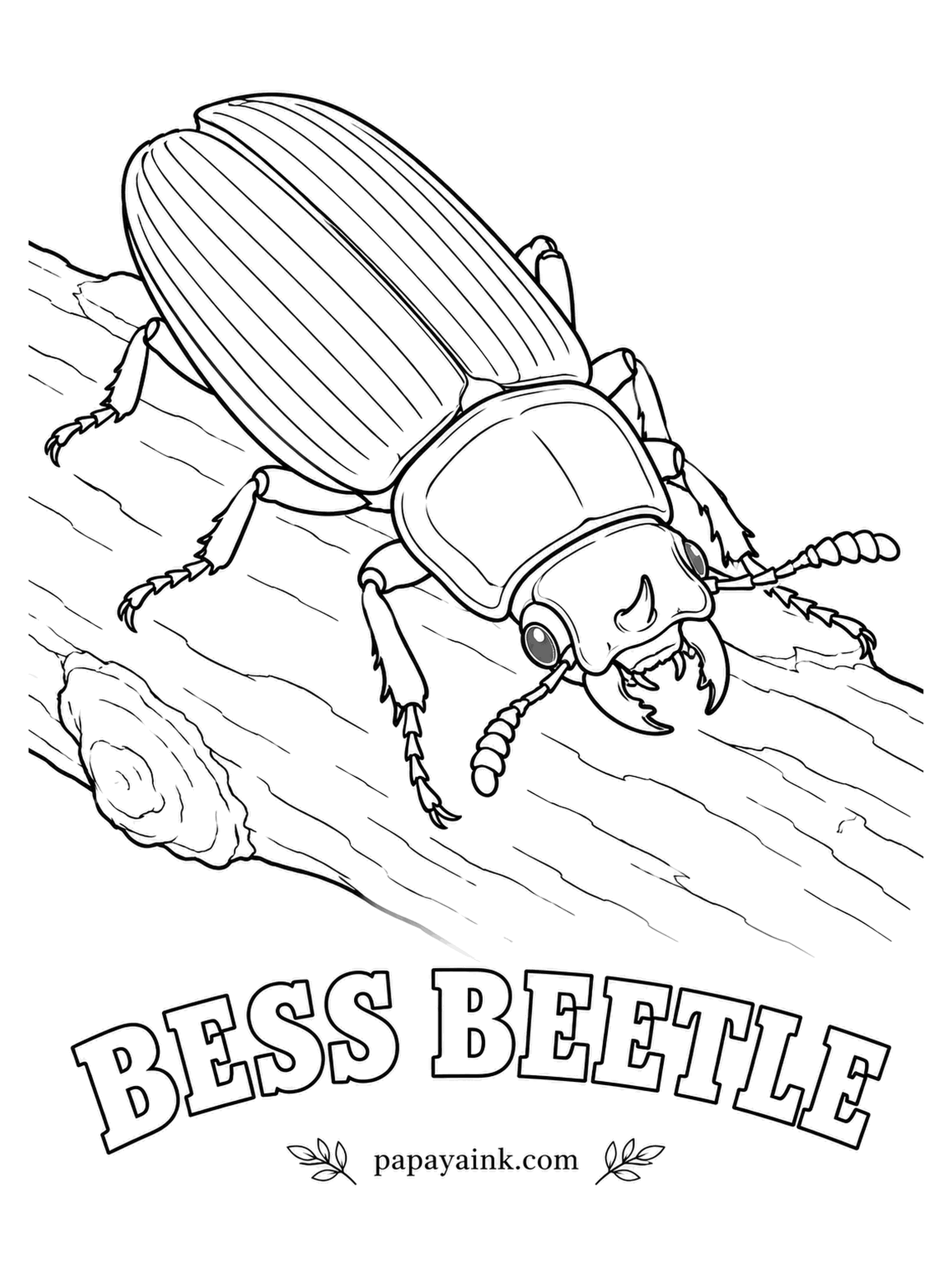
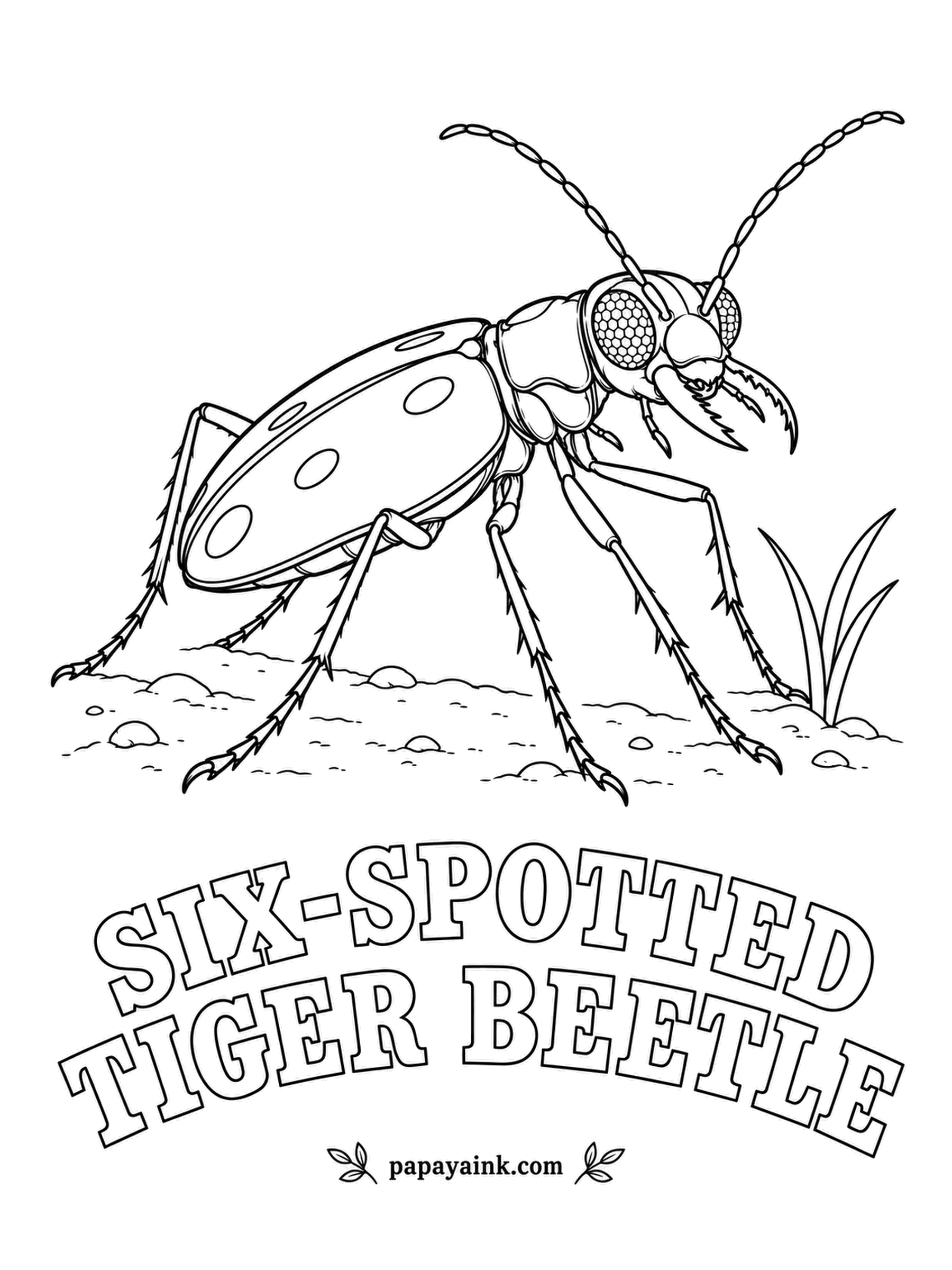
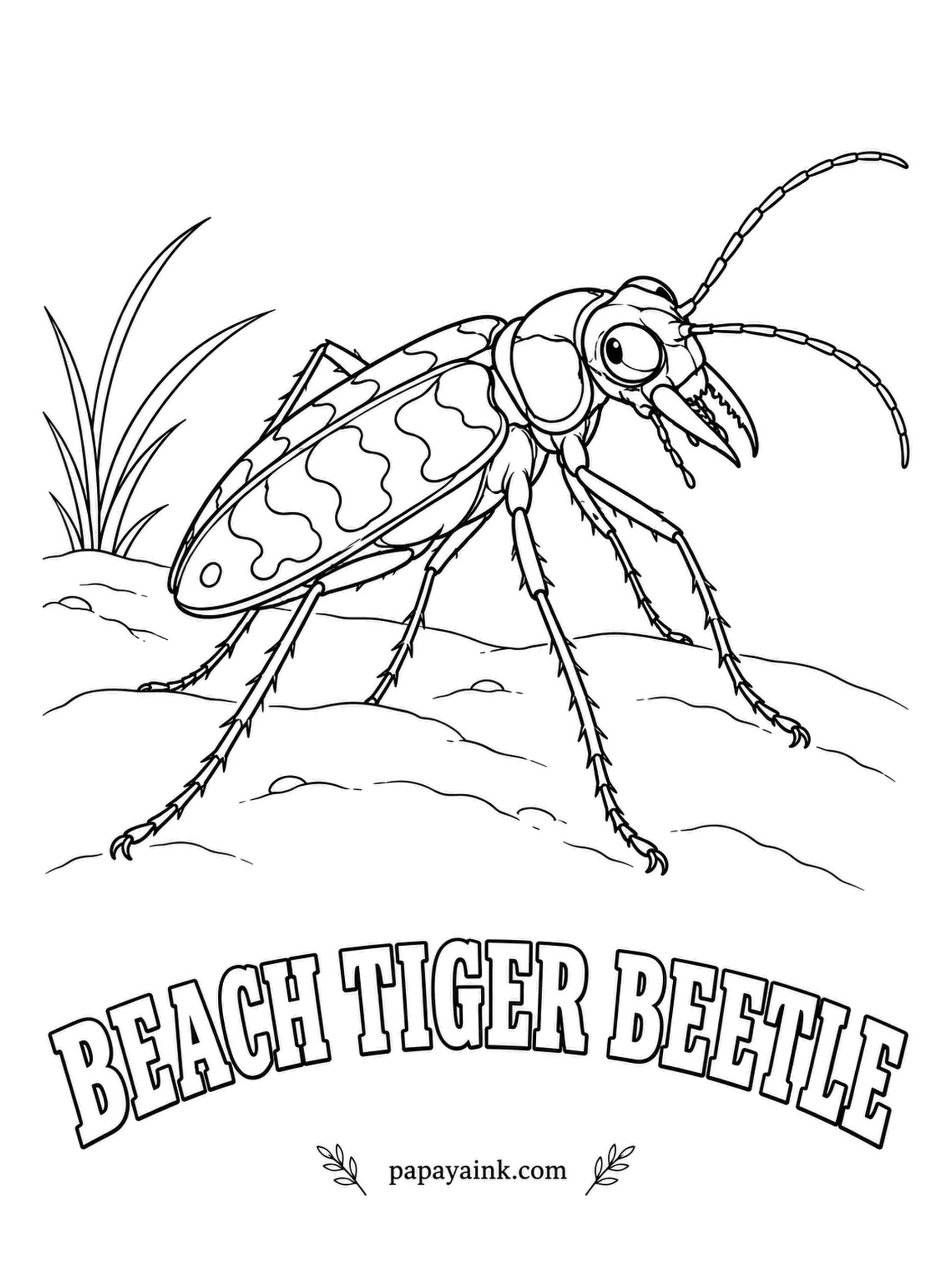
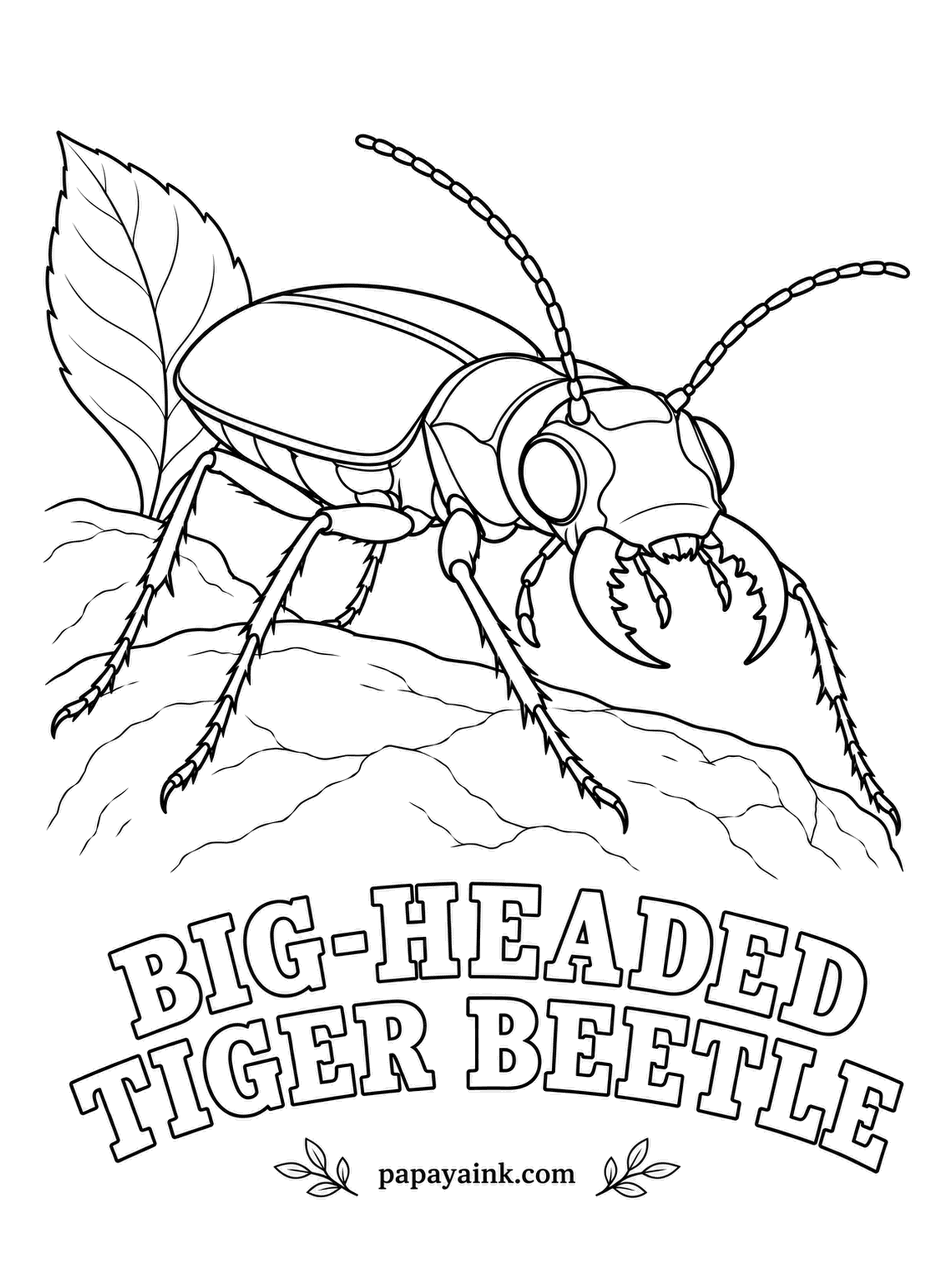
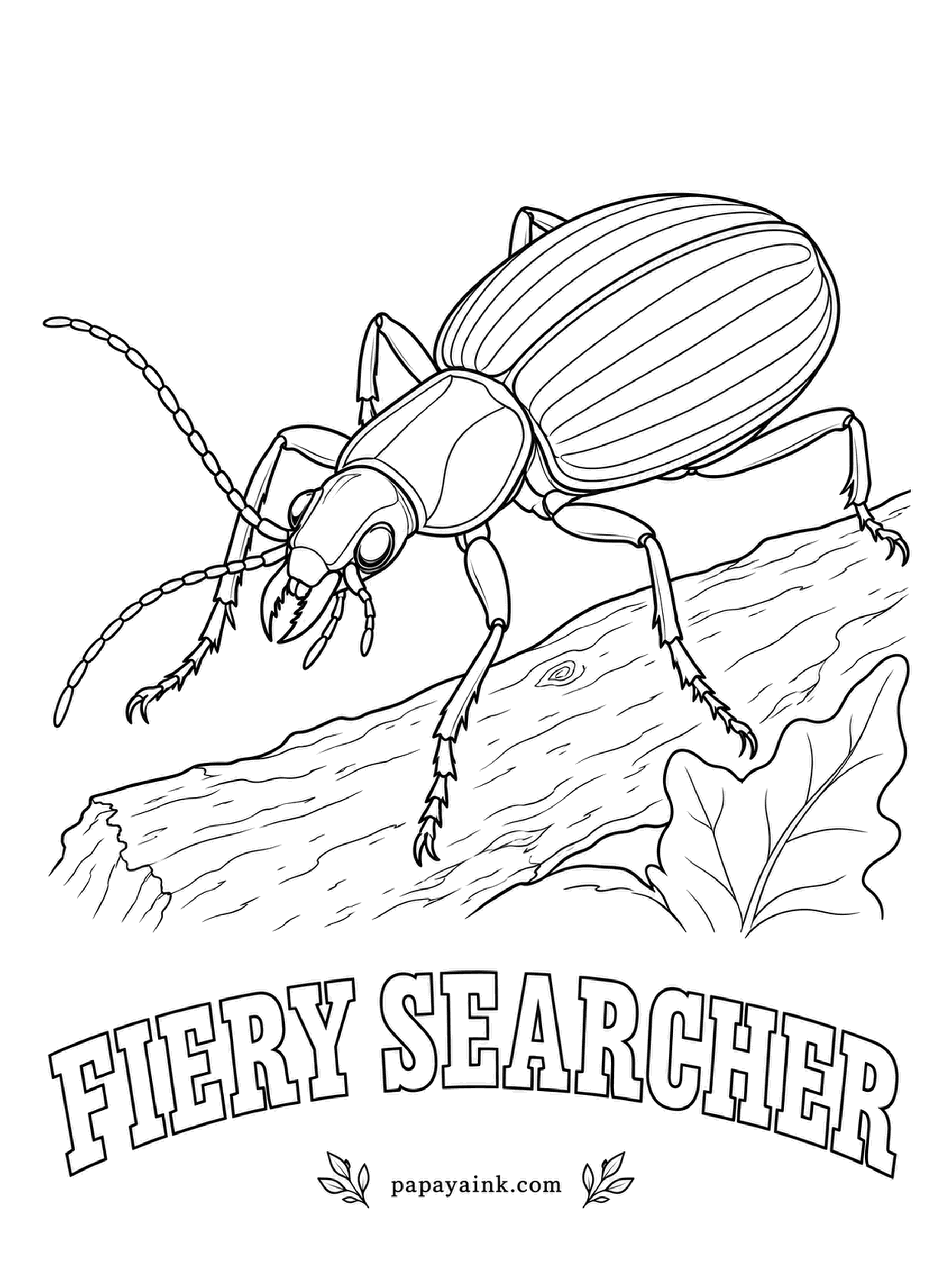


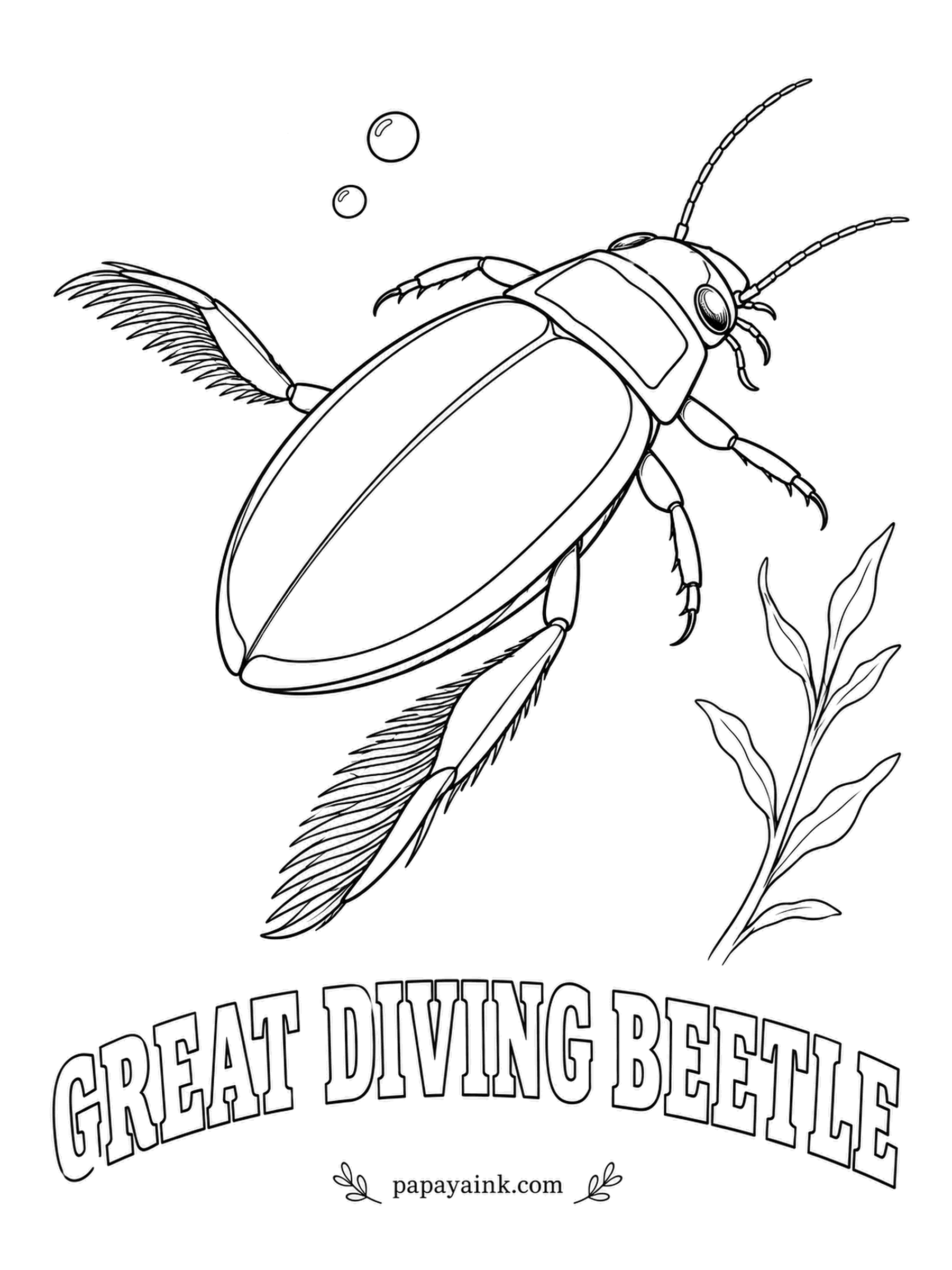
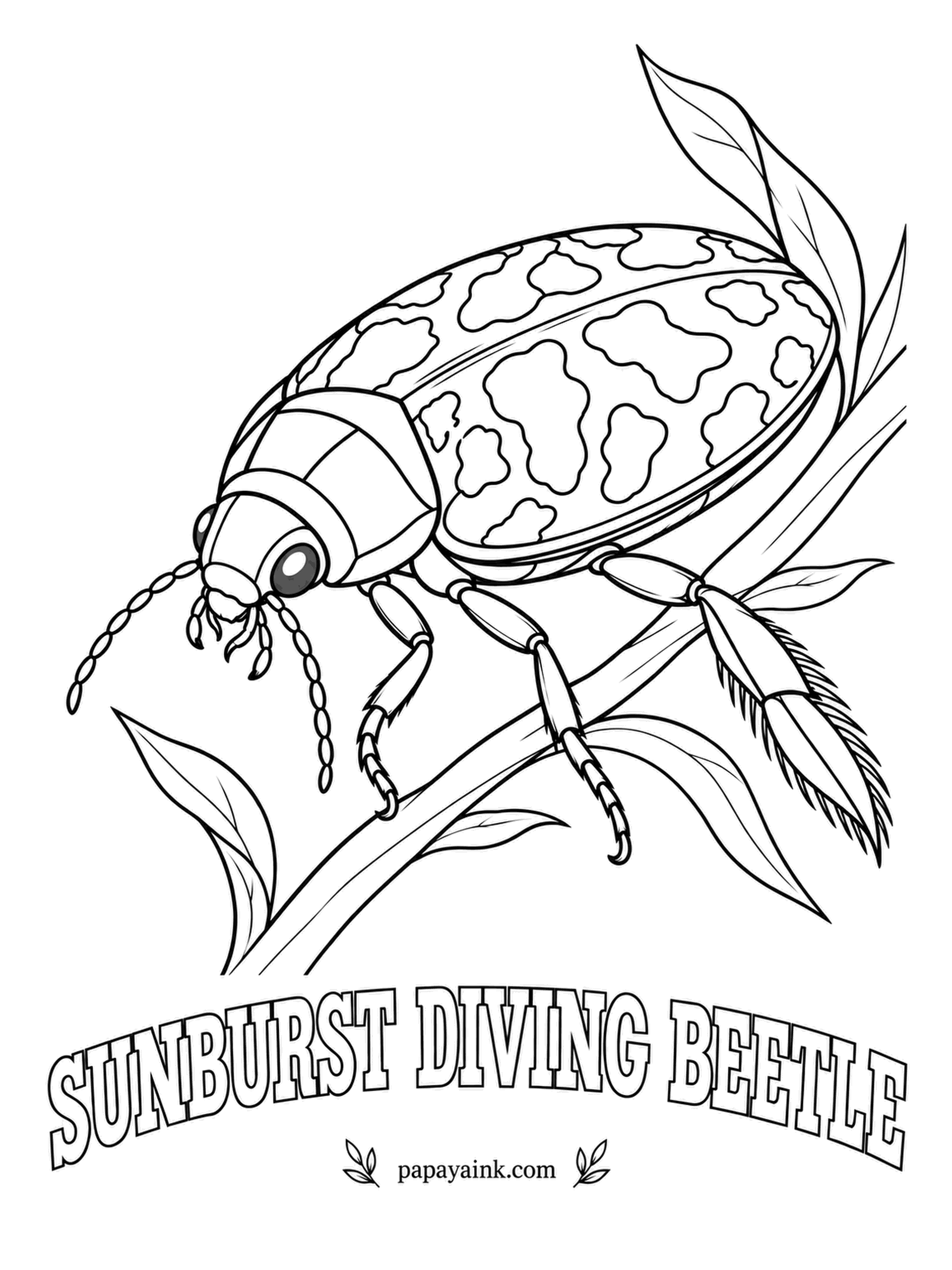

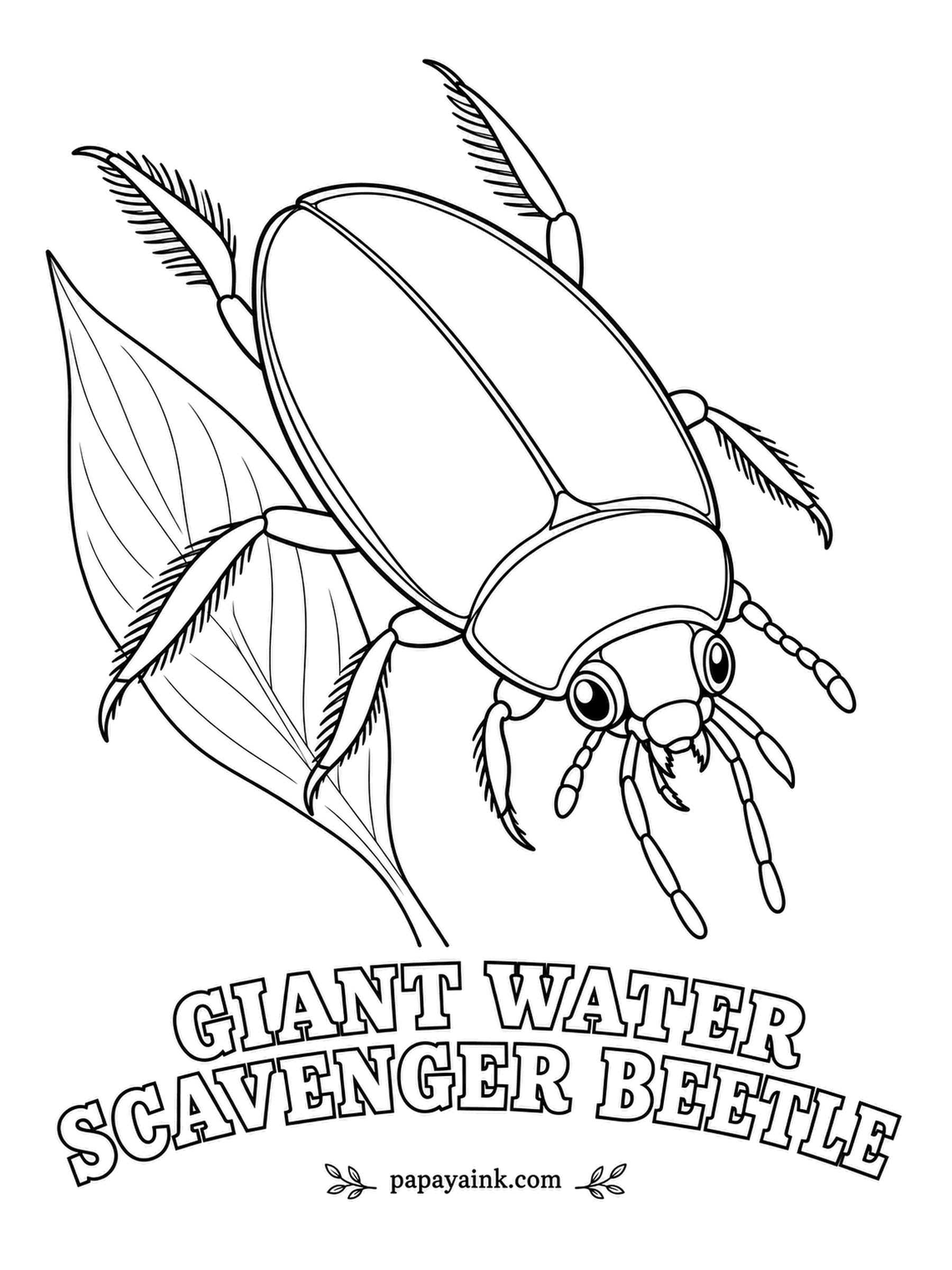
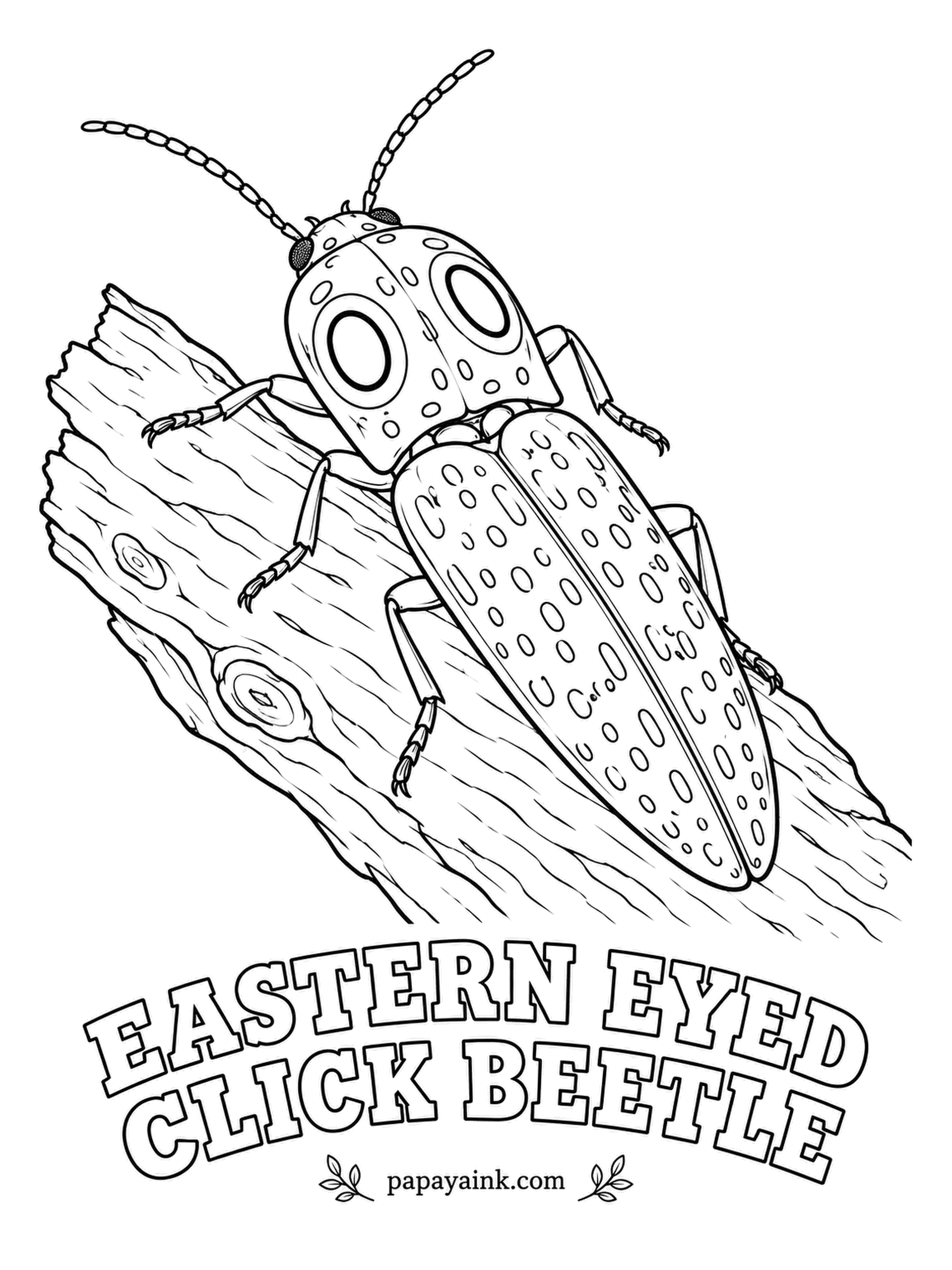


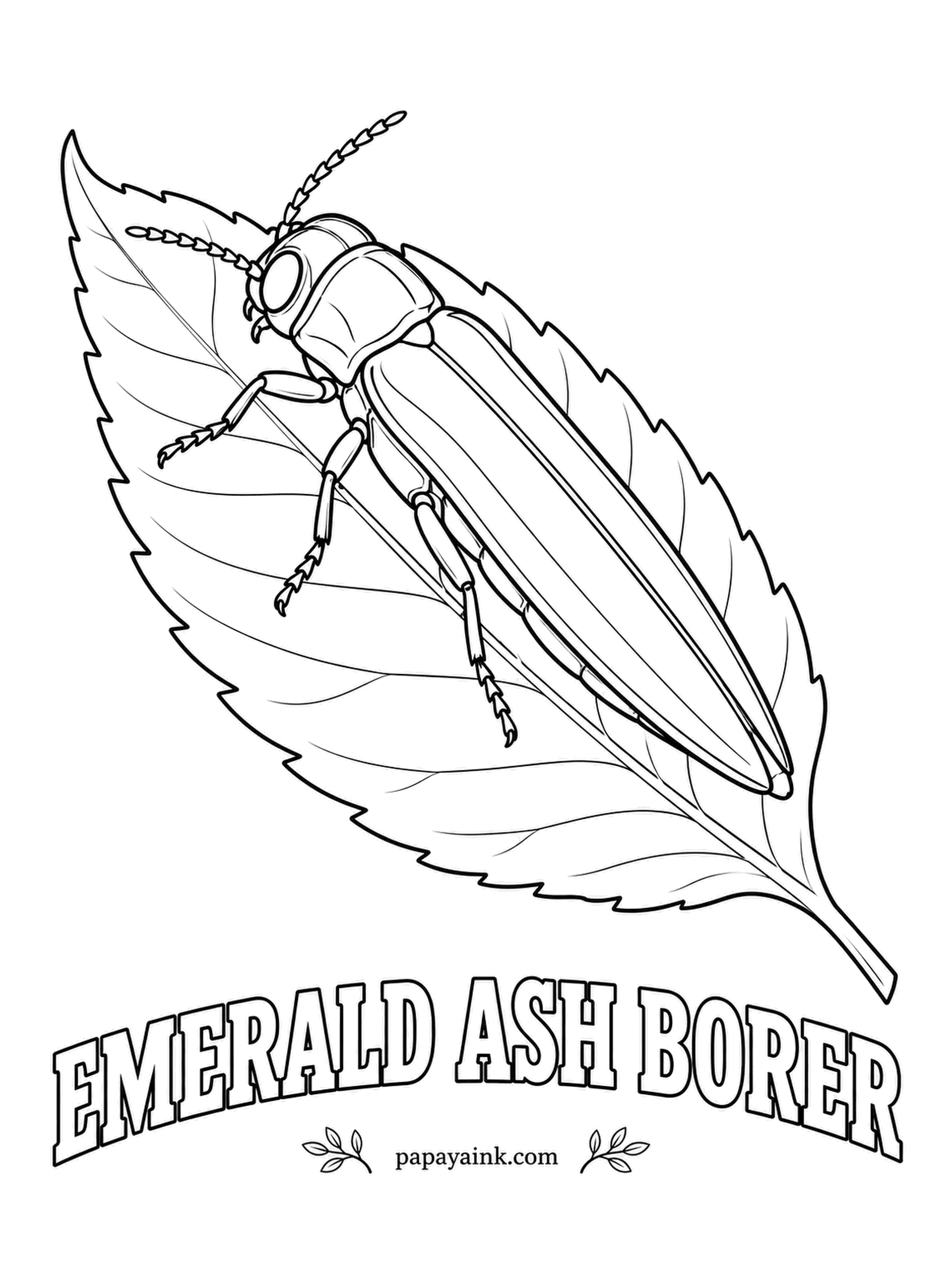
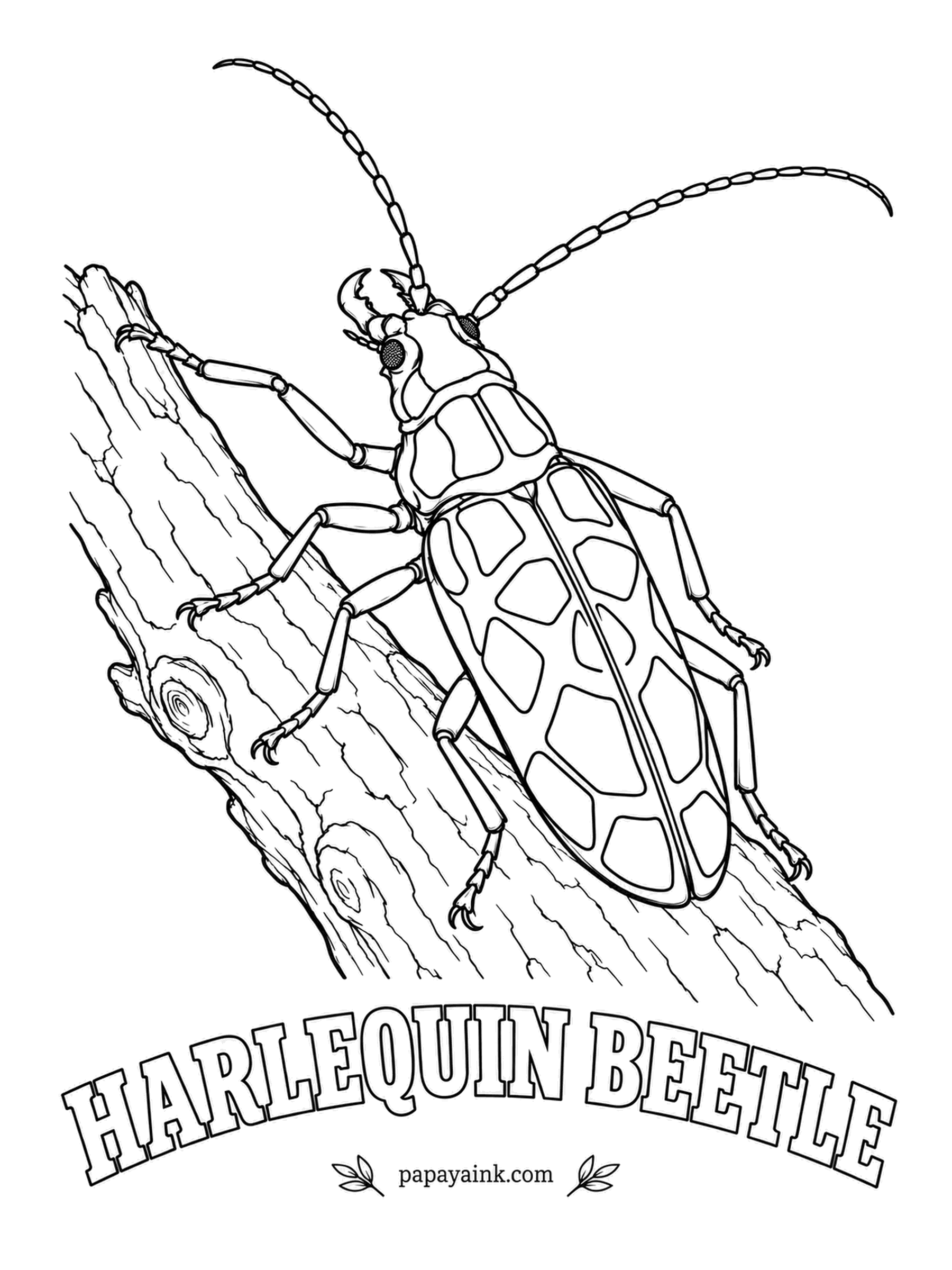

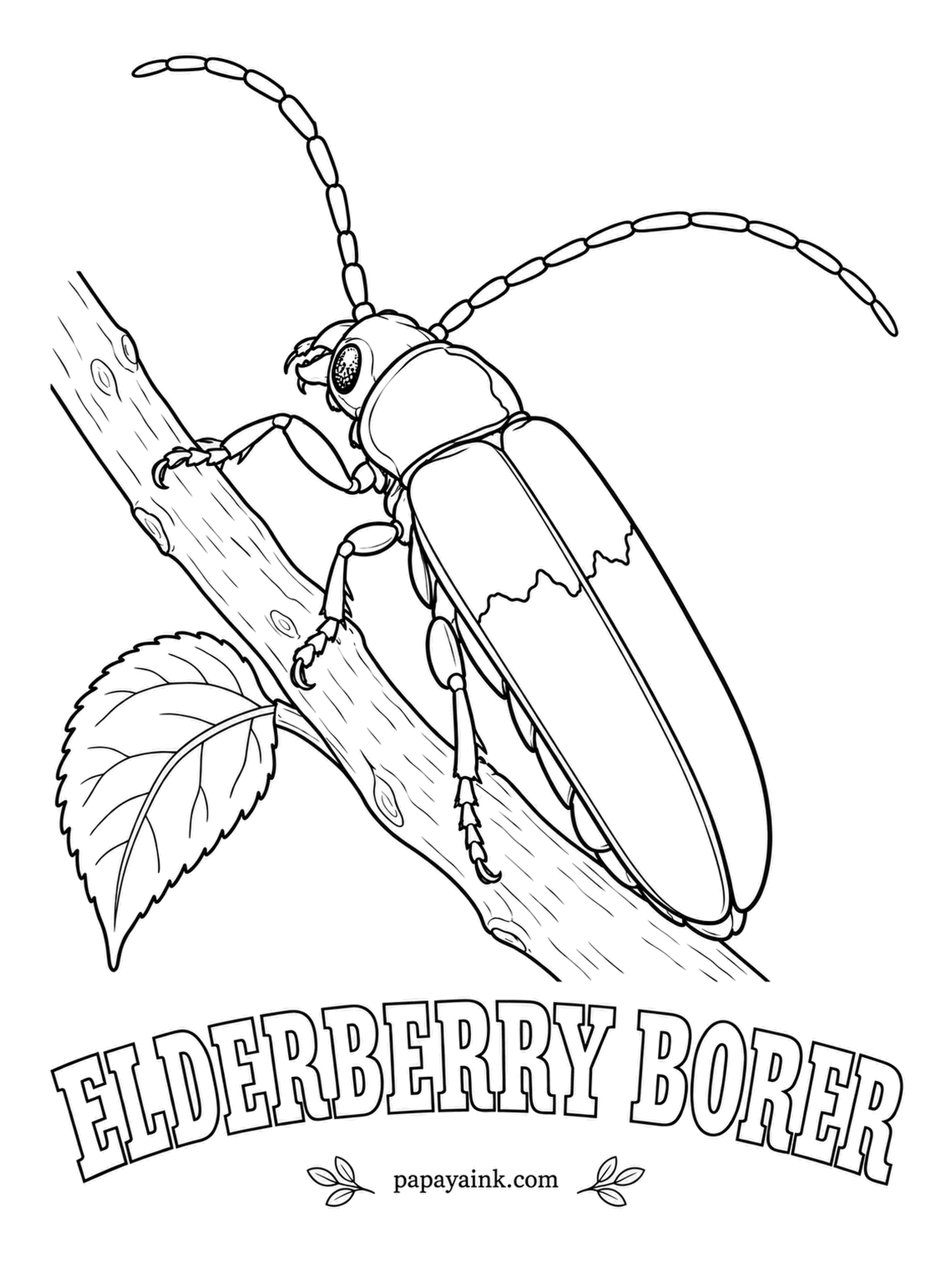
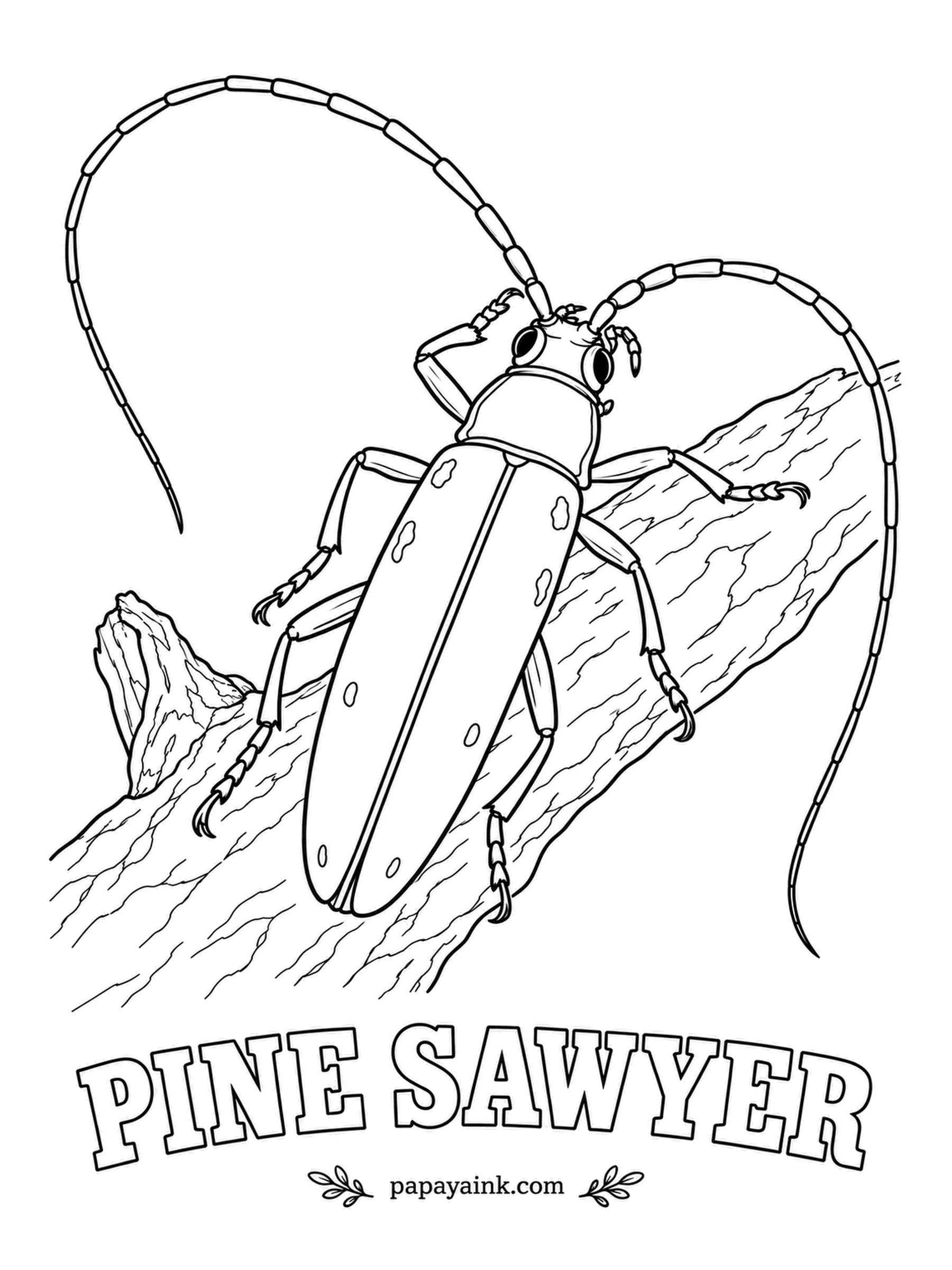
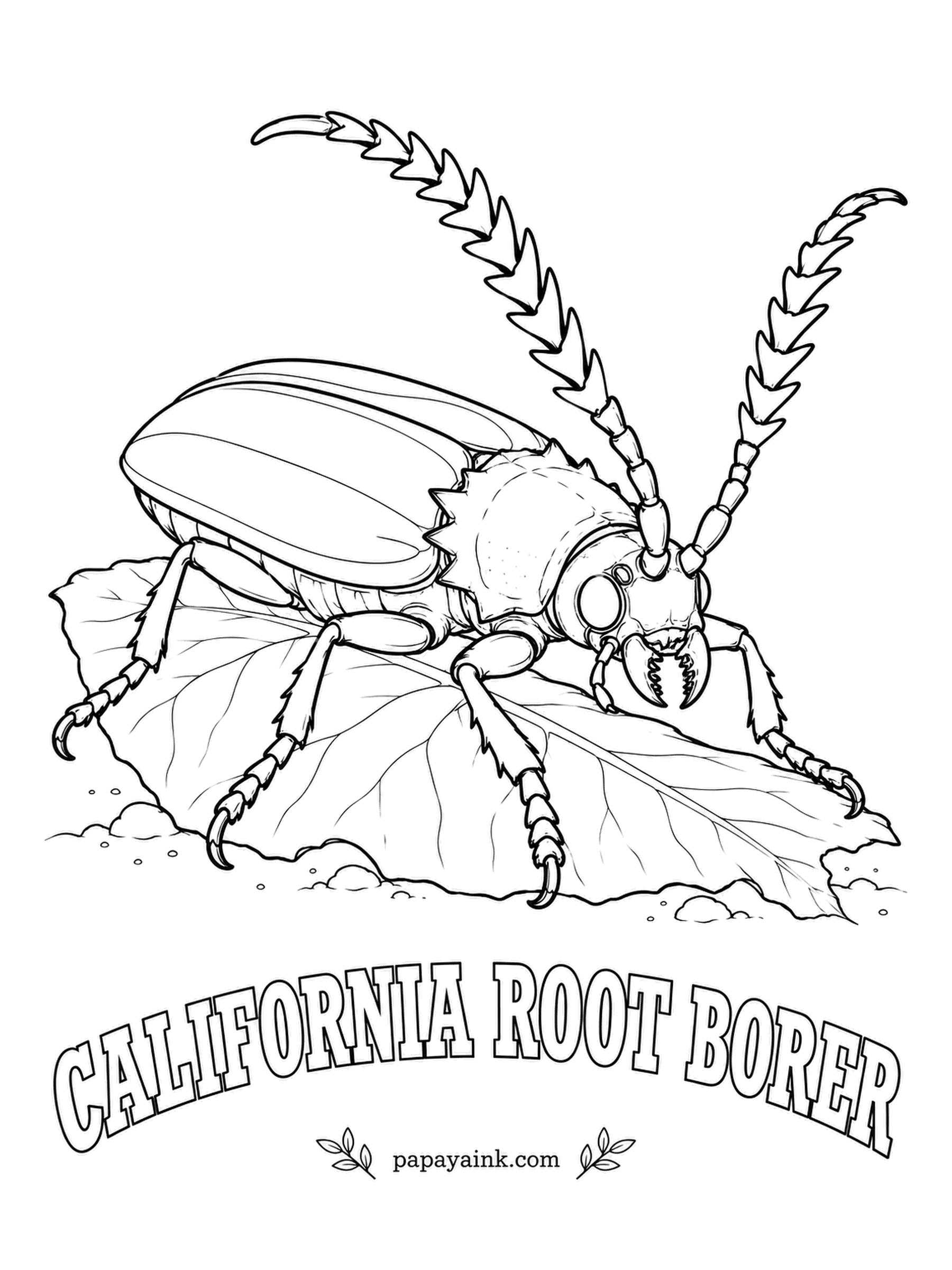

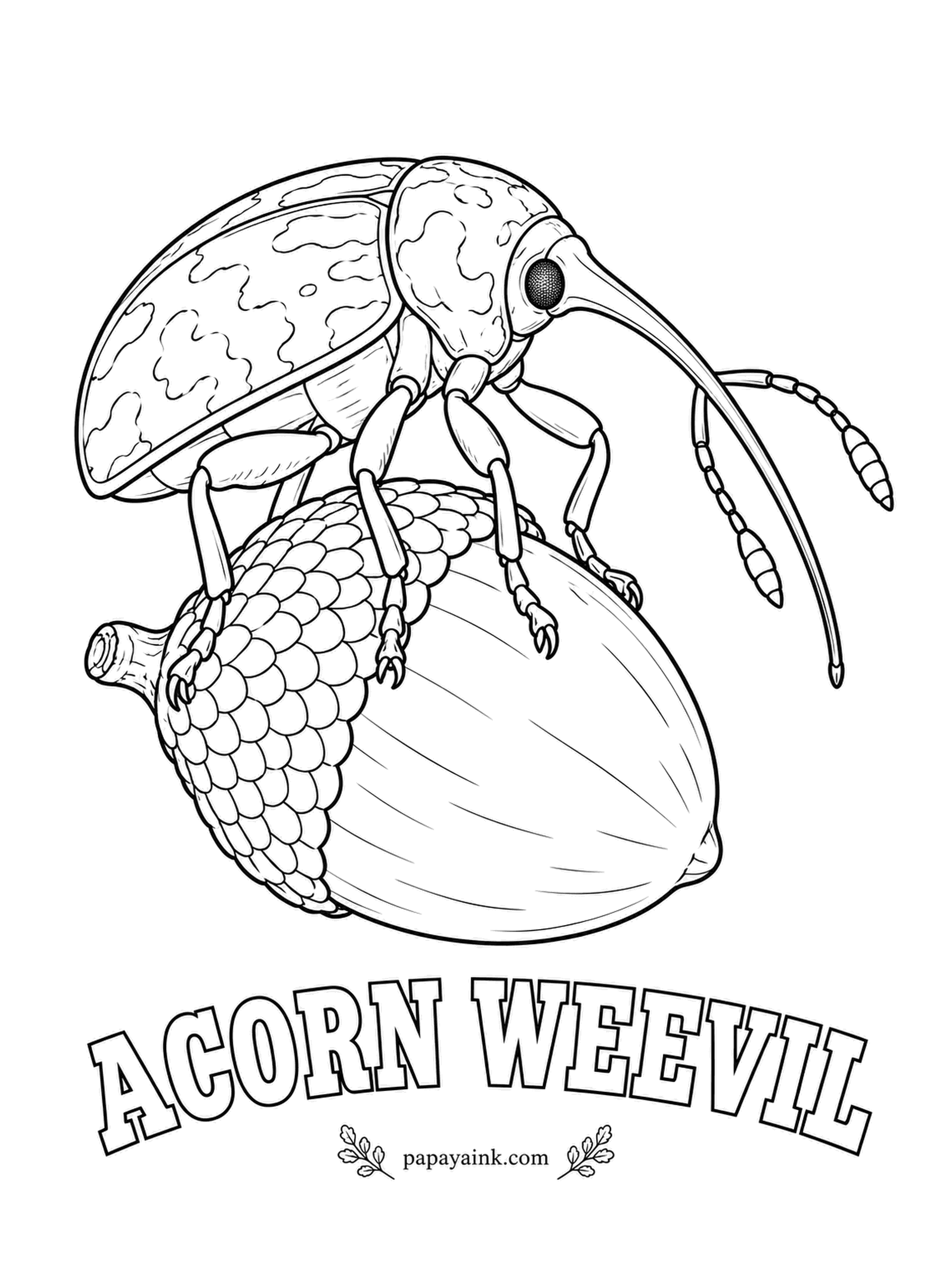


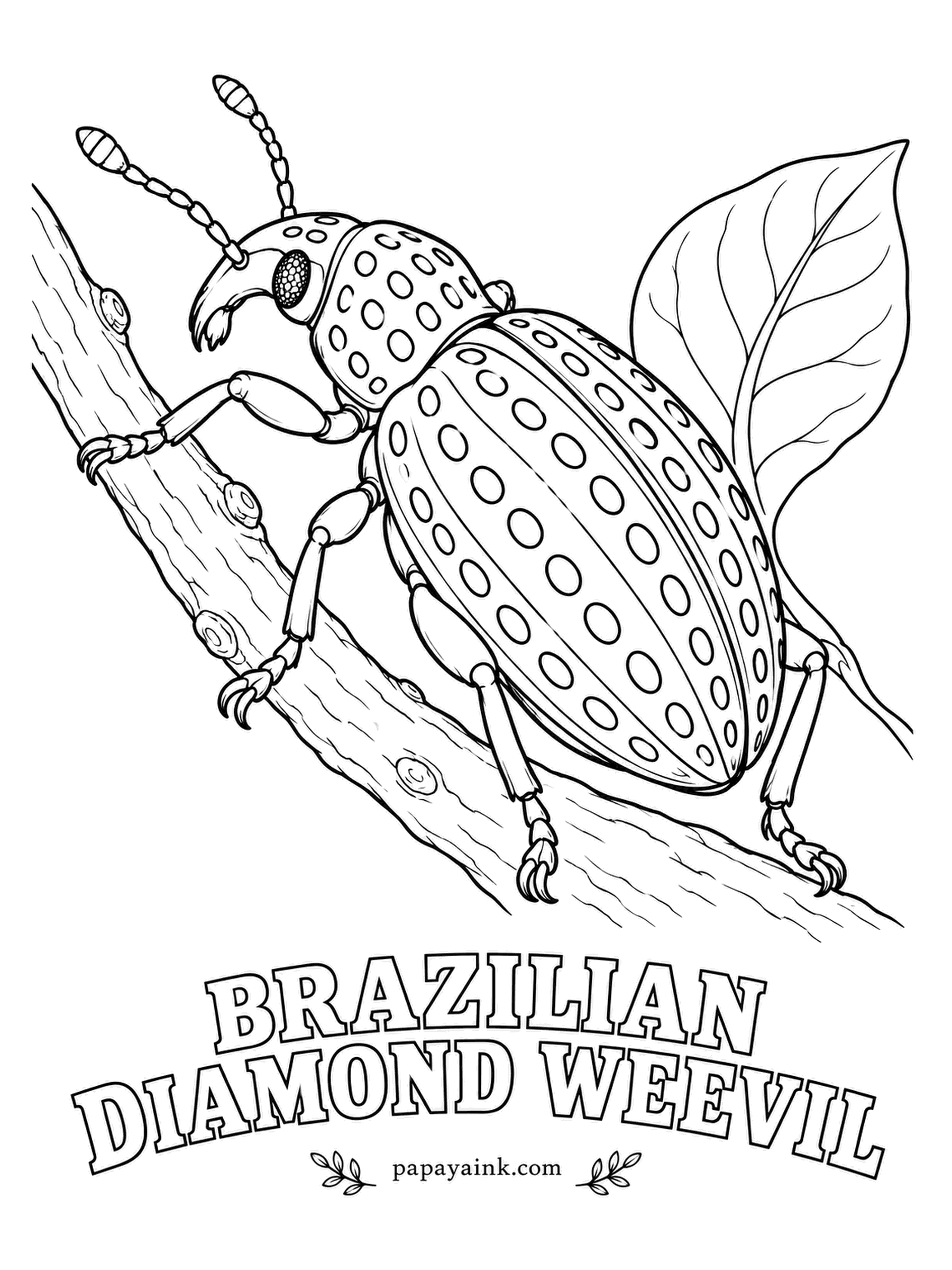
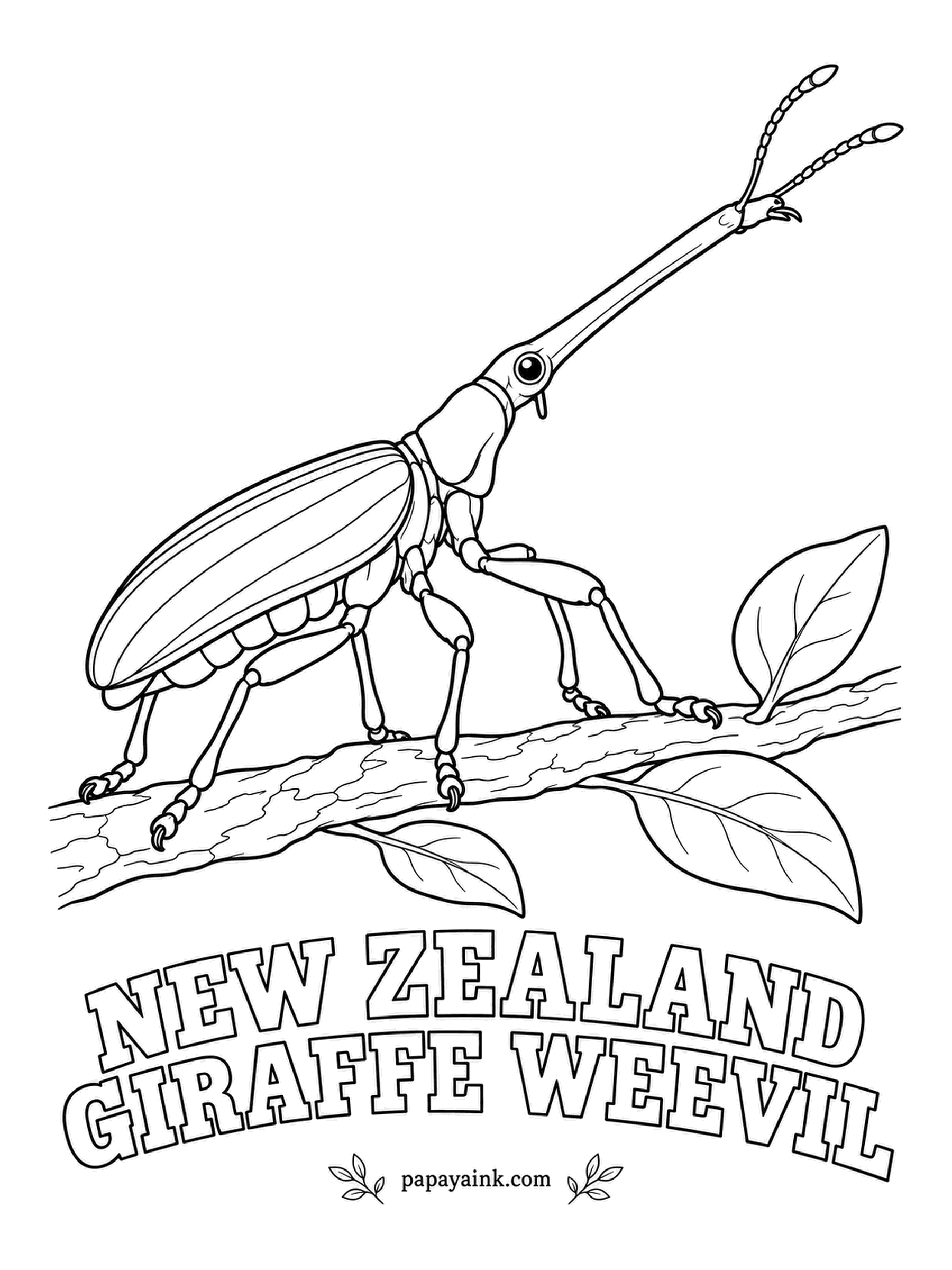

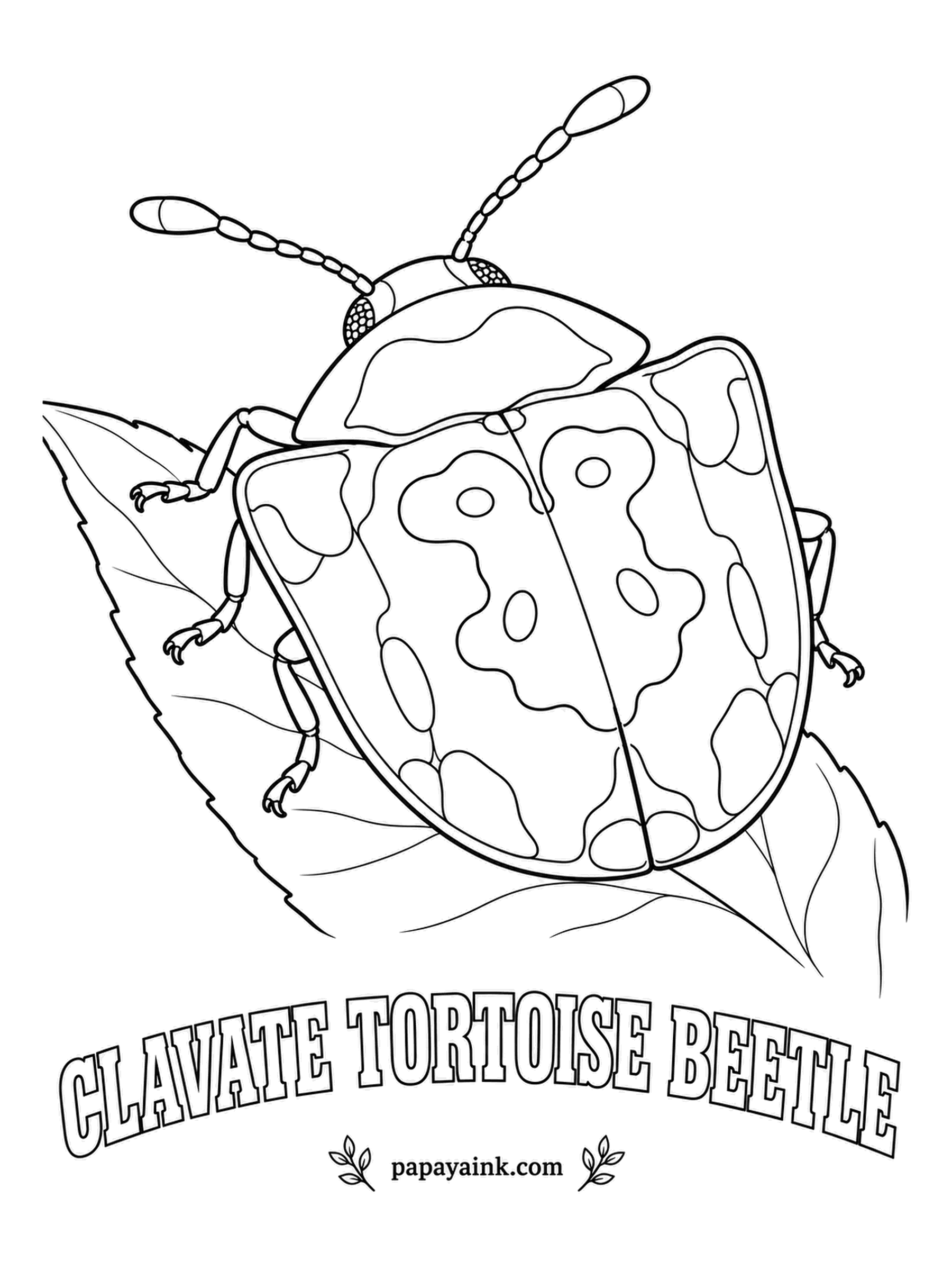
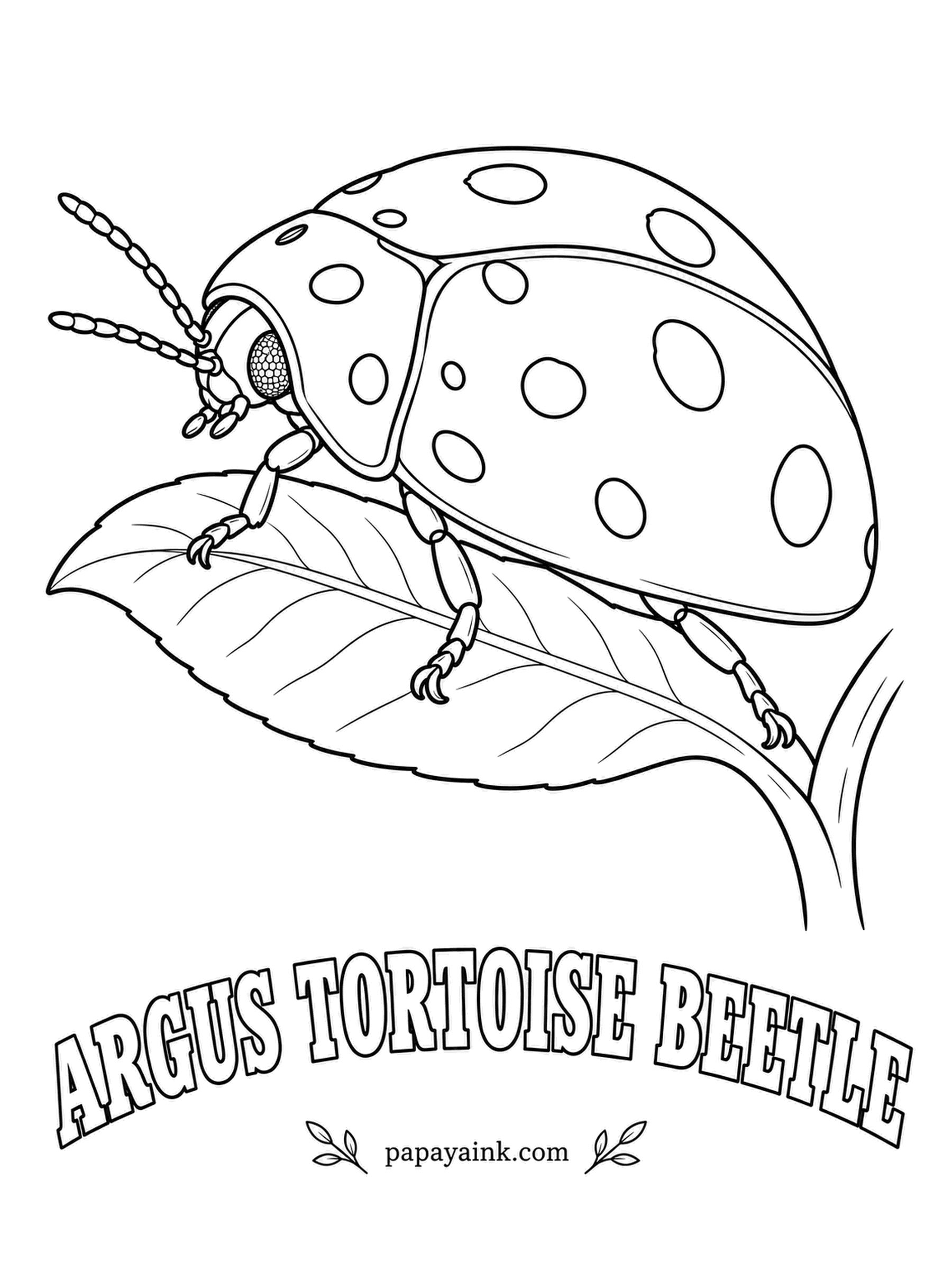
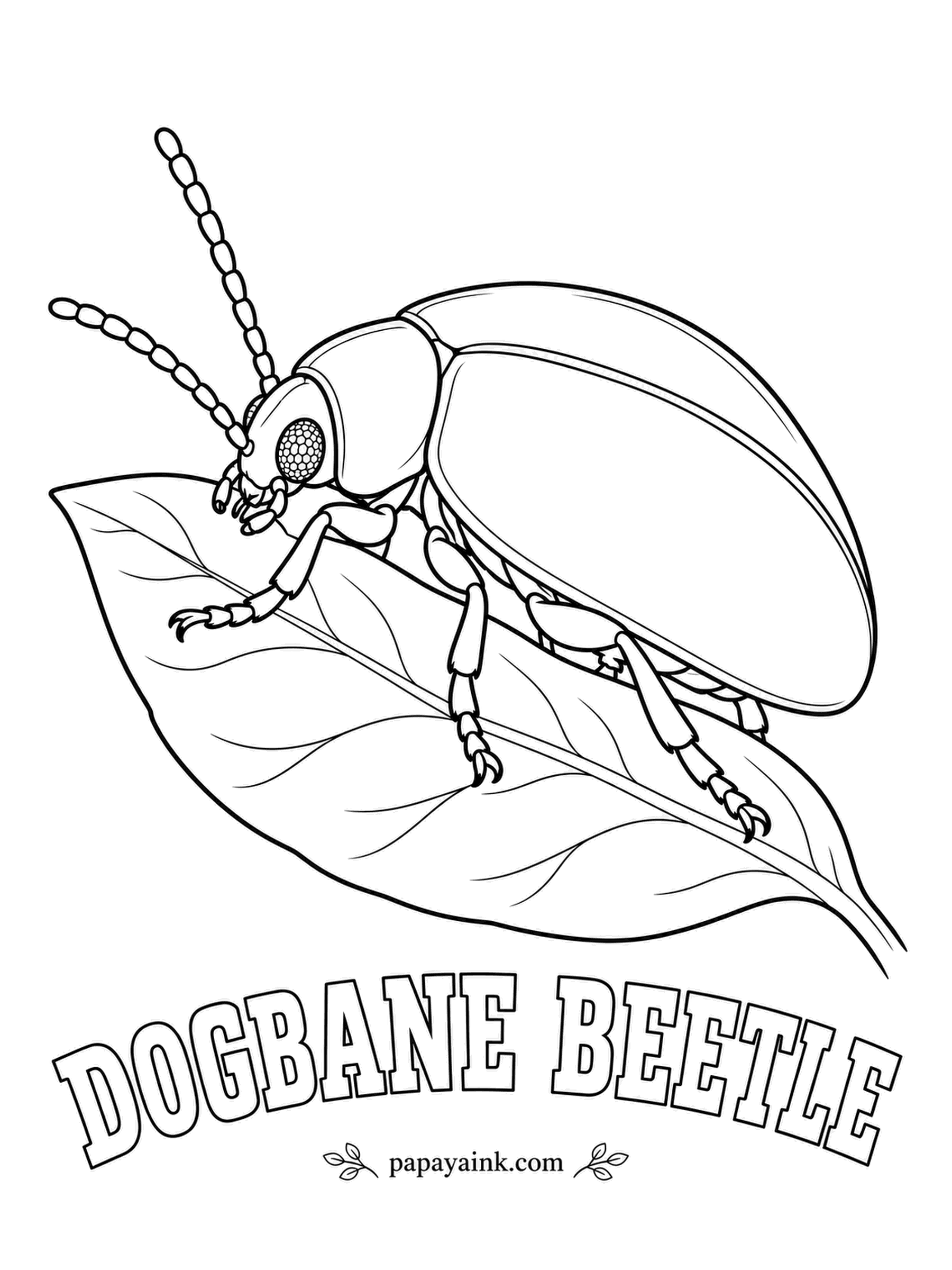
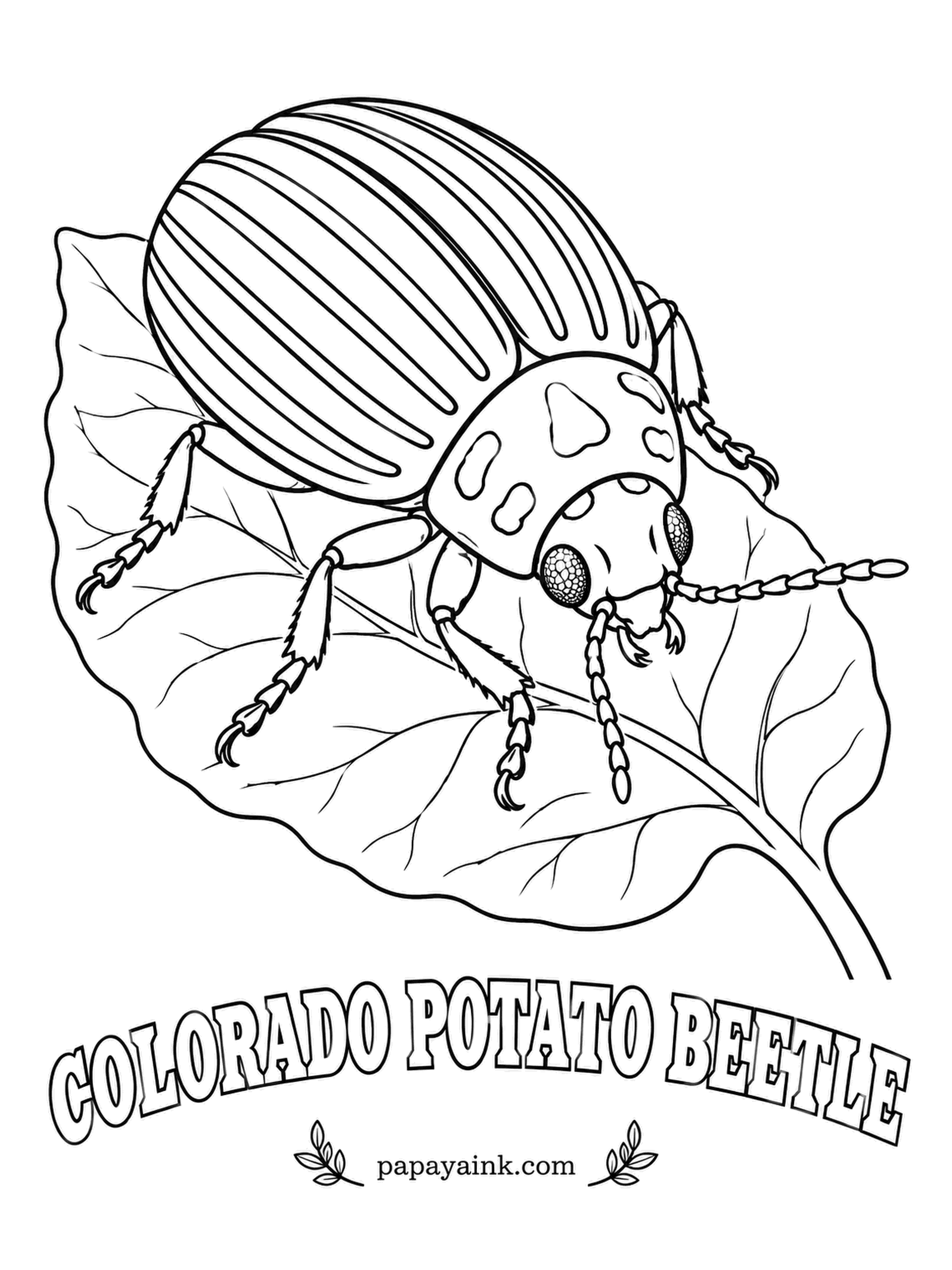

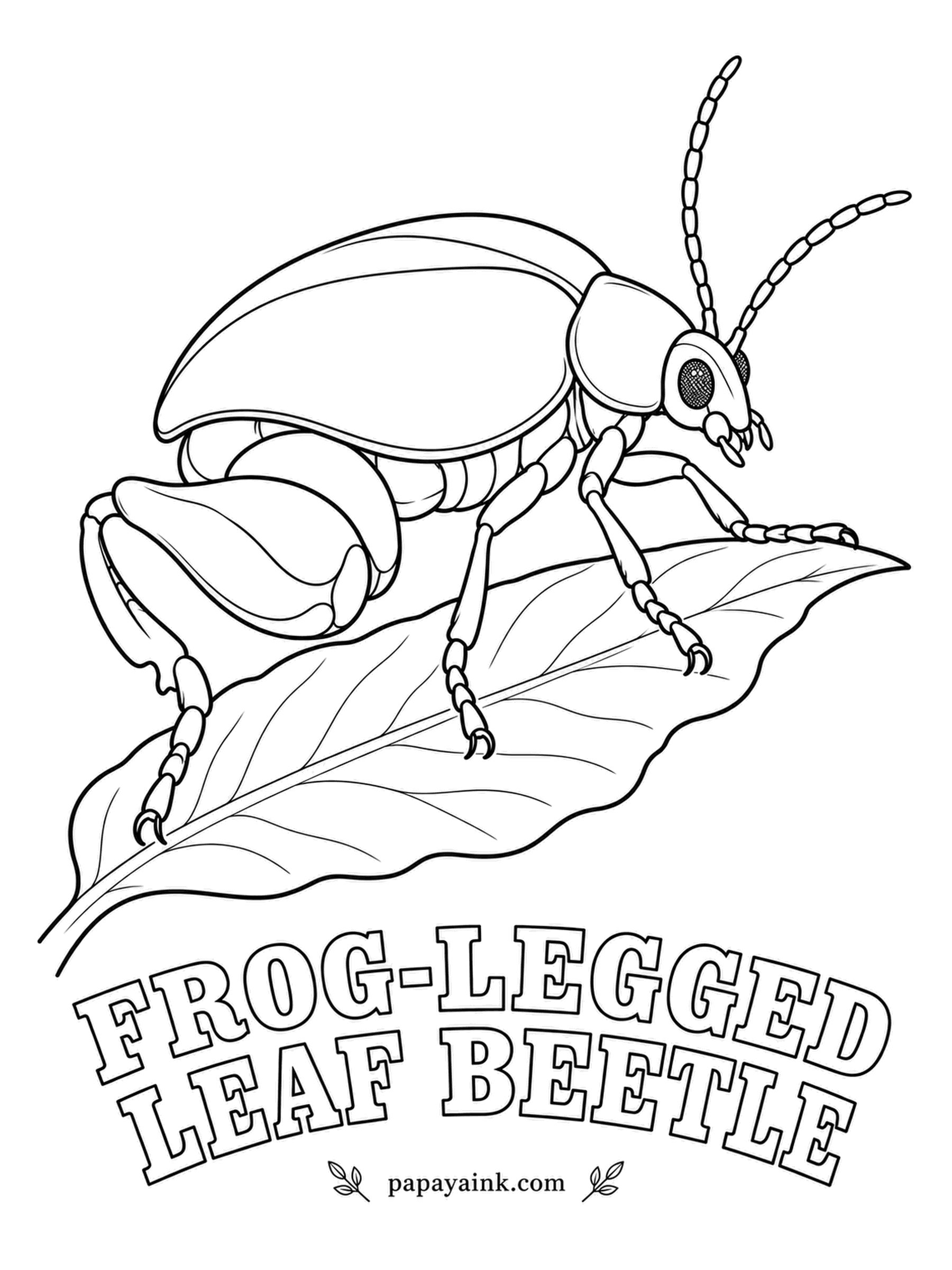
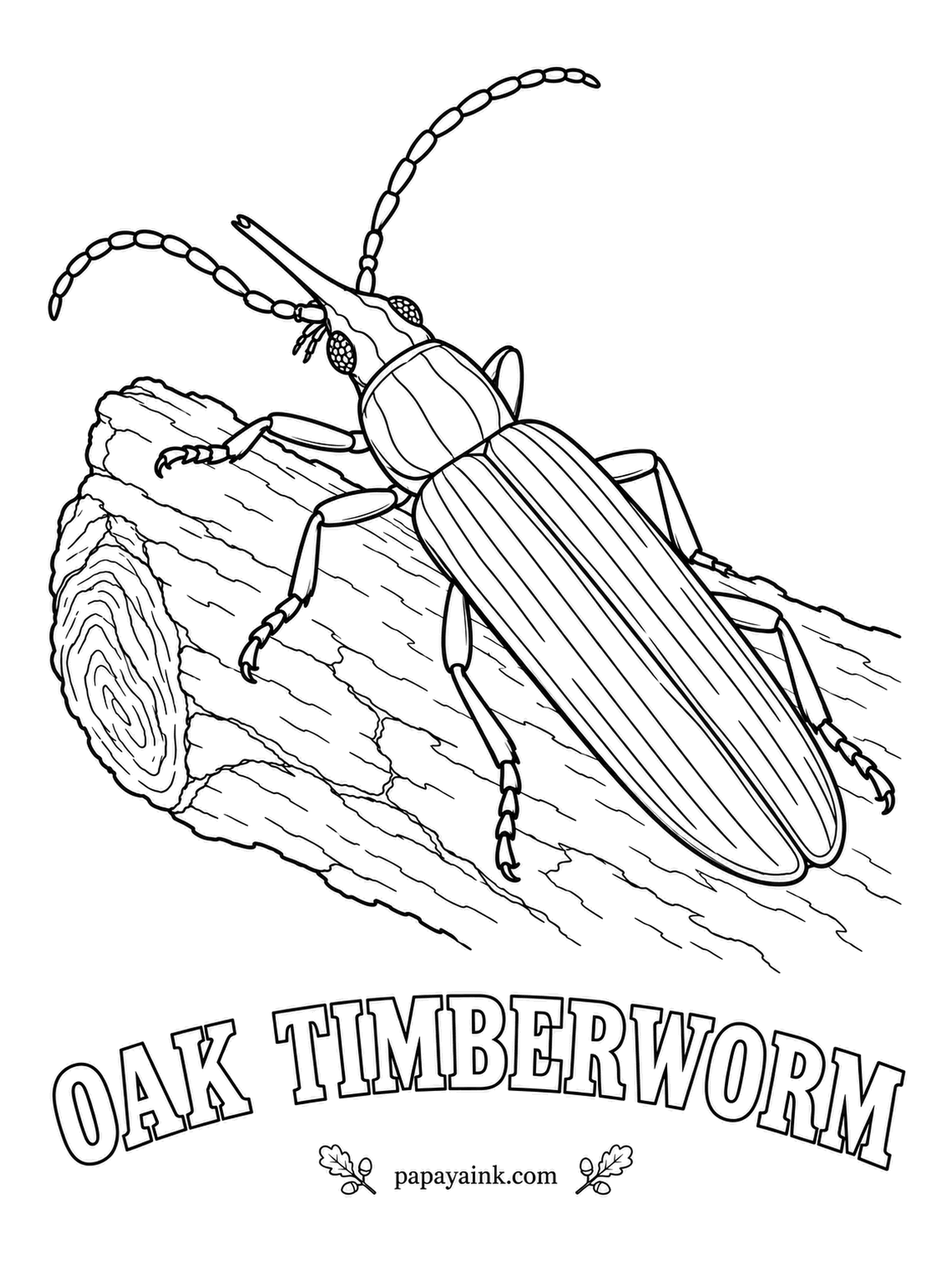
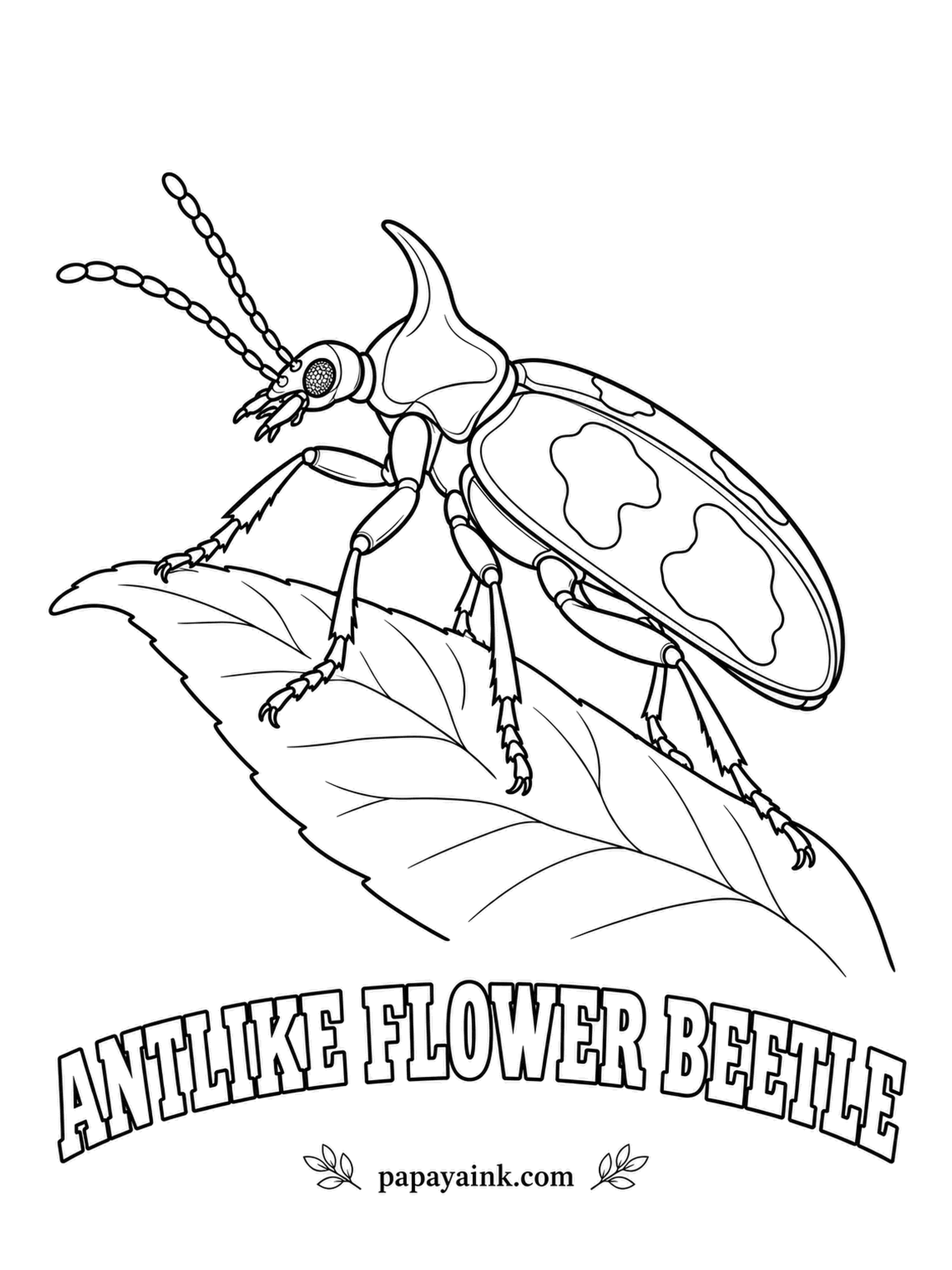
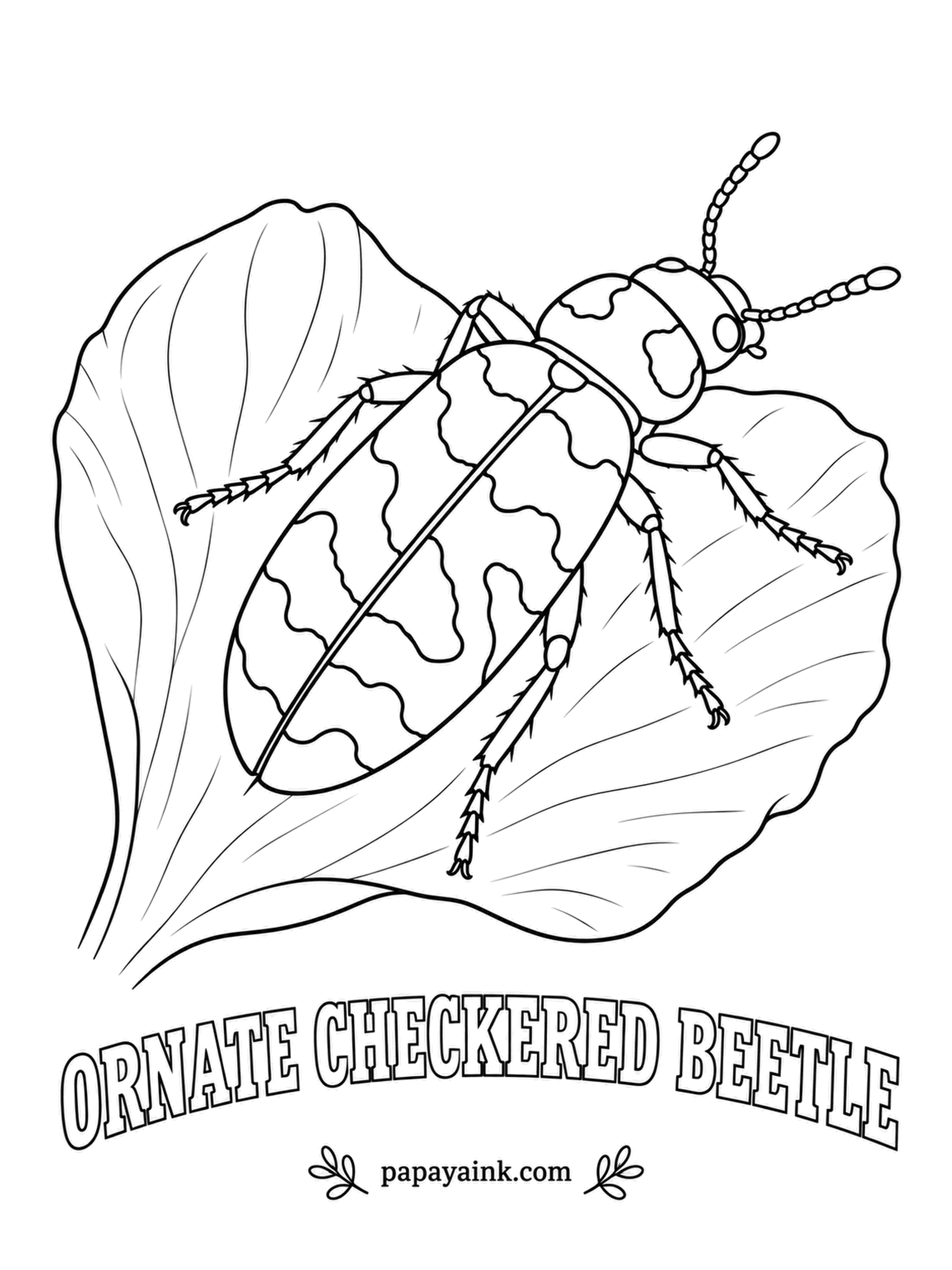
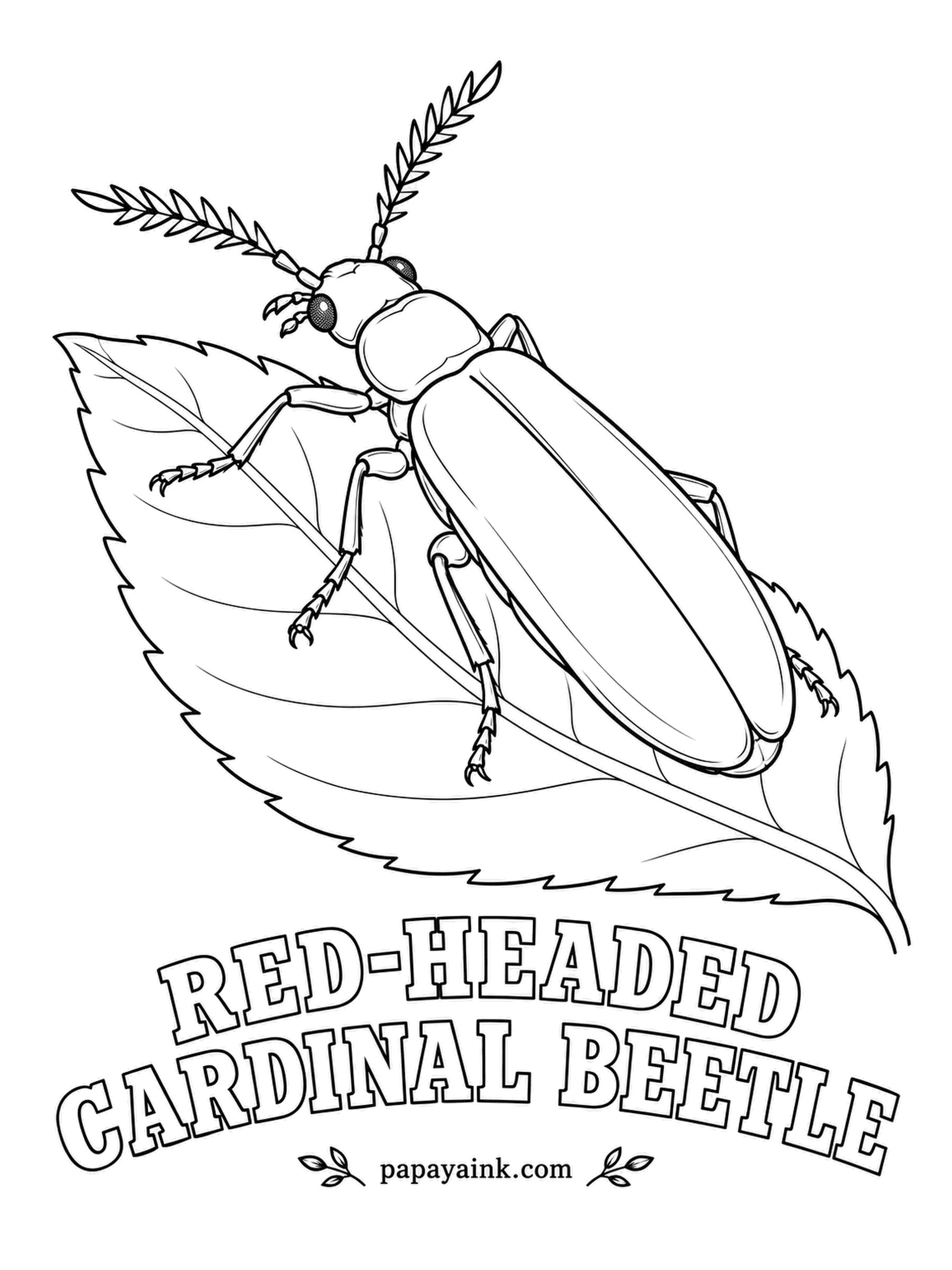

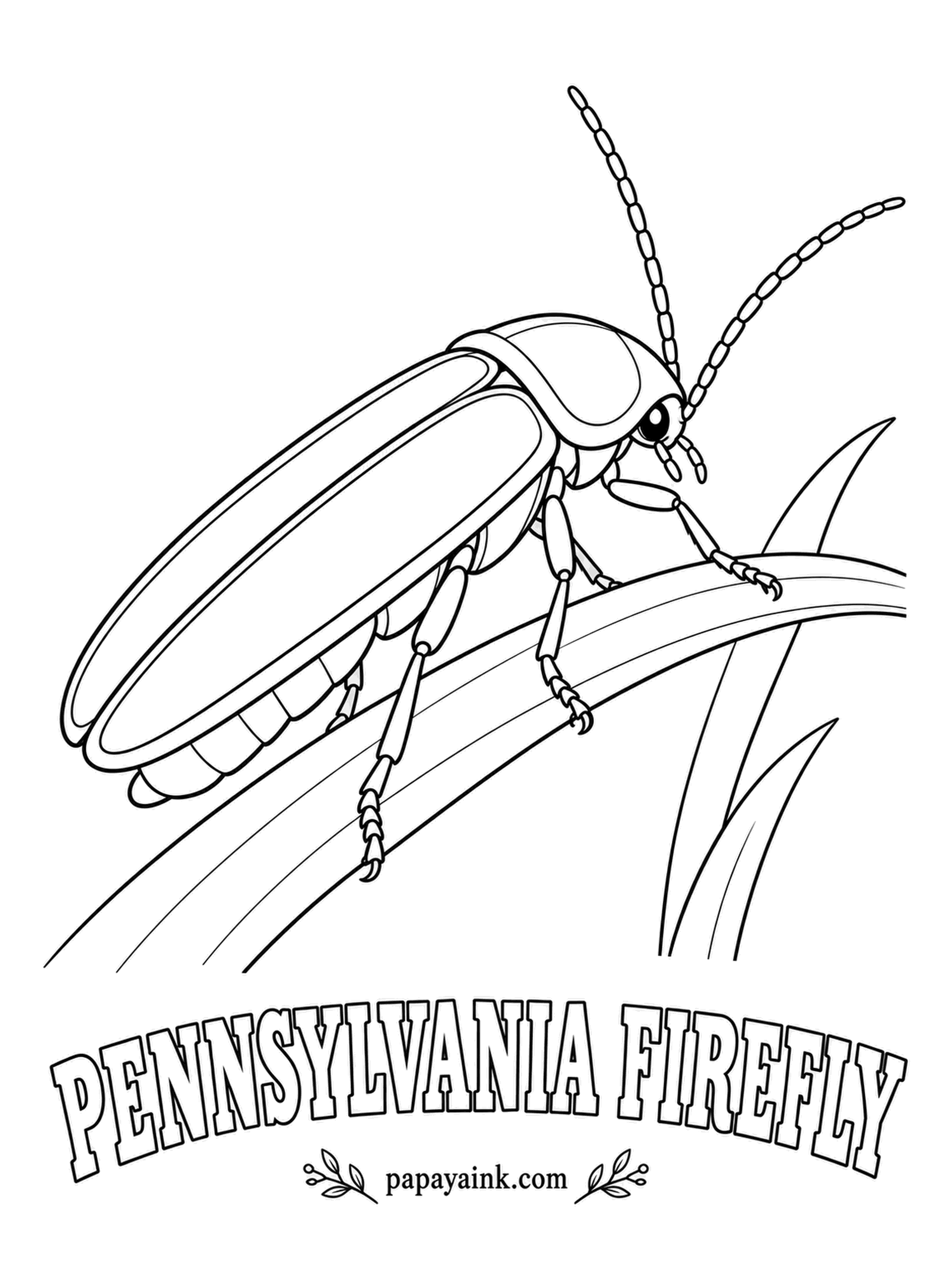
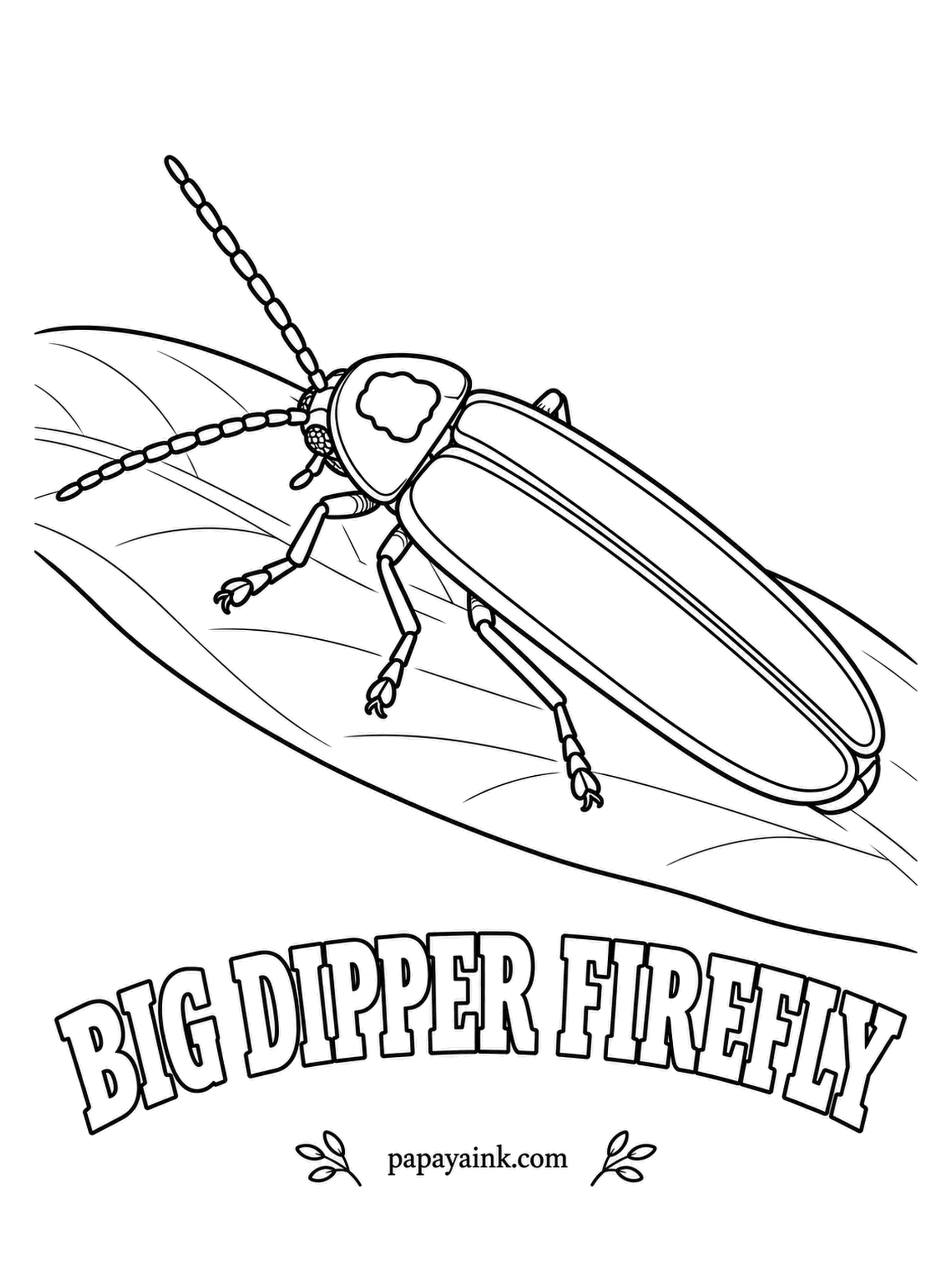
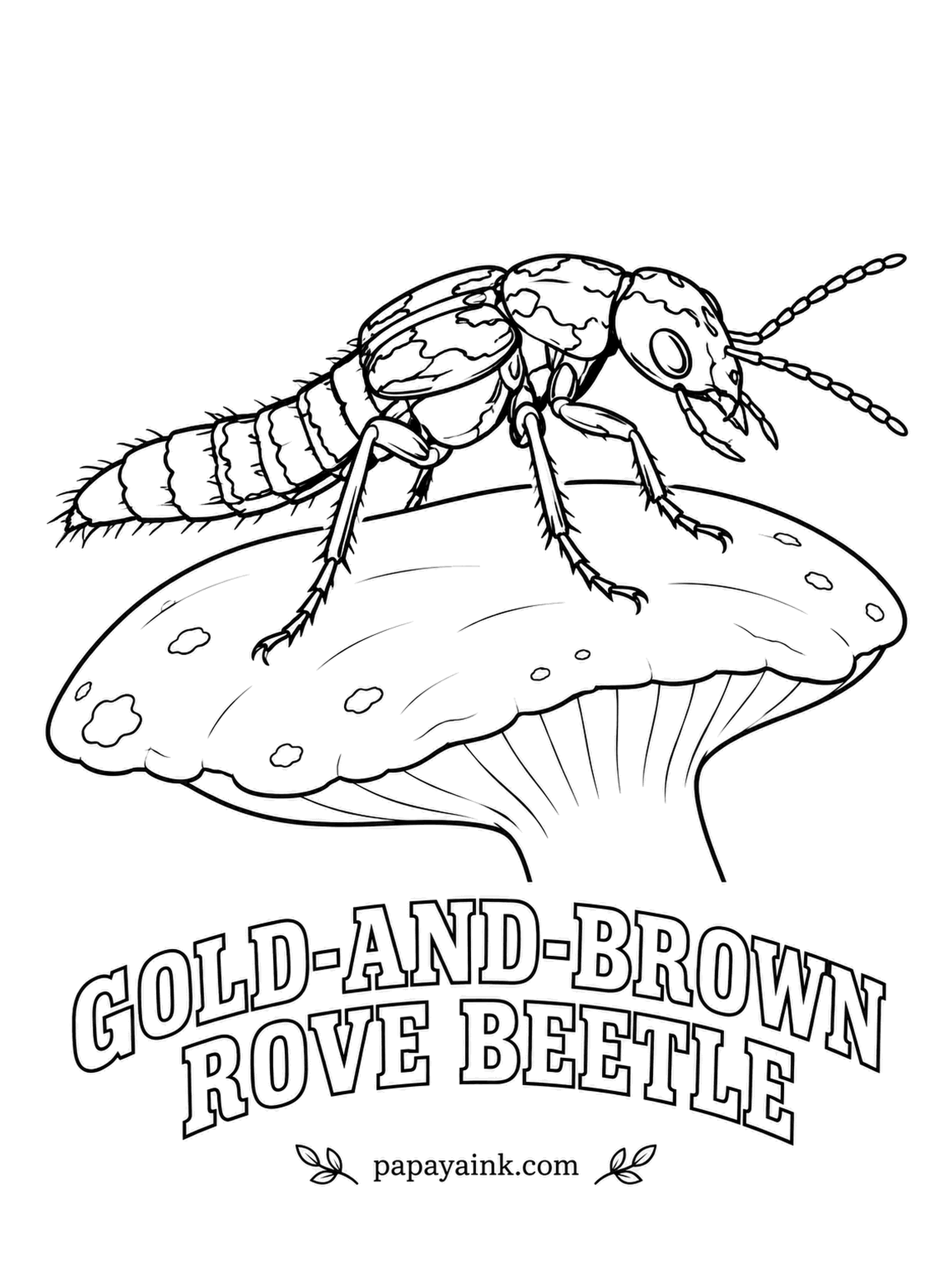
Fun Things to Make with These Coloring Pages
- Museum specimen box – color several species, cut them out and pin them in rows inside a shallow box or shadow frame, with a small handwritten label under each one, like a drawer from an old natural history collection.
- Metallic shell finish – once the coloring is dry, trace over the wing covers with metallic gel pens or markers. A few strokes of gold, green or copper turn a flat shell into something that catches the light.
- Size chart on the wall – before coloring, write each beetle's real length beside it, then line the sheets up from smallest to largest. The jump from a ladybug to a horned giant is startling at full scale.
- Ladybug garden stones – use the ladybug sheets as a pattern guide for painting smooth stones with acrylics. Copy the color and spot count of a real species instead of inventing one, then tuck the stones into a flowerpot.
- Species flash cards – print at reduced size, two or four sheets to a page, color them and glue each onto an index card. Write the range, size and one surprising fact on the back.
- Bug hotel sign – color a sheet, cover it with clear packing tape on both sides and mount it on a stick beside a garden log pile or bug hotel, where real beetles shelter.
- Lucky ladybug card – ladybugs count as a good-luck sign in many countries. Fold a sheet of card stock, glue a colored ladybug on the front and write a short wish inside.
- Horn and jaw bookmarks – cut a long stag or rhinoceros beetle out in one strip, glue it to thin cardboard and let the horns or jaws stick out above the top of the book.